Start With the Site, Not the Artwork
Before any engraving is set up, look closely at where the plaque will live. A plaque on a shaded reception wall has very different needs to one fixed outside a gate, on a boundary wall, or beside a driveway where it gets direct sun for most of the day. Pretoria East heat, summer storms and dust all affect how a plaque ages, and coastal areas such as Durban bring extra moisture into the picture.
For outdoor use, the first questions are practical: will people touch it often, will water run across it, and will it need to stay readable from a distance? A plaque that is viewed up close can carry finer detail, but a sign for a street entrance should stay clear in bright light and from a moving vehicle. At LightBurn Engraving in Wapadrand, Pretoria East, we plan for the location first so the final result works in real conditions, not just on screen.
- Check if the plaque is fully exposed or under cover
- Note the direction of sun and weather exposure
- Decide how far away the text must still be readable
- Allow for dust, wind and regular cleaning
Choose Materials That Suit South African Weather
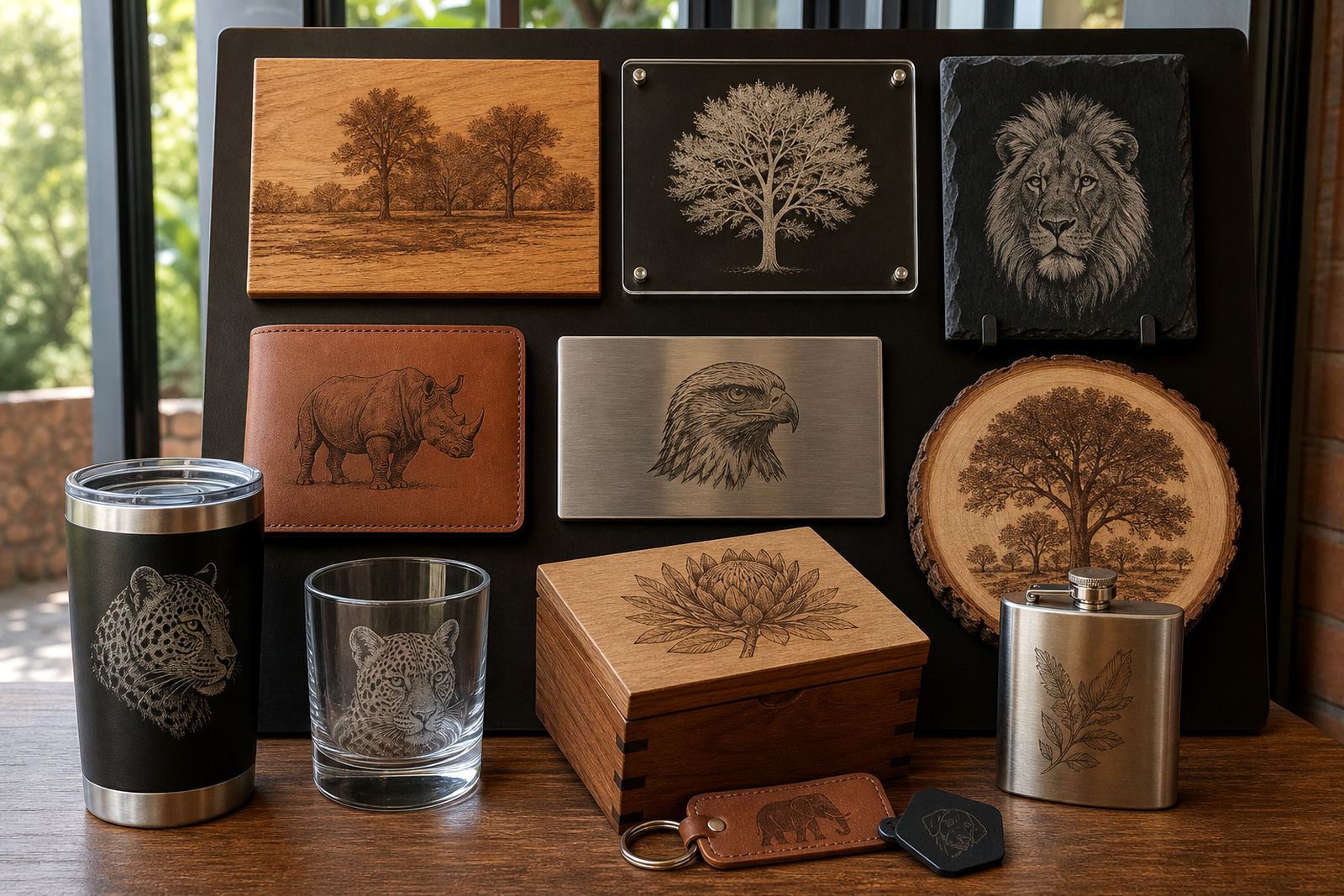
Different materials behave differently outdoors. Wood gives a warm natural look, but it needs careful sealing and is best where the plaque has some shelter. Acrylic is popular for modern signs because it holds crisp engraved detail and can be cut into neat shapes, though it should be chosen with the right thickness and mounting method for the site. Glass offers a refined finish for plaques under cover or in controlled outdoor areas, while metal is often preferred where long life and a harder wearing surface are important.
Laser engraving works well on each of these materials, but the finish must be matched to the job. A product marking plate on a gate post may need a different approach to a commemorative plaque at a school entrance. If the plaque will be handled often, a deeper marking or stronger contrast can help it stay legible after years of use. In humid areas, material choice also helps reduce staining, lifting or edge wear.
- Wood: best for sheltered areas and natural finishes
- Acrylic: clean, modern and useful for layered signs
- Glass: suitable where protection from impact is good
- Metal: practical for tougher outdoor conditions
Make the Layout Easy to Read in Harsh Light
Outdoor plaques often fail because the layout is too busy. Fine script, thin lines and crowded wording can look good in proof form yet disappear in strong sun or when seen quickly. For this reason, font selection and size planning matter just as much as the material. Bold lettering, sensible line spacing and enough empty space around the message help the plaque stay readable from first glance.
When planning the artwork, think about contrast too. A dark engraved area on a light plaque, or a lighter mark on a darker surface, usually reads better than low contrast combinations. Logos may need to be redrawn or simplified so they reproduce cleanly at the chosen size. If the plaque is for a business front, estate entrance or memorial wall, make sure the most important detail comes first in the visual order.
- Keep wording short where possible
- Use clear font styles rather than decorative ones
- Leave space between lines and around logos
- Test how the plaque reads from standing height and from a distance
Plan the Mounting Before the Plaque Is Made
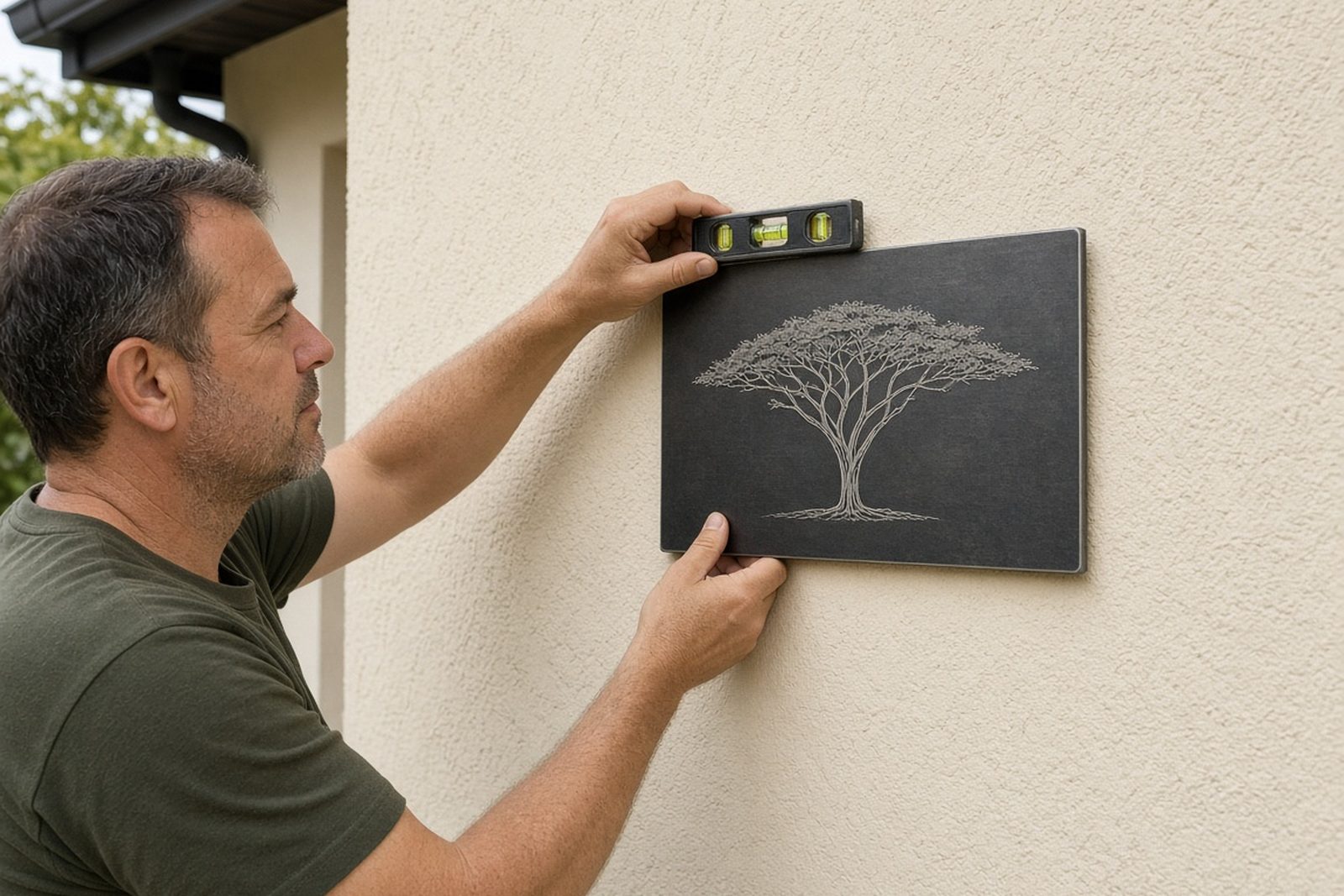
A well engraved plaque can still fail if the fixing method is wrong. Outdoor plaques need mounting that suits the wall surface, weight of the material and local conditions. On painted plaster, brick, stone, wood or metal, the fittings should be chosen with care so the plaque sits level and does not work loose over time. In windy spots or high traffic areas, that becomes even more important.
Mounting also affects the final appearance. Some projects need concealed fixings for a cleaner look, while others are better with visible screws, standoffs or frame supports. If the plaque will be removed later for maintenance or replaced as part of a growing site, plan for that from the start. Reorder matching is much easier when the original size, layout and fixing position are recorded properly.
- Match fixings to the wall surface and plaque weight
- Allow for easy cleaning and future removal if needed
- Use secure mounting where the public can reach the plaque
- Think about vandal resistance in exposed areas
Allow for Handling, Cleaning and Long-Term Use
Outdoor plaques are often touched, wiped down or exposed to dust from cars, building sites and foot traffic. That means the finish should be chosen with handling in mind. A plaque at a school, clinic, office entrance or gate may need to be cleaned often, so the engraving should remain easy to read after routine washing. In some areas, bird droppings, tree sap and coastal salt can also affect the surface.
Good planning includes packaging prep if the plaque is going to another branch or city, especially when courier delivery is involved. Edges need protection, and the plaque should be wrapped so it arrives ready for mounting. For clients in Pretoria, Johannesburg, Centurion, Midrand and Durban, delivery planning helps avoid damage and keeps the finish looking as intended.
When a plaque is part of a larger set, batch personalisation and consistent file conversion matter too. The same job may need several names, room numbers or directional signs, and every item should match in size and spacing. That consistency saves time later and keeps the site looking orderly.
A Pretoria East Example: A Gate Sign That Must Last
Consider a Pretoria East business park that needs an outdoor plaque at the entrance gate and a second one at the reception doorway. The gate sign must stay visible in bright afternoon sun, cope with dust from the road and remain readable for visitors arriving by car. The reception plaque can carry finer detail, but it still needs to match the overall look and material family. Planning both together avoids a patchwork result.
In a case like this, the team will usually check artwork, logo redraw needs, size planning and proof approval before production starts. Material guidance is just as important as the wording itself, because the same design may need a different treatment for a wall plaque than for a small identification plate. With careful setup, the final pieces look consistent across the site and are easier to replace later if the business expands.
From our base in Wapadrand, Pretoria East, LightBurn Engraving serves Pretoria East, Pretoria, Centurion, Midrand, Johannesburg, Durban and wider Gauteng. Clients reach the team through the enquiry form on the contact page, and the work is handled by Thabo Abrahams and the production team with practical attention to sizing, finish and dispatch. For outdoor plaques, that kind of planning makes a real difference over time.