Why engraved tags matter on handmade goods
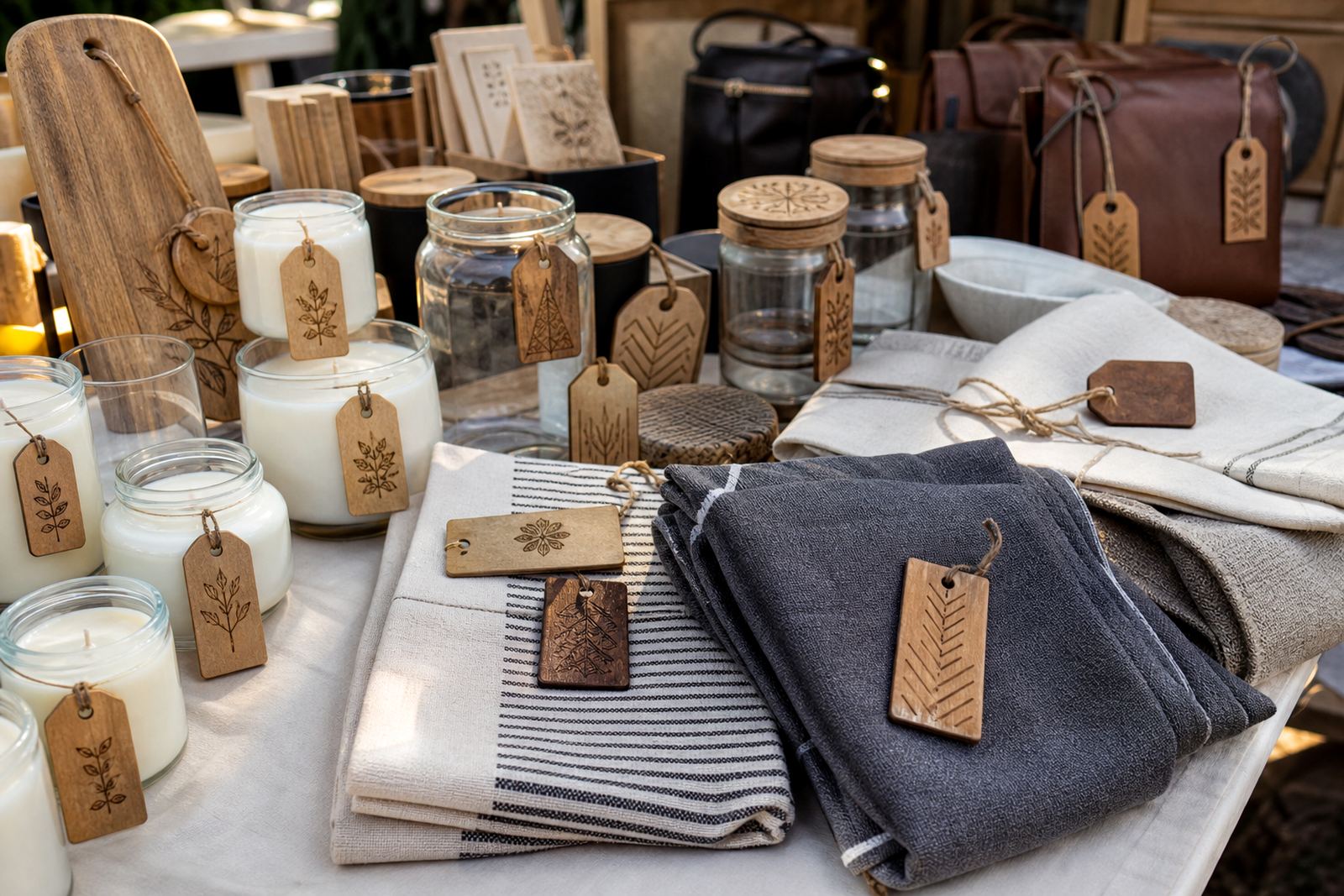
A tag does more than show a name. It gives the buyer a point of contact with the maker, carries care instructions, and helps the product look finished rather than unfinished. For candles, soaps, leather goods, jars, fabric items and small décor pieces, a neat engraved tag can make the difference between something that feels home-made and something that feels ready for retail.
For Pretoria East makers selling at weekend markets or delivering orders through Johannesburg and Centurion, that small detail also helps when stock is mixed together. A proper tag makes sorting easier, and it keeps your brand visible even after the item has left your table. It is a simple step but it adds real value.
Choosing the right material for each product
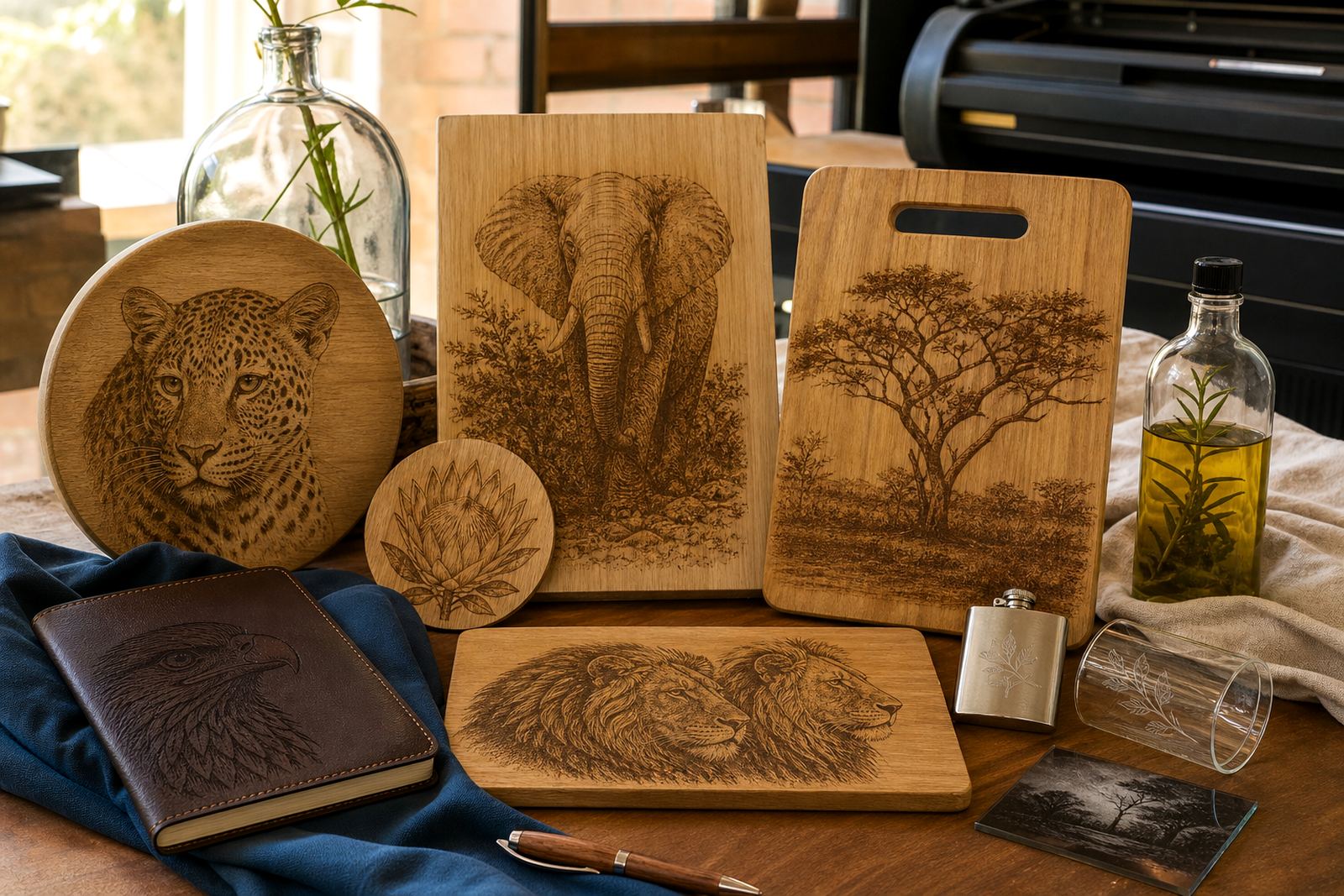
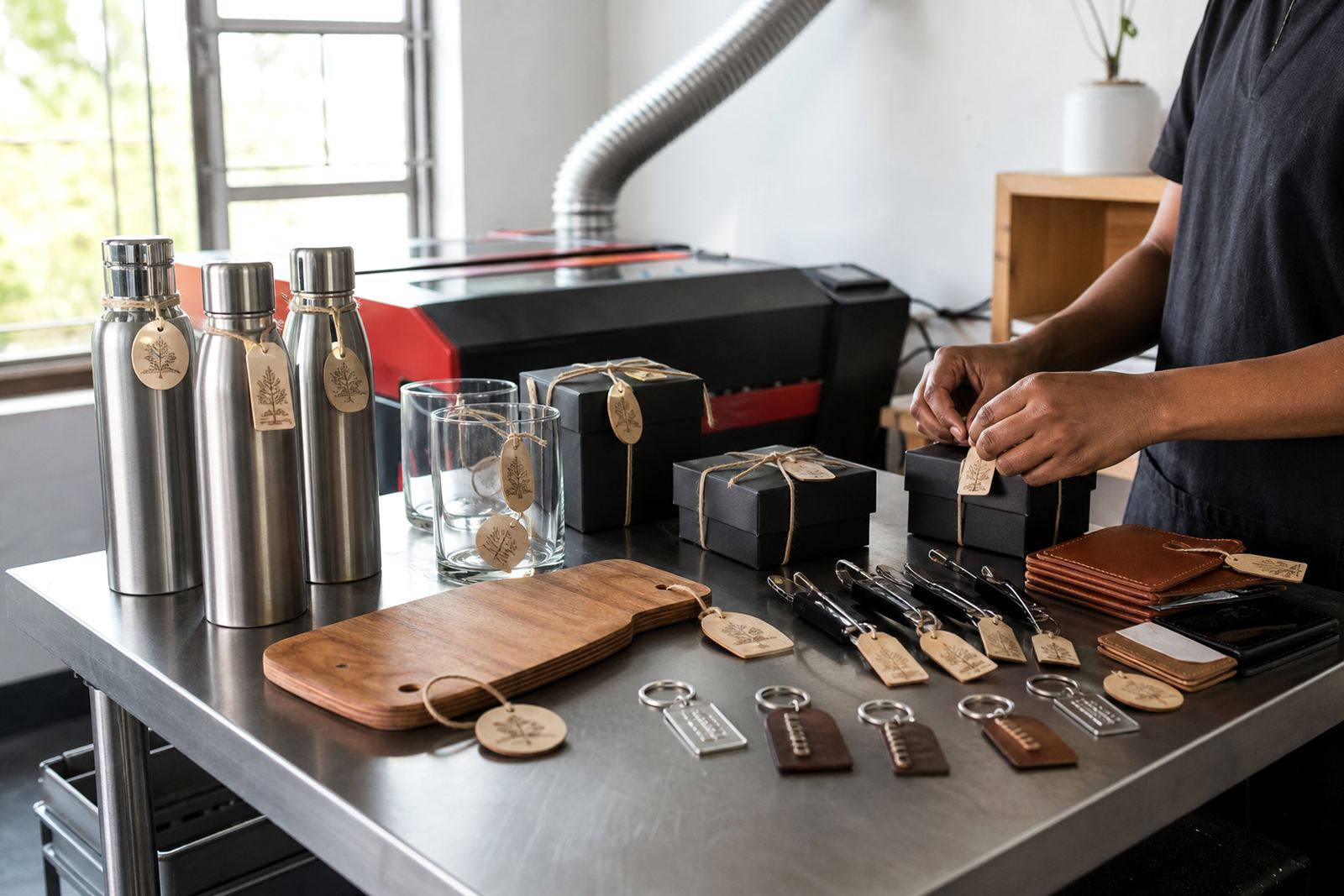
Different products suit different tag materials. Wood gives a warm, natural look that works well with handmade homeware and rustic gift items. Acrylic is cleaner and more modern, which suits boutique packaging, hair accessories and premium gift boxes. Metal is a good choice for long-term marking, while leather works well for softer, craft-driven items where a tactile finish is important. Glass can be engraved for presentation pieces, bottles or keepsake items.
- Wood tags suit natural products, gift sets and earthy colour palettes.
- Acrylic tags work well for modern branding, clean lines and repeated use.
- Leather tags add a soft, premium feel to bags, journals and accessories.
- Metal tags are useful where durability and repeat handling matter.
Material choice should also match the way the item will be used. A tag for a hanging décor piece is not the same as a tag for a bottle, and a tag for an event favour needs different fixing options from one meant for shelf display.
Design details that make a tag feel intentional
Good tag design starts with clarity. The name should be easy to read at a glance, the font should suit the product and the layout should leave enough breathing room around the wording. Too much detail can crowd the surface and make the tag look busy. A simple logo, product name or maker name often works better than trying to fit everything onto one small piece.
LightBurn Engraving assists with artwork setup, logo redraw, layout planning, font selection and size planning, so the finished tag matches the item it will sit on. If the design needs file conversion or proof approval before production, that can be handled before the tag goes into the laser. That way, the maker avoids waste and gets a cleaner result from the start.
- Keep wording short for small tags.
- Use contrast that suits the material and the product colour.
- Leave space for holes, ties, clips or adhesive backing.
- Check spelling carefully before approval.
Practical ways to use tags for gifting and resale
For handmade sellers, engraved tags can do a lot of quiet work. They can mark the product name, a scent, a collection, a serial number or a short care note. They can also carry a logo for repeat branding across a whole range. That helps when a customer buys one item now and comes back later looking for the same maker.
For gifts, tags can carry a personal message, a date or a short phrase that makes the item feel considered. This is useful for weddings, baby showers, anniversaries and corporate hampers. In those settings, a tag is often the last thing the recipient sees, so it should feel neat and balanced not overloaded.
Businesses in Midrand, Pretoria and Johannesburg often use matching tags across their product ranges to keep displays consistent. If the same shape and size is used across multiple items, reorder matching becomes easier and the whole range feels more organised. That matters when stock is packed for courier delivery or collected at markets.
Production details that help handmade makers avoid problems
Handmade products are often produced in smaller batches, so the marking process needs to be flexible. Batch personalisation is useful where each tag carries a different name, number or message. Packaging prep also matters, especially when tags need to arrive flat, clean and ready to attach to finished items.
It is worth planning the mounting option before production starts. A tag may need a drilled hole, adhesive backing, a slot for ribbon, or a way to sit neatly on a box. If the tag is being added to leather, wood or glass, the fixing method should suit the surface and the finish. Small changes here can save a lot of time later.
- Confirm the final tag size against the product size.
- Check that the fixing method will not damage the item.
- Plan for stock movement if you need repeat orders.
- Allow for courier packing so tags do not scratch in transit.
From the studio log: Durban deliveries
A maker in Pretoria East selling handmade candle jars, gift boxes and leather key rings may want one tag system for all three ranges. Wood tags can suit the candle line, acrylic can suit the gift boxes, and leather tags can be used on the key rings. Once the layout is agreed, the same brand details can be applied across the full range with only small changes for each product line.
That approach works well for businesses sending parcels across South Africa, including Durban, Gauteng and nearby routes through Centurion and Johannesburg. Courier delivery is simpler when items are labelled clearly and packed in a way that protects the finish. In a humid coastal area, materials and packaging also need to be chosen carefully so the final product still looks good when it arrives. It is a practical step, but it makes the brand feel more dependable.
LightBurn Engraving operates from Wapadrand in Pretoria East and works with clients through the enquiry form on the contact page. The team can help with material guidance, proof approval, mounting options and reorder matching, so the tag system stays consistent as the business grows.