Why mixed materials work so well in engraving
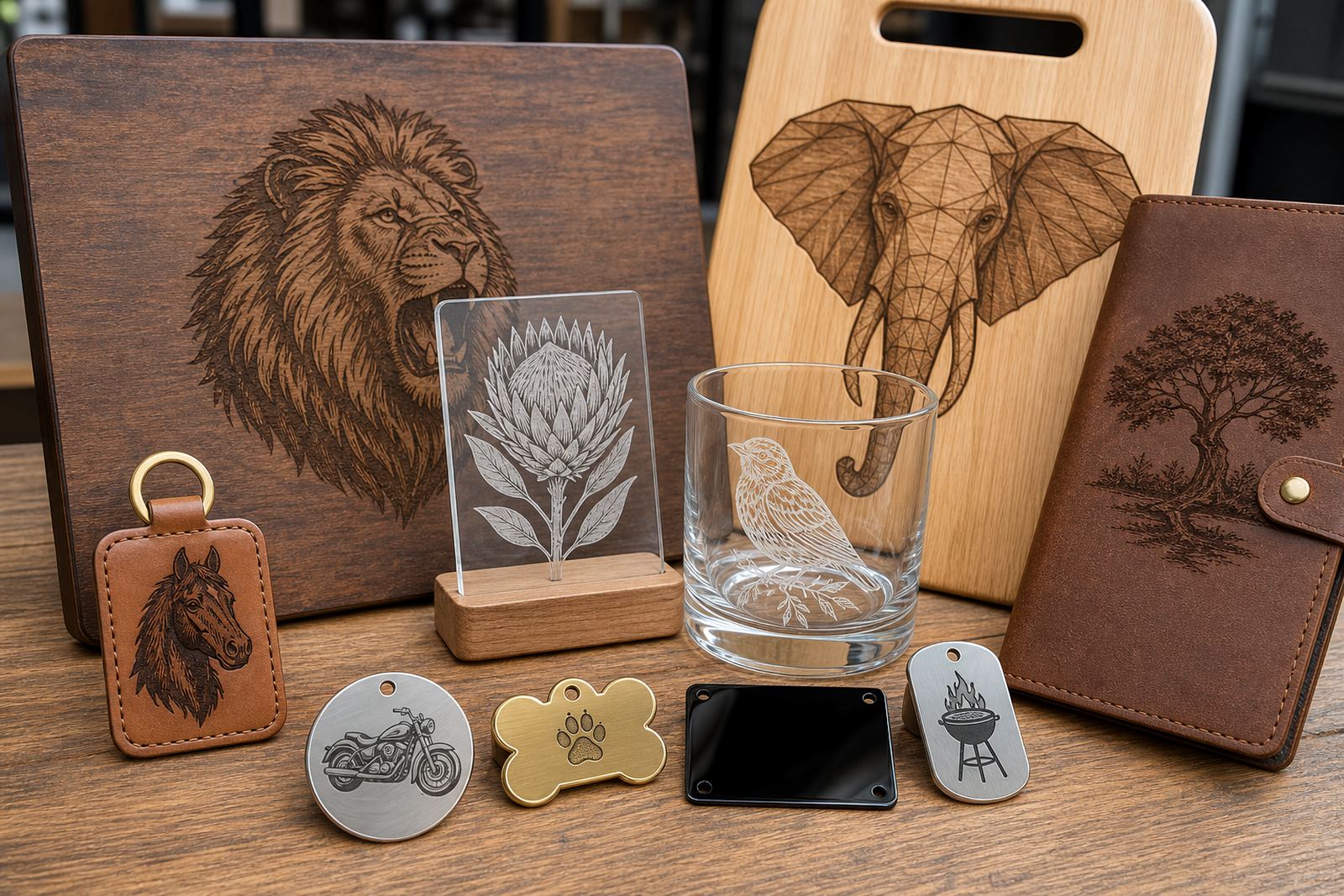
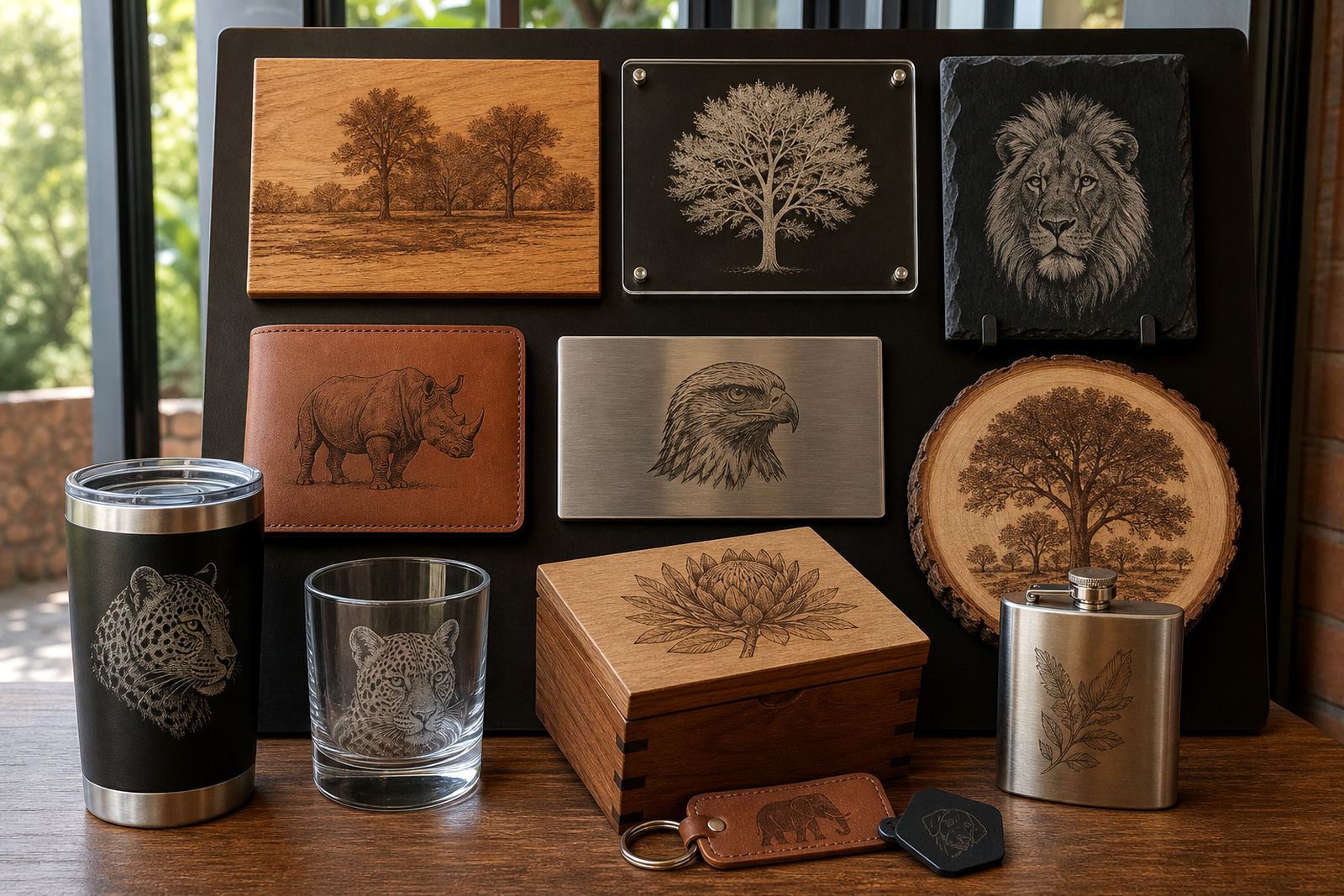
Single-material pieces have their place, but mixed materials often make the message easier to read and the finished item feel more deliberate. A timber base with an acrylic face, for example, can bring warmth and clarity together. Leather adds a softer, more tactile feel while metal gives a clean, durable finish for labels, tags and marked components.
In practice, the value comes from contrast. Dark engraving on pale wood is easy to read. Frosted acrylic can make fine text stand out without looking heavy. Brushed metal works well when a product needs a neat, professional face that still handles daily use. For Pretoria East businesses, where office reception signs, retail displays and gift items often need to carry both branding and practical information, mixed materials help a piece do more than one job.
It is also a sensible way to match the setting. A coffee shop in Brooklyn may want a natural wood and acrylic menu sign, while a corporate office in Centurion might prefer a metal nameplate mounted on a darker backing board. The same engraving method can be adapted to suit the room, the brand and the use case.
Choosing the right material pair for the job
The best combination depends on where the item will live and how it will be handled. Wood works well for warmer, welcoming pieces. Acrylic suits modern signage and layered branding. Leather is useful for compact gifts and premium presentation, and metal is often the better choice when durability matters or the item will be handled often.
- Wood + acrylic: useful for reception signs, directional pieces and gift plaques where you want contrast and a clean face.
- Leather + metal: a strong option for keyrings, luggage tags, flask wraps and premium staff gifts.
- Wood + metal: works well for awards, counter signs, wall plaques and product labels with a more traditional look.
- Acrylic + metal: suited to layered signage, equipment labels and presentation items that need a sharper finish.
Material thickness matters too. Thin acrylic can crack if it is unsupported, while thicker timber may need careful spacing so the engraved elements do not feel crowded. In humid coastal conditions, especially for clients sending work to Durban, material selection should also consider how edges, fixings and finishes will cope over time.
Designing for contrast, not clutter
Mixed materials only work if the layout is planned properly. Too many textures, colours or fonts can make the piece look busy. Good engraving design starts with the main message and builds around it. That means deciding what must be seen first, what is supporting detail and what can be smaller without losing meaning.
For example, a corporate award might use a wood base, a metal plate and a small acrylic name insert. The name should not compete with the headline. A product tag may need the item name, a batch number and a logo, but each element should still have space to breathe. If the layout is tight, the result can feel cramped even when the engraving itself is precise.
Our artwork setup process usually starts with font selection, size planning and proof approval, because small changes make a big difference once the job is cut or engraved. A serif font may suit a formal plaque, while a clean sans serif is often better for product marking and signs that need quick reading from a distance.
Practical uses in signs, gifts and product marking
Mixed-material engraving is useful across a wide range of everyday applications. A business sign might use layered acrylic on a timber backing. A gift set can combine a leather item with a metal nameplate. A workshop or manufacturing client may need product marking on metal components with a matching sign for the packing area. Each combination helps the item carry both function and presentation.
Across Pretoria, Johannesburg and Midrand, we often see clients looking for pieces that can move between settings. A sign at the front counter needs to look smart, but it also has to survive dust, handling and regular cleaning. In a home setting, a personalised gift may need to feel special without becoming delicate or impractical. Mixed materials are useful because they let you balance appearance with use.
- Reception signs for offices and clinics
- Personalised gifts for weddings, birthdays and retirements
- Retail tags and shelf labels
- Workshop and equipment identification plates
- Event signage and directional markers
What to consider before combining materials
Before a job is started, it helps to think through mounting, weight and finish. A heavier metal face may need a stronger fixing method than a light acrylic insert. Wood can move slightly with changes in temperature and humidity, so clearances and edge treatment matter. If the item will be transported often, packaging should protect corners and engraved surfaces so nothing scuffs on the way to site.
That avoids delays when a batch needs to be repeated or when a reordered item has to match an older piece exactly. Reorder matching is especially important for franchises, offices and suppliers who need consistency across more than one branch.
We also advise checking municipal or site rules where signage is being installed. Some buildings limit projection, fixings or face size. A good mixed-material sign can still meet those limits if the size plan is done properly from the start.
A Pretoria East example that gets the balance right
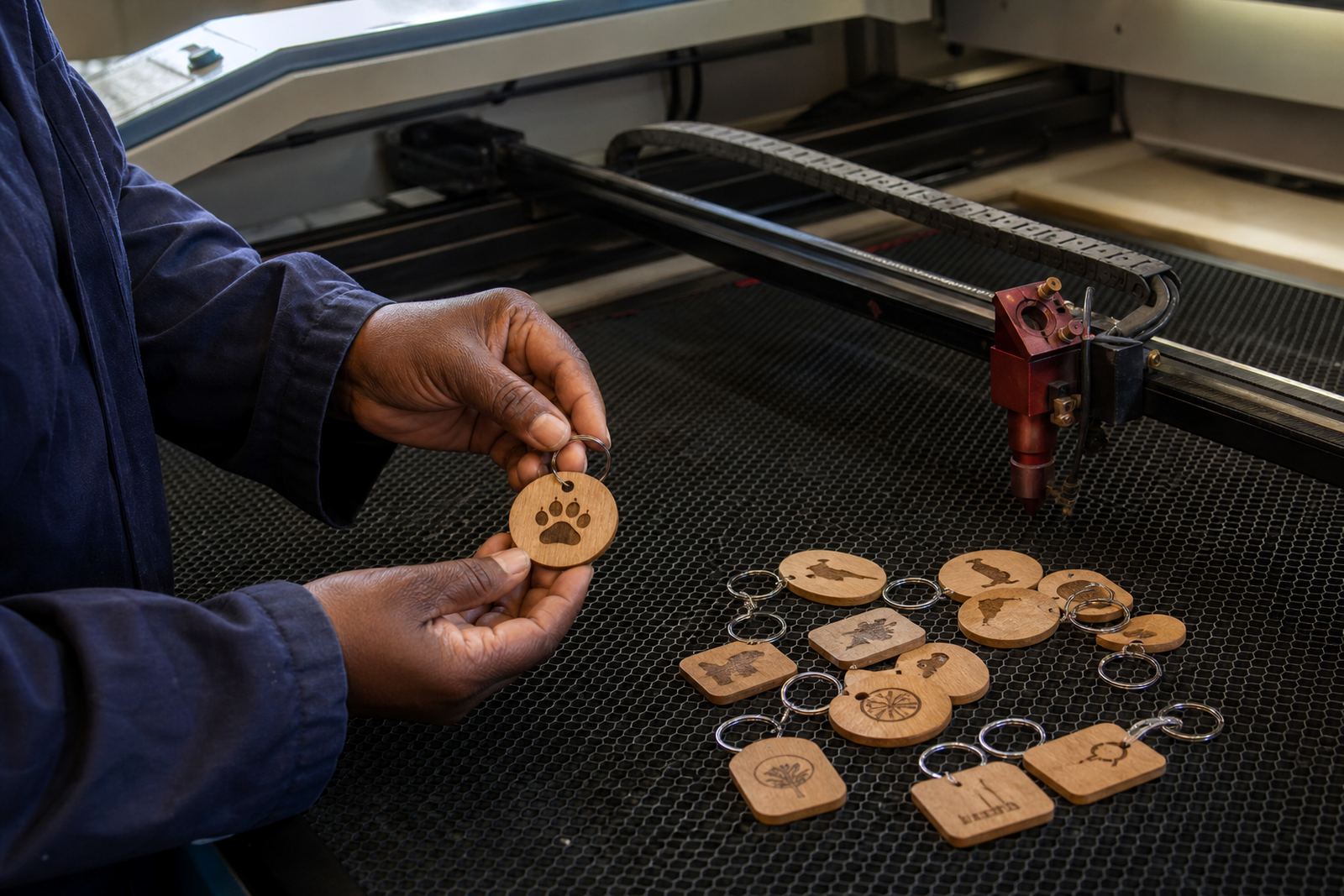
A practical example is a small professional practice in Pretoria East that wants a reception sign and a set of engraved gift items for clients. A wood base can give the reception sign warmth, while a clear acrylic face keeps the lettering light and readable. For the gift items, leather card holders or key fobs can be marked with a clean logo and a short message, while a metal insert can carry the practice name for a more formal finish.
The point is not to use every material available. It is to choose the right combination for the room, the purpose and the audience. A well matched set feels considered from the first glance through to the final touch. That is especially useful for local businesses that want their front counter, packaging and client gifts to carry one consistent look across Pretoria, Centurion and Johannesburg.
From artwork setup and logo redraw to layout planning, packaging prep and dispatch, our Wapadrand, Pretoria East team works through the practical steps. That makes it easier to produce mixed-material pieces that hold together visually and still make sense in the real world.
Getting a cleaner result from the start
The cleanest mixed-material pieces usually come from simple choices. Keep the colour palette tight. Use one clear focal point. Leave enough space around the engraving. And make sure the materials suit each other in both look and handling. A strong contrast between wood and acrylic, or leather and metal, often works better than trying to force too many effects into one item.
If you are planning signage, gifts or product marking for Pretoria, Johannesburg, Centurion, Midrand or Durban, mixed materials can add value without overcomplicating the job. The best results tend to come from clear artwork, sensible material choices and careful finishing from the start.