Start With the Metal Type Before You Clean
Not all engraved metal plates behave the same. Aluminium, stainless steel, brass, coated steel and anodised finishes each need a slightly different touch, especially when the plate has fine lettering or a dark fill in the engraved lines.
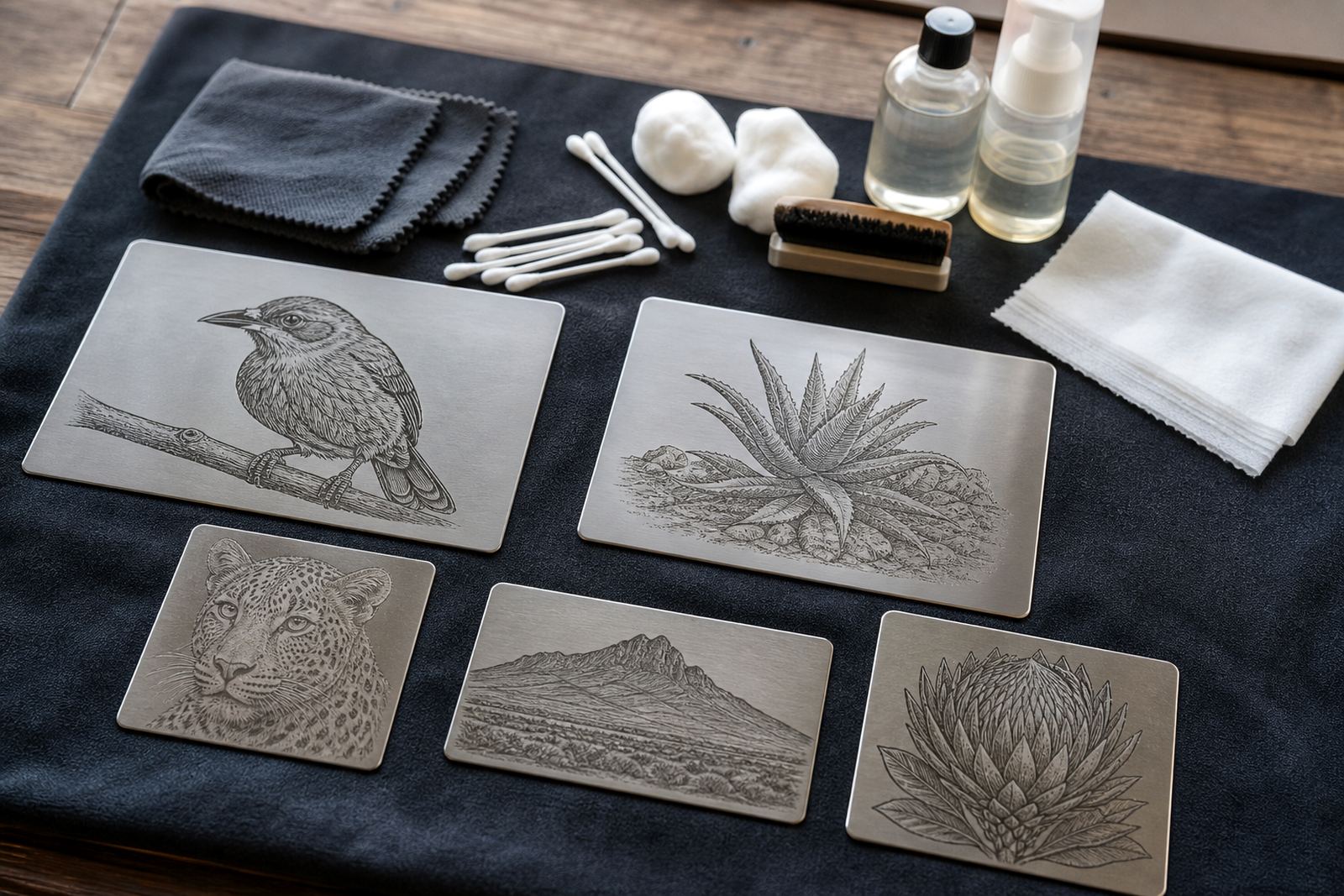
If you are not sure what the plate is made from, begin with the gentlest method. Use a soft cloth, lukewarm water and a small amount of mild soap. In Pretoria East and the wider Gauteng area, dust is common and it is usually safer to lift the dirt first rather than rubbing it dry into the surface.
- Use a microfiber cloth or soft cotton cloth.
- Test any cleaner on a small brushed metal plate corner first.
- Avoid abrasive pads, steel wool and powdered scourers.
- Dry the plate after cleaning so water marks do not set in.
How to Clean Engraved Plates Without Dulling the Finish
For most metal labels and plaques, regular light cleaning is better than occasional harsh scrubbing. Finger marks, dust and surface grime can be removed with a damp cloth followed by a dry wipe. If the plate is mounted outdoors, check it after rain or after a windy week when grit can collect around the edges.
For oil from hands or workshop use, a small amount of isopropyl alcohol on a cloth can help on many metal surfaces, but do not flood the plate. Keep liquid away from the fixing holes, wall plugs and any backing material. If the plate is on equipment or machinery, switch off the unit first and make sure the area is safe before cleaning.
- Wipe in one direction where possible rather than scrubbing in circles.
- Use a soft brush for corners and engraved grooves.
- Never use strong acids, bleach or oven cleaner.
- For painted or filled engraving, avoid aggressive rubbing over the filled areas.
Handling Tips That Prevent Scratches and Bent Corners
A lot of damage happens before the plate is even installed. When you move engraved labels, hold them by the edges and keep them flat. If several plates are packed together, separate them with paper or soft film so one piece does not rub against the next one in transit.
For larger plaques, ask for packaging that supports the full face and corners. This matters when courier delivery is involved between Pretoria, Johannesburg, Centurion, Midrand and Durban, because bumps in the trip can mark polished metal or bend thin plates. In our own work at LightBurn Engraving in Wapadrand, Pretoria East, careful packing is part of the job from the start.
- Do not drag plates across a counter or metal shelf.
- Keep magnets, keys and tools away from finished surfaces.
- Wear clean gloves if the plate has a polished face or dark fill.
- Store spare plates flat and covered.
Outdoor Exposure, Coastal Humidity and Rust Risk
Metal plates used outdoors face sun, dust, moisture and temperature changes. In Pretoria, the dry season can leave a fine layer of dust on plaques and labels. In Durban and other coastal areas, humidity and salt in the air can be harder on fixings, backing boards and some metal finishes. That does not mean the plate will fail, but it does mean maintenance should be more regular.
If a plate is mounted outside, check for early signs of corrosion around screws, rivets and edges. If the metal is mild steel or has a coating, chipped areas should be watched carefully. Stainless steel usually handles weather well, but even stainless can show spots if dirt is left sitting on it for too long.
- Rinse off airborne dirt with a damp cloth before it builds up.
- Check fixings after heavy rain or long humid spells.
- Replace rusty screws before they stain the plaque face.
- Make sure wall mounts allow a little airflow behind the plate.
Protecting Lettering, Fills and Fine Detail Over Time
Many engraved plates rely on detail that is small but important, such as serial numbers, machine labels, directional signs or name plates. Fine lettering can become harder to read if it is filled with dirt or polished with the wrong product. The safest habit is to clean gently and leave harsh polishing for only those metals that can take it.
If your engraved plate has a colour fill in the lettering, avoid solvents unless you know they are safe for that finish. A quick wipe with a damp cloth is usually enough for routine care. For plates used on product marking, make sure the cleaning routine does not alter the readability of serials, batch details or compliance wording.
- Keep a copy of the original wording and layout for future reorders.
- Use a soft toothbrush only on stubborn dust in shallow grooves.
- Do not scrape with knives, blades or metal tools.
- If the plate is important for identification, inspect it regularly rather than waiting for visible wear.
A Practical Pretoria East Example for Workshops and Offices
Picture a small engineering workshop in Pretoria East with metal equipment labels on cabinets, a gate plaque at the entrance and a few brushed steel name plates in the reception area. Dust from the yard settles on the outdoor pieces, while the indoor plates collect fingerprints from daily use. A simple routine works best: weekly wiping for the visible plates, a monthly check on fixings and a quick look after stormy weather.
If one of those labels begins to loosen, it should be reattached before it falls or bends. If a plate has become scratched, polishing may not help if the engraving is very fine. In that case, it is often better to replace the piece or have the artwork matched for a clean reorder. That is where careful size planning, file conversion and reorder matching make a difference.
At LightBurn Engraving, based in Wapadrand, Pretoria East, we work on engraved metal labels, plaques and product marking for clients across Gauteng and further afield. Clients reach us through the enquiry form on our contact page, which is the best way to ask about artwork setup, mounting options, packaging prep or a repeat order.