Why leather takes engraving so well
Leather reacts well to laser engraving because the surface is natural and varied. When the laser removes or darkens the top layer, it leaves a mark that can look clean and controlled, with enough texture to feel intentional rather than printed on. The final result depends on the hide, the finish on the surface and how the material was prepared before marking.
In Pretoria East we often see customers bring in items that must hold up in daily use, from luggage tags to presentation pieces. Leather is a practical choice because it suits both formal and rugged settings, and it ages in a way many other materials do not. The engraving can remain legible long after other branding starts to wear.
What changes the look of the engraving
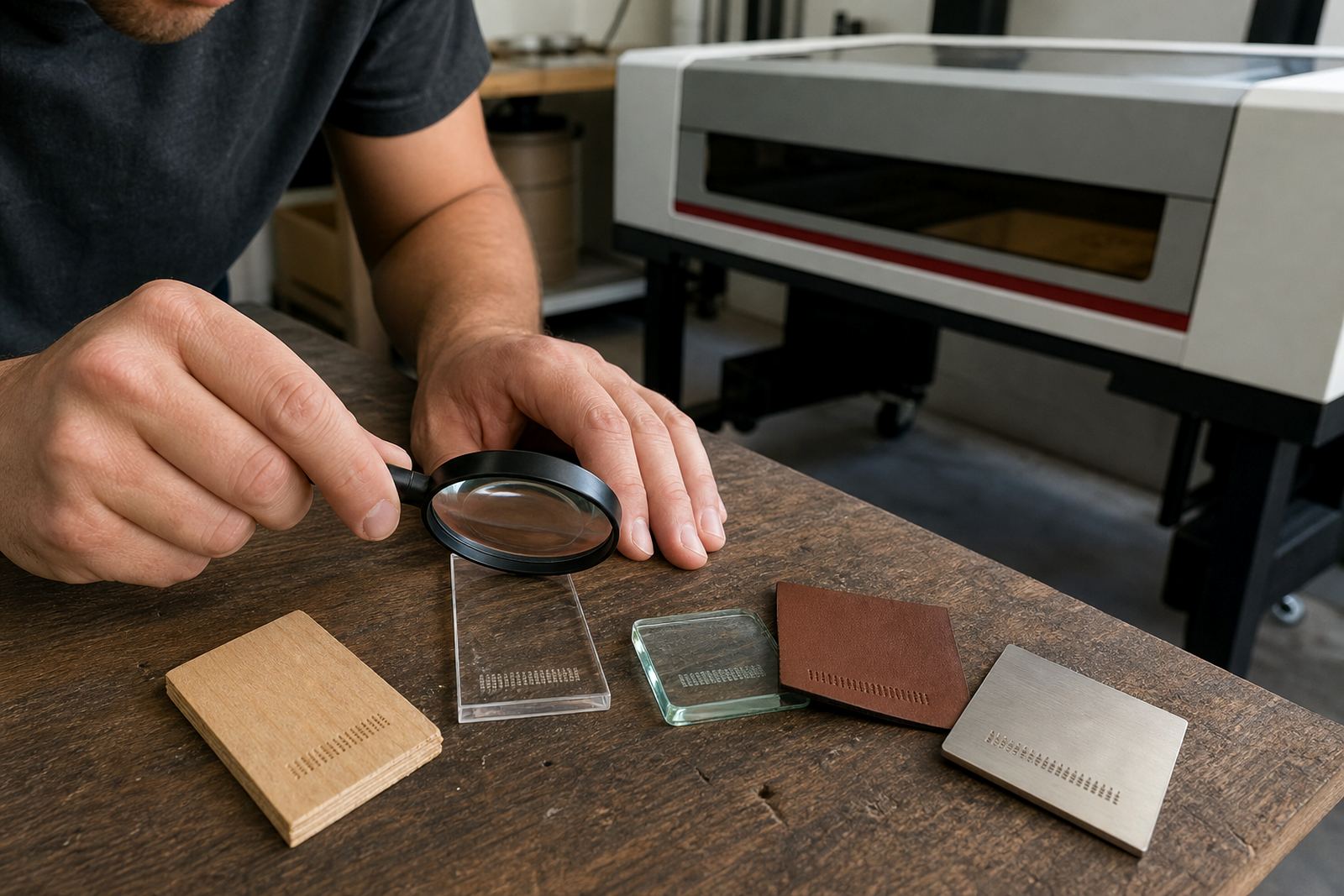
Not every leather item marks the same way. Full grain, top grain, coated leather and bonded leather each respond differently, so a sample test is useful before any full batch runs. Natural fibres, dyes and surface sealers all influence the shade and depth of the engraving.
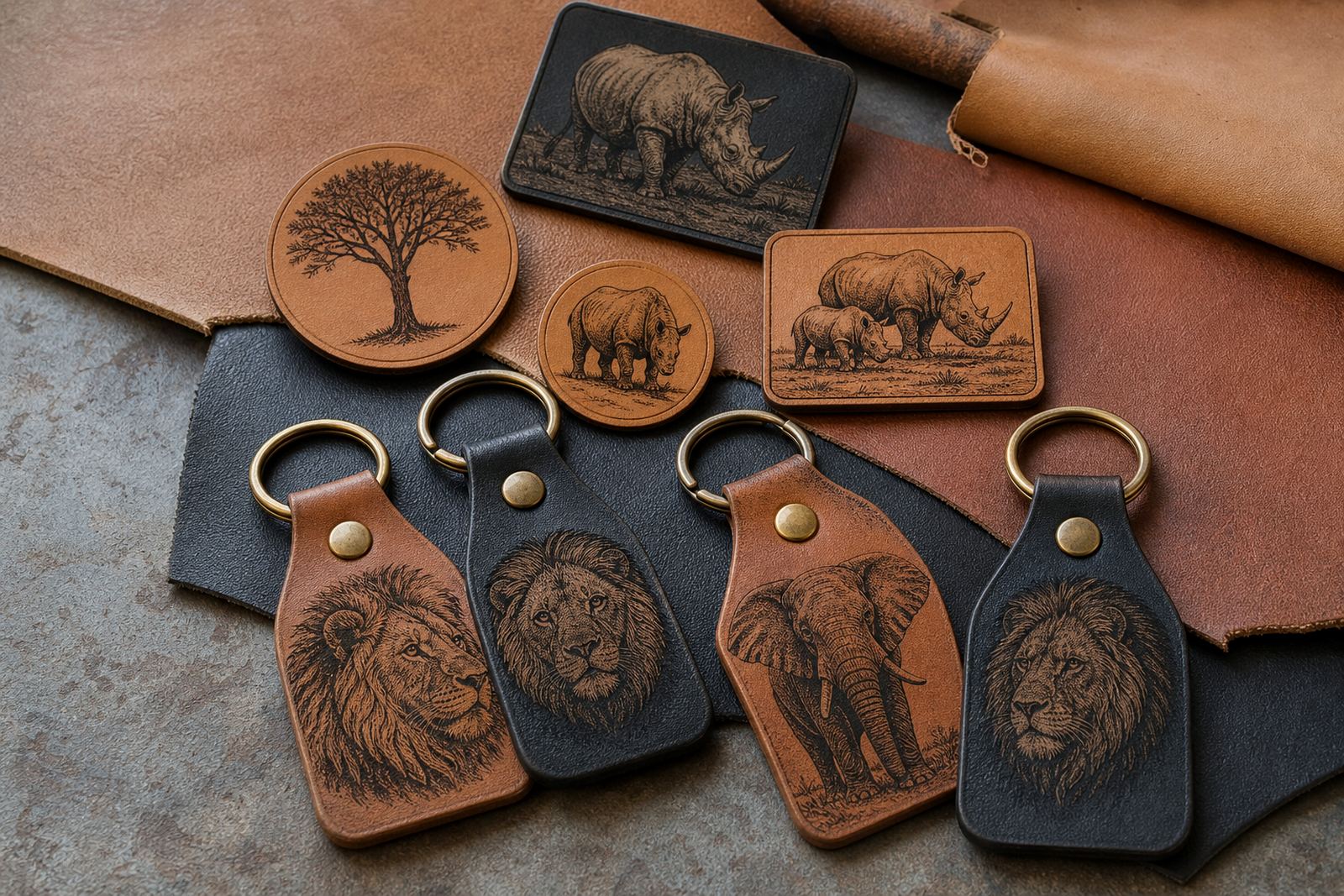
- Dark leather often shows tone-on-tone marking with a softer contrast.
- Light leather can show stronger contrast and more visible detail.
- Heavily coated surfaces may give a sharper outline but less natural texture.
- Very soft leather can show slight compression around the mark if the settings are too high.
For business use, that means the same logo may need a different setup on two otherwise similar items. A careful proof helps avoid a result that looks too faint or too heavy.
Best leather items for signs, gifts and product marking
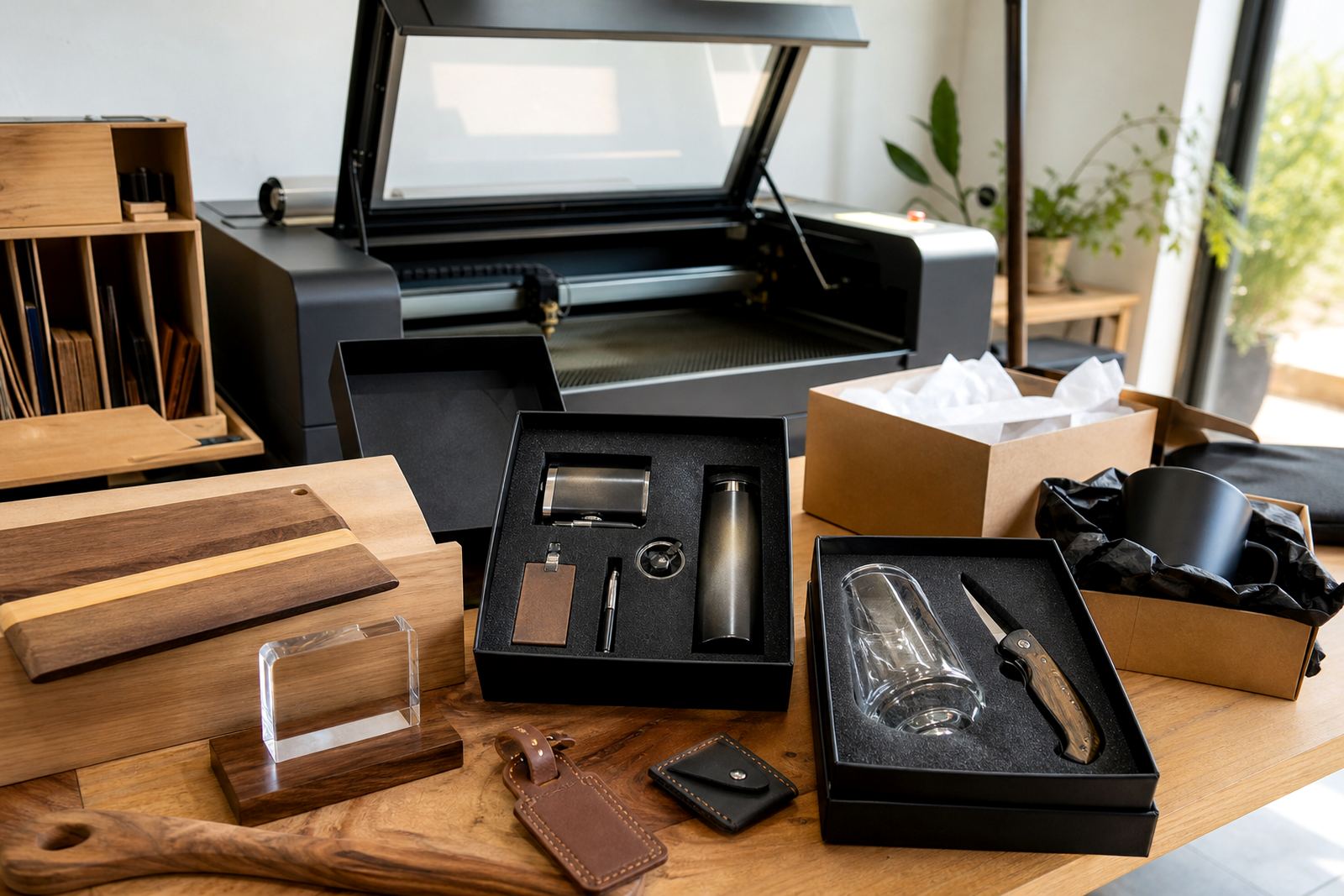
Leather engraving works well on a wide range of products, especially where a refined finish matters. It is used for corporate gifting, label tags, packaging inserts and retail accessories, as well as larger items such as presentation folders and menu covers.
- Wallets, card holders and notebooks
- Keyrings, luggage tags and bags
- Box lids, sleeves and gift sets
- Product labels and branded inserts
- Menu covers, folders and presentation items
For product marking, leather is useful when a customer wants a permanent identifier without stickers or loose tags. For gifts, it gives a custom feel that is neat and personal, which is why it is popular for anniversaries, staff gifts and event pieces.
How to prepare artwork for a cleaner result
Good engraving starts with clear artwork. Fine lines, small text and detailed logos need to be checked before setup, especially on textured leather where tiny details can fill in or soften. If a file is low quality, it may need cleanup before any marking begins.
Our team handles artwork setup, logo redraw, layout planning, font selection and file conversion for leather jobs. That matters when the item is small or curved, because lettering must stay readable and the placement must suit the shape of the product. Reorder matching is also useful for clients who need the same mark on repeat runs, month after month.
- Use high contrast artwork where possible
- Avoid very thin fonts on rough leather
- Confirm the final size before approval
- Check spelling, spacing and logo placement carefully
Practical notes for heat, finish and durability
Leather is sensitive to heat, so the engraving setup needs care. Too much energy can darken the area more than expected, harden the edge or leave a scorched smell that lingers. A balanced setting gives a better finish and helps the item keep its shape.
Different finishes also affect durability. Oiled and waxed leathers can show a softer mark, while sealed surfaces may resist engraving slightly but still give a useful contrast. If the item will be handled often, such as a card holder or bag tag, the mark should be placed where it will not rub against seams or hardware. In humid areas like Durban, storage and packaging matter too, because leather can react to damp conditions before delivery.
A Pretoria East example for local businesses
A small firm in Pretoria East may need leather notebook covers for client meetings, or luggage tags for a conference pack headed to Johannesburg or Centurion. In that case, the mark must look professional up close and still read clearly when the items are packed for courier delivery across South Africa. The same approach works for Midrand and Durban orders, where the product has to travel well and arrive neatly boxed.
For this type of work, our Wapadrand workshop handles batch personalisation, mounting options, packaging prep and proof approval. That includes material guidance so the customer knows what will work best on the item they already have, and how the finish may change from one leather type to the next. For businesses that need repeat orders, a matched setup saves time and keeps the line consistent.
Finished leather pieces are wiped down, checked for scorch marks at the edges and wrapped in tissue so the grain is not scuffed in transit.