Start with where the sign will live
Before choosing a material, decide whether the sign will stay indoors, face direct sun, or sit in a covered area that still catches dust and moisture. A reception sign in a climate controlled office has different needs to a shopfront plate at a pavement entrance in Centurion or a directional sign under an outside awning in Pretoria East.
Indoor signs can focus more on appearance and fine detail, while outdoor signs need clearer lettering, weather resistance, and a finish that copes with heat and cleaning. In Gauteng, intense sun and sudden summer rain can make some materials fade, warp, or stain if they are not matched well to the job.
For product marking, the decision is also about handling. A tag, panel, or serial plate must stay legible after touching, packing, and cleaning. That is where material thickness, engraving depth, and surface finish all matter.
Wood gives warmth, but it needs the right setting
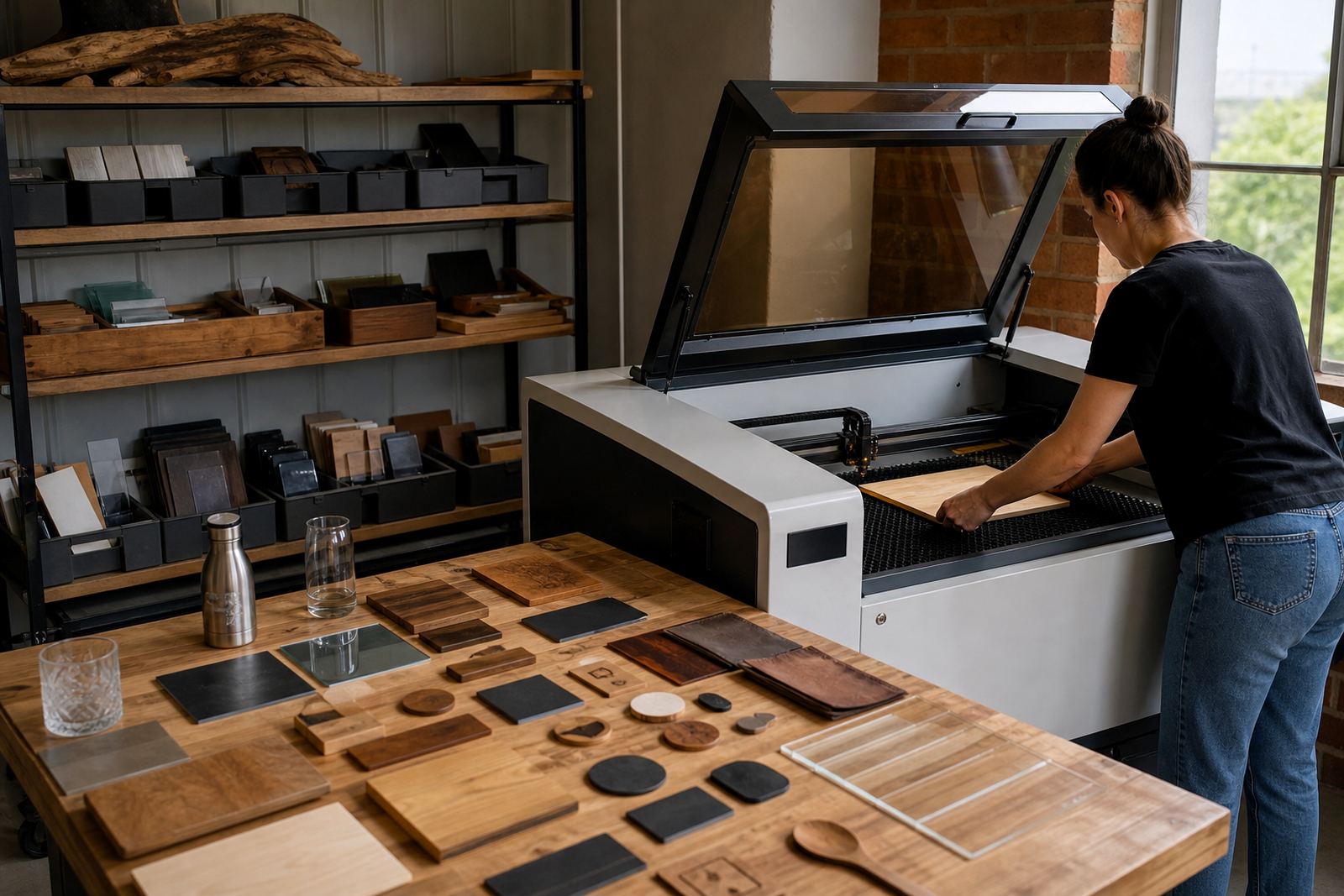
Wood works well for interior signs, hospitality pieces, gifting, and decorative branding where a natural look matters. Laser engraving on wood creates a dark, clear mark and can give a softer feel than printed graphics or cut vinyl. It suits plaques, room signs, menu boards, and presentation pieces.
For outdoor use, wood is less forgiving. It can swell, split, or distort in high humidity, and constant sun can bleach the surface. If a sign must live outside in Pretoria or Durban, the wood choice, sealing method, and mounting method need proper attention. Even then, it is usually best kept under cover.
Wood is a sensible option when the brief calls for character rather than maximum durability. It also works well for one-off gifts and short runs where each piece can be finished carefully.
Acrylic is neat, sharp, and versatile
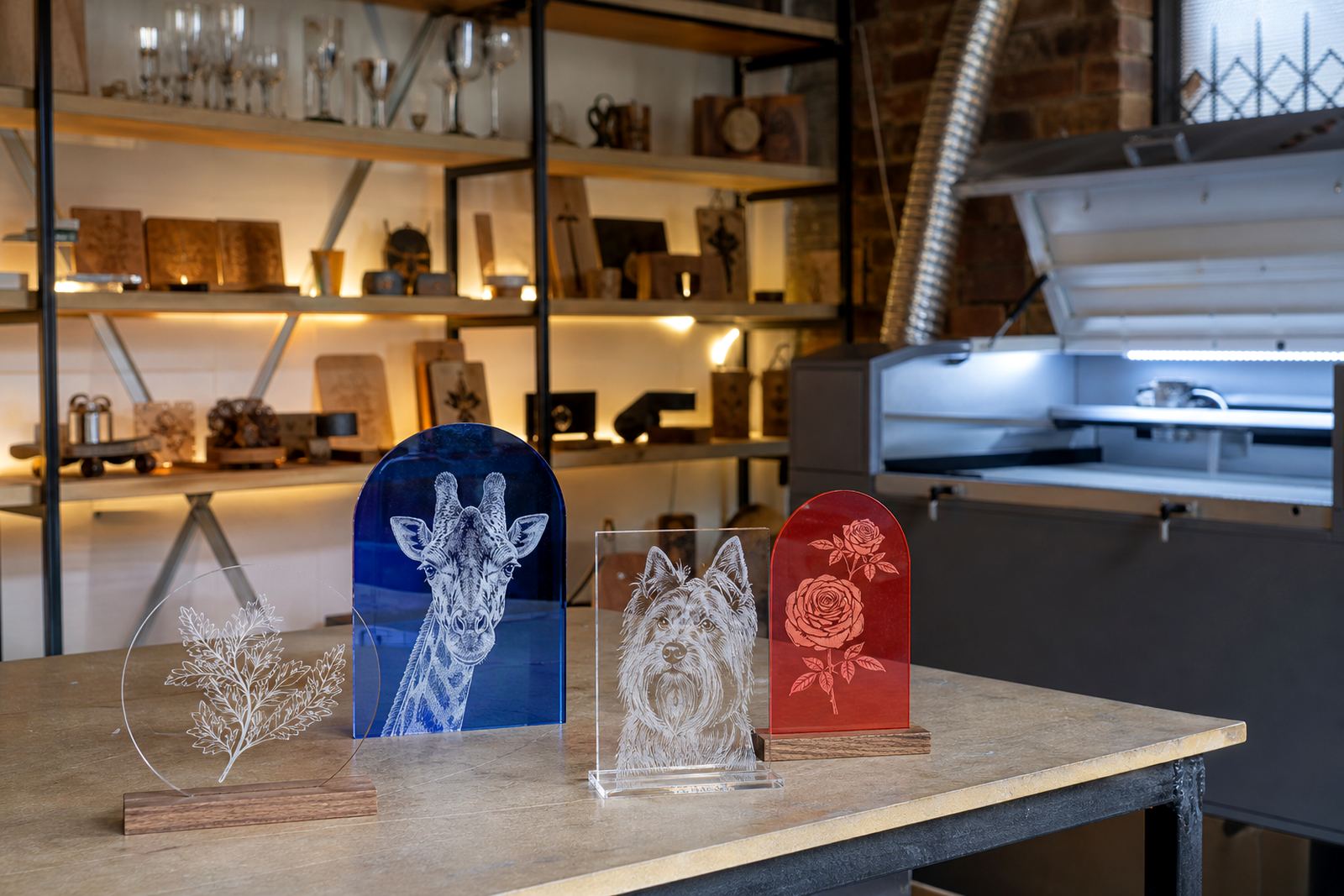
Acrylic is a common choice for modern signage because it gives crisp edges, clean contrast, and a tidy finish. It can be engraved for a frosted effect, layer well with backing colours, and suit reception branding, door plates, directional signs, and promotional items. It is especially useful where a smart, low-maintenance look is wanted.
For indoor applications, acrylic performs very well. For outdoor signs, thickness and fixing method are important, because thinner sheet can flex in wind or crack if mounted badly. A sign in a public area also needs secure fittings and a layout that stays readable from a distance.
- Best for clean corporate signs and name plates
- Works well in clear, white, black, and coloured formats
- Can be used for layered signs and standoffs
- Needs careful handling to avoid scratches during fitting
When a client in Midrand wants a clean business front sign with room for a logo and business hours, acrylic is often near the top of the list because it balances appearance and practicality.
Glass suits premium interiors and protected areas
Glass engraving gives a refined result for boardrooms, reception spaces, awards, and decorative pieces. It has a formal feel and pairs well with minimalist signage where the aim is subtle rather than bold. On glass, engraving creates a frosted or etched finish that catches light nicely without looking busy.
Glass is best used indoors or in protected areas. It can be heavy, breakable, and expensive to replace if it is struck or poorly mounted. In a busy shop or public venue, that means the fixing method and the placement need to be planned before production starts.
For offices, clinics, and guest areas, glass can be a good choice when the sign is not exposed to regular knocks. It is also suitable for gifts such as commemorative pieces, where the goal is a polished and lasting presentation.
Leather works for gifts, labels, and presentation pieces
Leather engraving is popular for gifts, branded accessories, and smaller items where texture is part of the appeal. It can be used on wallets, tag holders, luggage labels, journal covers, and similar pieces. The engraved result is usually darker and more tactile than print, which gives it a crafted feel.
Leather is not usually the first choice for signs, but it can work for decorative nameplates, event pieces, or specialty branding. The main point is to avoid overcomplicating the design. Small lettering and fine detail must be set out carefully so the engraved mark stays readable on the grain.
- Good for personalised gifts and branded keepsakes
- Works best with simple logos and clear text
- Needs careful font selection for small surfaces
- Can vary depending on the leather finish and thickness
For businesses that want a warmer, more tactile item for client gifting, leather adds a different feel from standard sign materials.
Metal is the practical choice for hard use
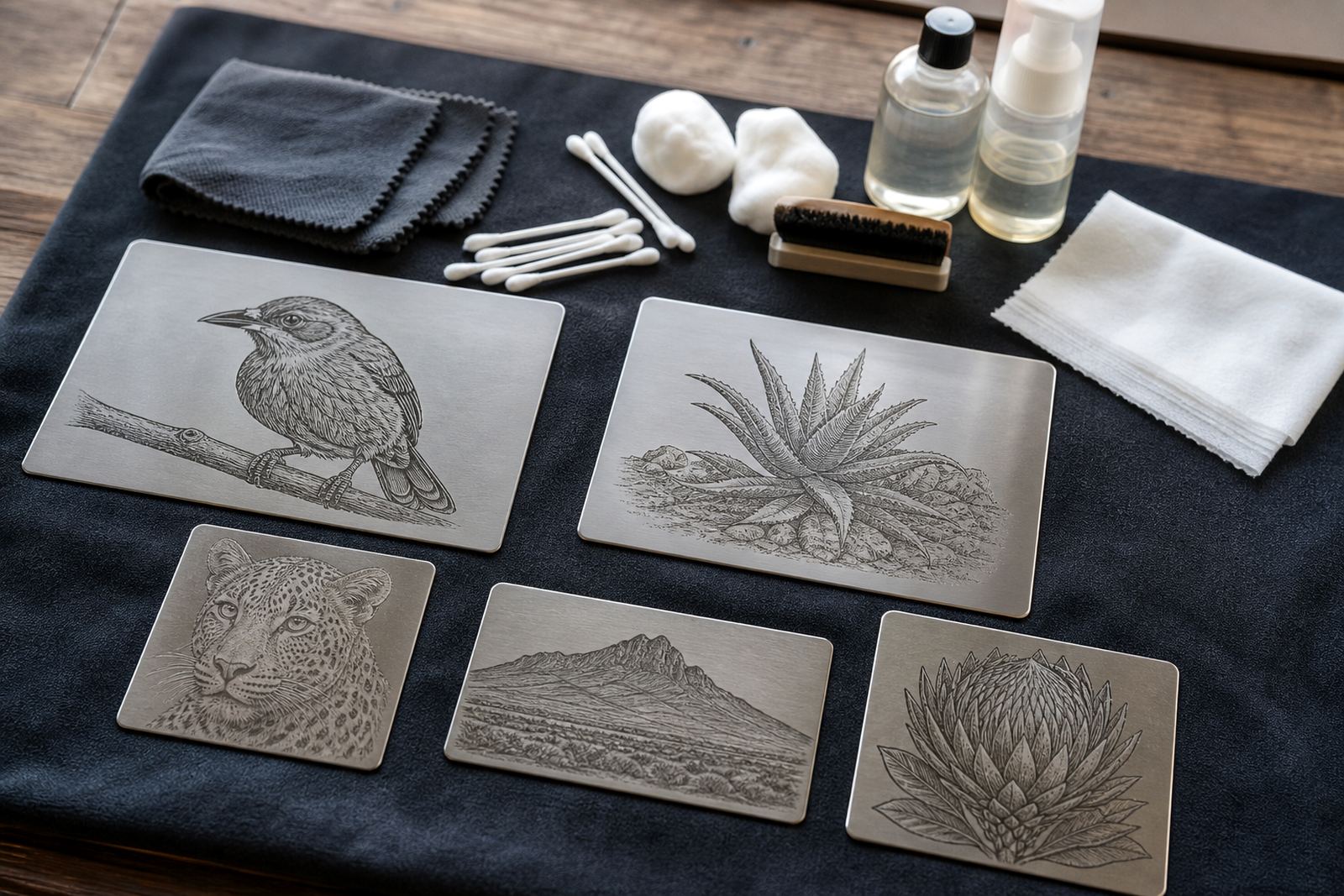
Metal is often the best option for product marking, equipment labels, serial plates, and exterior signs that must stay readable for years. Depending on the type of metal and the finish, engraving can create sharp contrast or a clean recessed mark that resists wear. It is a strong choice for factory settings, workshops, and commercial sites where signs are handled often.
In coastal conditions, metal selection matters even more. Durban’s humidity and salty air can be hard on some finishes, so the right material and mounting hardware should be chosen with corrosion in mind. For inland Gauteng, the issue is often heat, dust, and repeated cleaning rather than salt exposure.
Metal is also useful when a client needs a sign that looks serious and functions well in daily use. It can handle smaller text better than many softer materials, especially when the layout is prepared with enough breathing room.
A practical guide to picking the best sign material
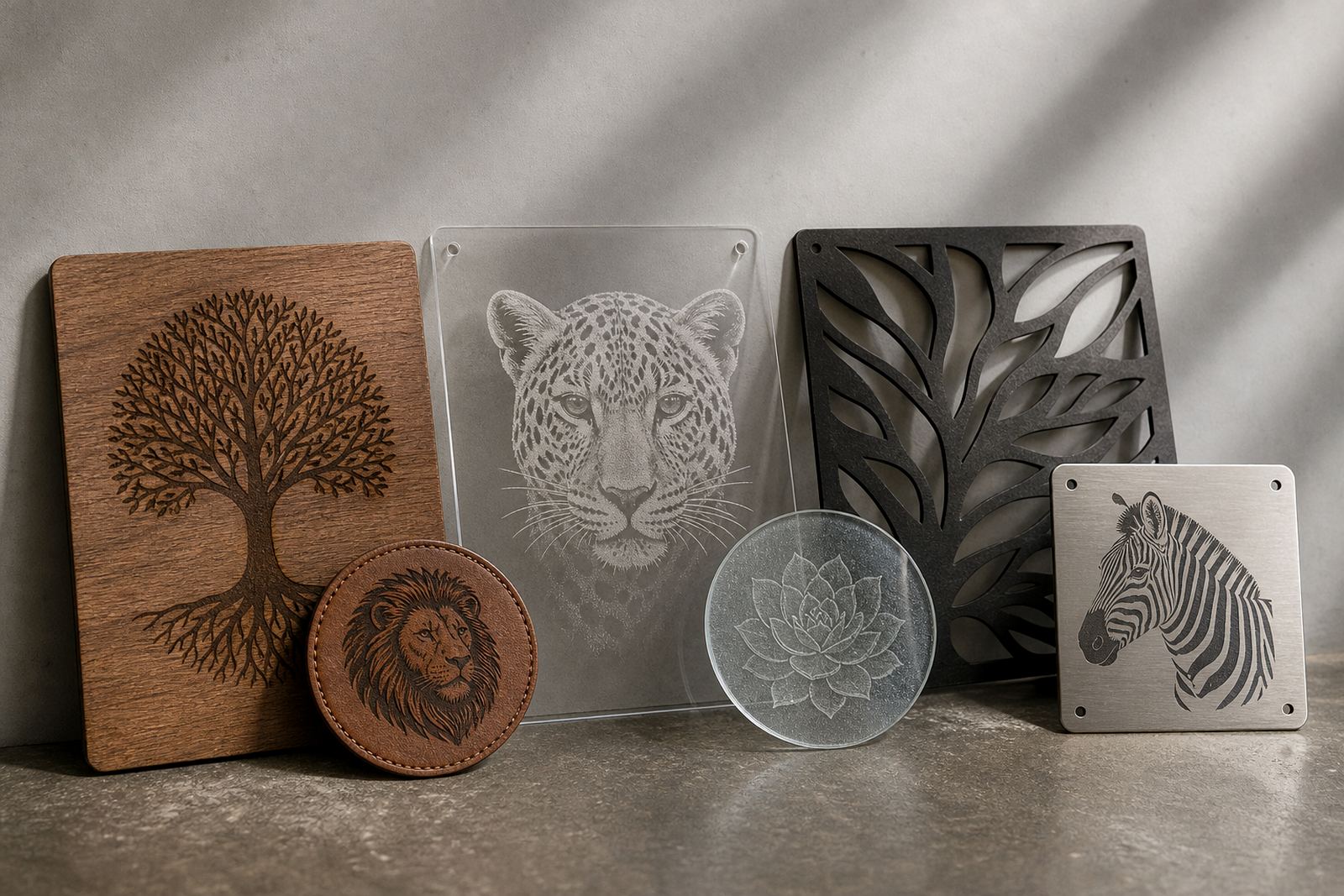
The best material is usually the one that matches the use, the setting, and the lifespan you need. If the sign is decorative and sheltered, wood or glass may be the right answer. If it must be clean and modern, acrylic often makes sense. If it will be handled hard or mounted outdoors, metal is normally the safer option.
A practical selection process helps avoid costly rework later. At LightBurn Engraving in Wapadrand, Pretoria East, we often guide clients through artwork setup, logo redraws, size planning, and proof approval before anything is marked. That is especially useful when a sign needs to be repeated for branches in Pretoria, Centurion, Johannesburg, Midrand, or Durban with the same layout and finish.
- Choose based on indoor or outdoor placement
- Match the material to sun, rain, dust, and cleaning
- Keep lettering simple if the surface is small or textured
- Plan fixing, packaging, and transport before production starts
A good example is a Pretoria East business wanting one sign for reception, one for the front gate, and a set of engraved product labels. The reception piece might suit acrylic, the gate sign may need metal, and the labels could be done on a different material altogether. The right answer is not always one material for everything, but the right material for each job.