Why acrylic suits crisp engraved signage
Acrylic is a practical choice when the sign needs to look neat from a distance and up close. It takes engraved detail well, keeps clean edges, and can be finished in clear, frosted, black, white or coloured sheet depending on the look you want. For reception signs, directional boards and display pieces, it gives a professional result without adding much weight.
In a place like Pretoria East where offices, clinics and home-based businesses often want something polished but not bulky, acrylic is often the material that balances appearance and cost control. It also suits indoor areas where dust, frequent cleaning and aircon dryness can affect other finishes over time.
How acrylic behaves with laser engraving
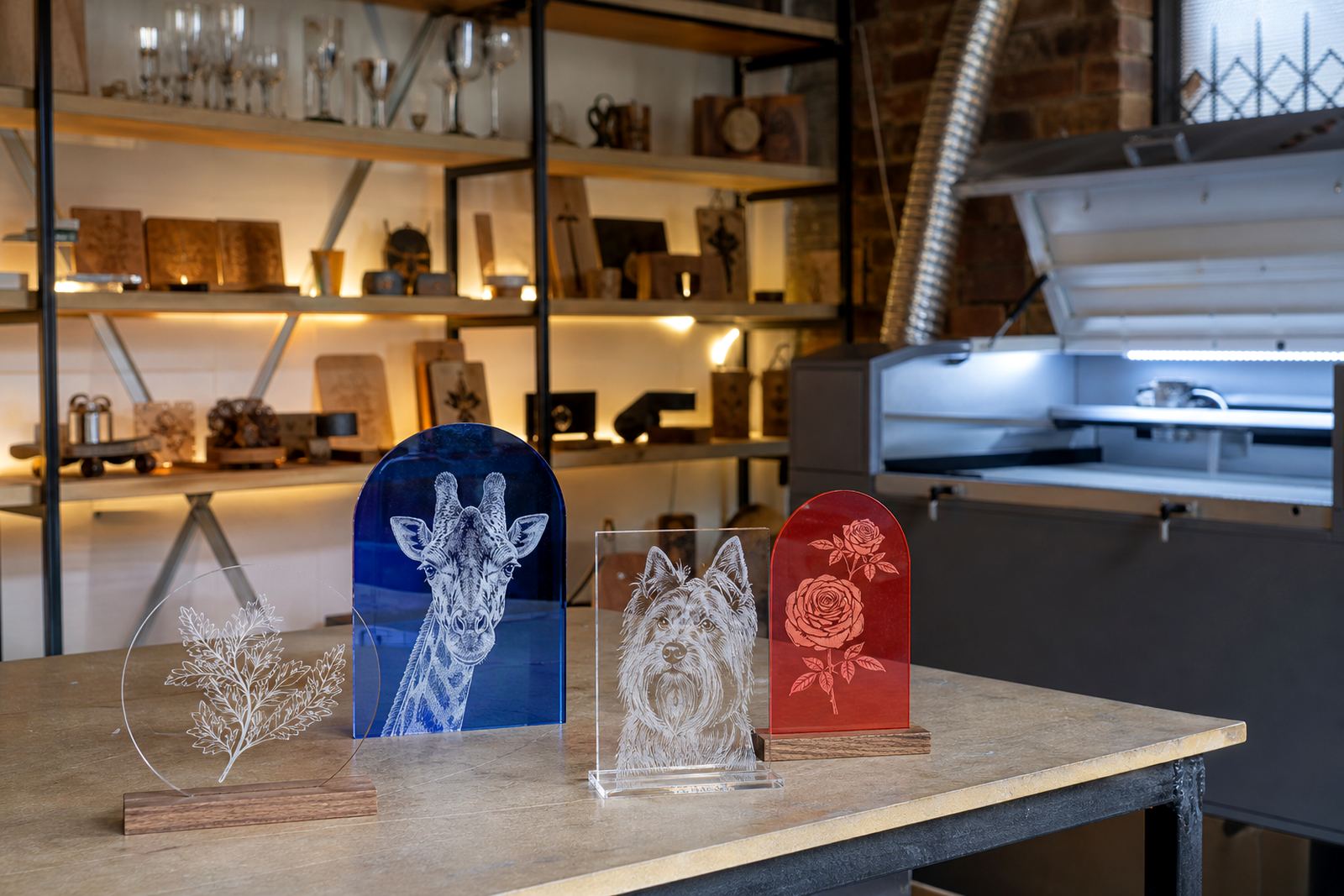
Laser engraving on acrylic creates a frosted or etched effect that stays readable and consistent. On clear acrylic, the engraved areas catch the light and stand out well. On coloured sheet, the contrast depends on the material layer and the finish, so material choice matters just as much as the artwork.
Good results start with proper artwork setup, font selection and size planning. Thin fonts can disappear on small signs, while oversized lettering can crowd the panel. A clean layout helps the engraving remain legible in waiting rooms, retail counters and office entrances where people read the sign quickly.
- Clear acrylic works well for a clean, modern etched look
- Frosted or opaque sheet can improve contrast in bright light
- Thicker panels suit wall mounting and stand-off fittings better
- Smaller text needs careful spacing so it does not fill in
Where acrylic works best in real use
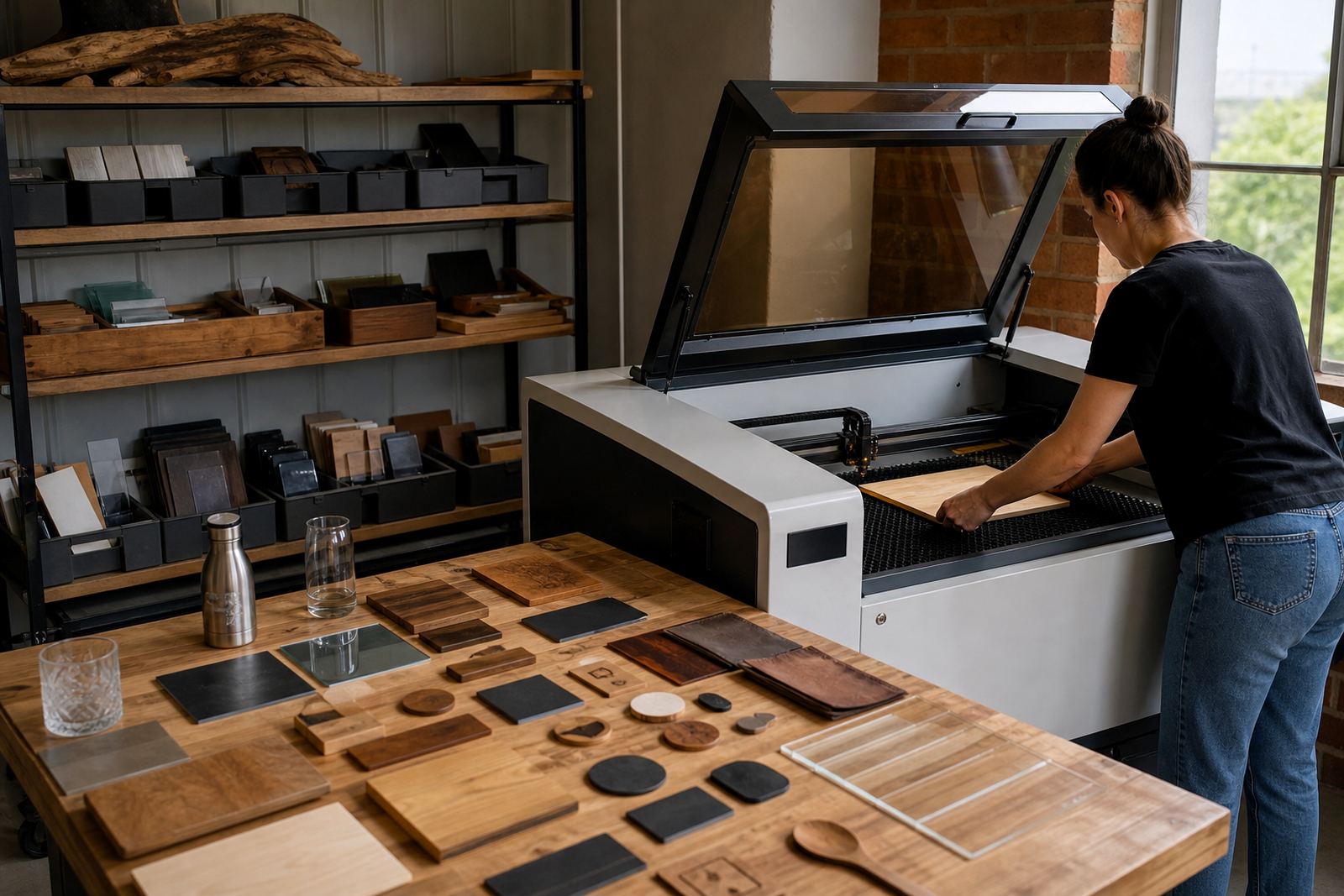
Acrylic is commonly used for reception signage, room labels, name boards, wayfinding arrows and product display pieces. It also works for awards, donor plaques and promotional items where the finish needs to be neat and repeatable. For product marking, acrylic can be used as a display component or as a clean identification panel when the application calls for it.
In practice, acrylic is often chosen because it can be cut to shape, engraved precisely and mounted in different ways. That makes it useful for businesses that want a sign above a doorway, a board fixed to a wall, or a freestanding display that moves between events and shows.
- Office and clinic signage
- Shopfront and counter displays
- Directional signs for buildings and complexes
- Custom gifts and recognition pieces
Things to check before you order acrylic signage
Before production, it helps to confirm the final size, fixing method and viewing distance. A sign read from 2 metres can use finer detail than one read from across a parking area. You should also consider indoor or outdoor use, because outdoor exposure means more attention to UV, heat and cleaning. In Gauteng, strong sun and dust can make finish selection important, and coastal humidity matters too for clients sending work to Durban.
If the sign will sit near windows or under strong light, glare can affect readability. In those cases, matte or frosted finishes may be a better choice than clear sheet. If the sign will be couriered, packing also matters because acrylic can scratch if it is wrapped badly or moved around during transport.
- Confirm the exact measurements before artwork is approved
- Choose the correct thickness for the mounting method
- Decide whether the sign is for indoors or outside
- Ask about protective packaging for courier delivery
Local example from Pretoria East work
A small business in Pretoria East may want a clean entrance sign for a consulting room, plus matching door labels and a few engraved display pieces for the front counter. In that kind of job, acrylic is often chosen because it keeps the space tidy and professional without looking heavy. It is also practical for reorders, which matters when a business later adds more rooms or updates the wording.
LightBurn Engraving works from Wapadrand in Pretoria East and supplies acrylic engraving for clients in Pretoria, Johannesburg, Centurion, Midrand and Durban, with courier delivery across South Africa. The team includes Thabo Abrahams, Snethemba Khoza, Johan Hadebe, Ayesha Zwane, Sipho Hendricks and Lindie Lombard, and the work process usually starts with artwork setup, layout planning and proof approval before the sheet is engraved and prepared for dispatch. That kind of step-by-step handling helps keep the final piece aligned with the space it will live in.
Getting better results from acrylic signage
Acrylic gives the best result when the artwork is prepared with the material in mind. Logos may need redraws, text may need spacing changes, and file conversion may be needed if the original artwork is not clean enough for laser work. When the sign will be part of a matching set, reorder matching is useful so future panels stay consistent in size and finish.
For the best result, think about how the sign will be read. A narrow corridor, a bright shop window and a shaded reception wall all call for slightly different choices. With the right size planning and mounting options, acrylic remains one of the easiest materials to use for crisp engraved signage and display pieces, and it stays dependable long after installation.
- Use clear artwork with strong linework and readable fonts
- Match the finish to the lighting in the room or entrance
- Plan the mounting before engraving starts
- Keep a copy of the approved layout for future reorders