Why Engraved Leather Needs Gentle Care
Leather is a natural material, so it reacts to heat, moisture, dust and rough handling. Once a logo, name or message has been engraved, the surface around it can also show wear faster if the item is left in a hot car, handled with oily hands, or wiped too hard.
For clients in Pretoria East and Johannesburg, the biggest issues are often dust, dry air indoors and sudden humidity after summer rain. On the coast, like Durban, moisture can be a bigger concern. A simple care routine helps keep engraved leather neat without softening the mark or drying out the item.
Start With A Dry Clean Before Any Moist Wipe
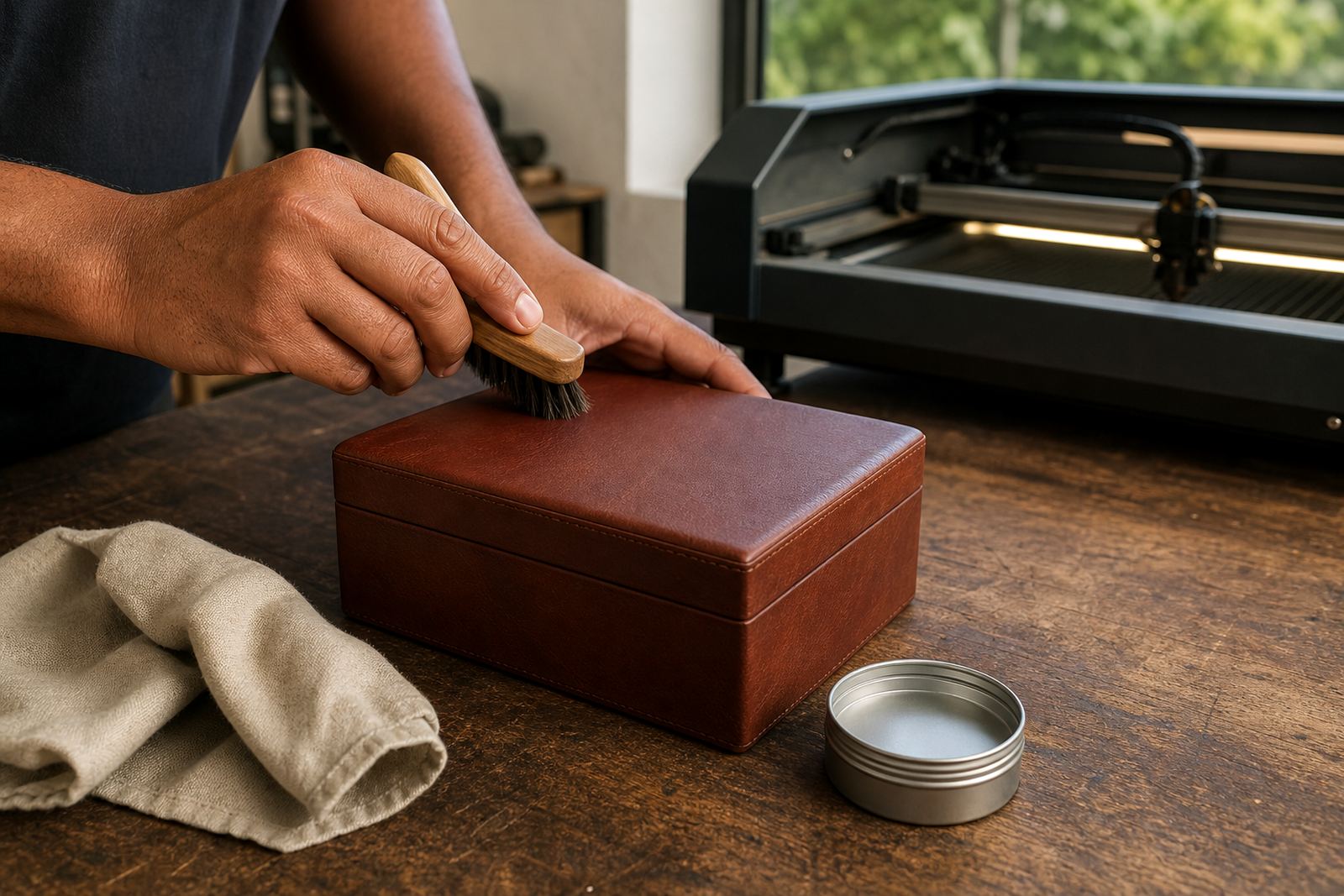
For everyday dust, use a soft dry cloth or a clean soft brush. If there is grit on the surface, lift it away first. Rubbing grit straight into the leather can scratch both the grain and the engraved area.
- Wipe lightly in one direction rather than scrubbing in circles.
- Use a lint-free cloth for small patches and tags.
- Check stitched edges and folds where dust tends to sit.
- Do not soak leather to remove a mark, even if it looks stubborn.
If a mark still remains, use a cloth that is only slightly damp with clean water. Too much water can leave rings, stiff patches or uneven colour, especially on darker leather.
Conditioning Helps, But Less Is Usually Better
Leather can dry out over time, particularly in air-conditioned offices or homes where the air is dry for months. A light leather conditioner, applied sparingly, can help keep the material supple. The key word is sparingly. Too much product can build up in engraved recesses and leave a dull film.
- Test any conditioner on a small hidden area first.
- Apply a thin layer with a soft cloth.
- Let the item dry fully before handling it again.
- Keep conditioners away from stitching if the thread is fine or decorative.
For engraved wallets, key holders, luggage tags and patches, a little care goes a long way. Over-conditioning can make the surface too soft and may blur fine detail around the engraving.
Protect The Engraving From Heat, Sun And Chemicals
Laser engraving on leather is meant to be durable, but the finish around it can still fade or warp if the item is mistreated. Direct sun on a car dashboard, heaters, strong cleaning chemicals and alcohol-based sprays can all affect the surface. This is especially relevant for items used daily in a vehicle or taken to site work.
In Gauteng, many people keep branded leather items in cars between meetings or deliveries. That is fine for short periods, but not ideal for long stretches in summer heat. If you need to keep a leather accessory in the car, store it out of direct sun and inside a pouch or bag where possible.
How To Handle Leather Patches On Clothing And Bags
Leather patches on jackets, aprons, bags and hats need slightly different care because they flex with use. Avoid pulling on the patch when opening pockets or adjusting straps. That repeated strain can weaken the edges over time.
- Brush off dust before it gets worked into the seams.
- Do not machine wash an item with a leather patch unless the care label says it is safe.
- Air dry naturally if the item gets wet, away from direct heat.
- Reshape the item while it dries so the leather does not crease awkwardly.
If the patch is used for branding, a clean dry finish matters. Mud, soap residue and repeated scrubbing can make the mark less clear and leave the leather patch looking uneven.
Storage Tips For Gifts, Samples And Corporate Runs
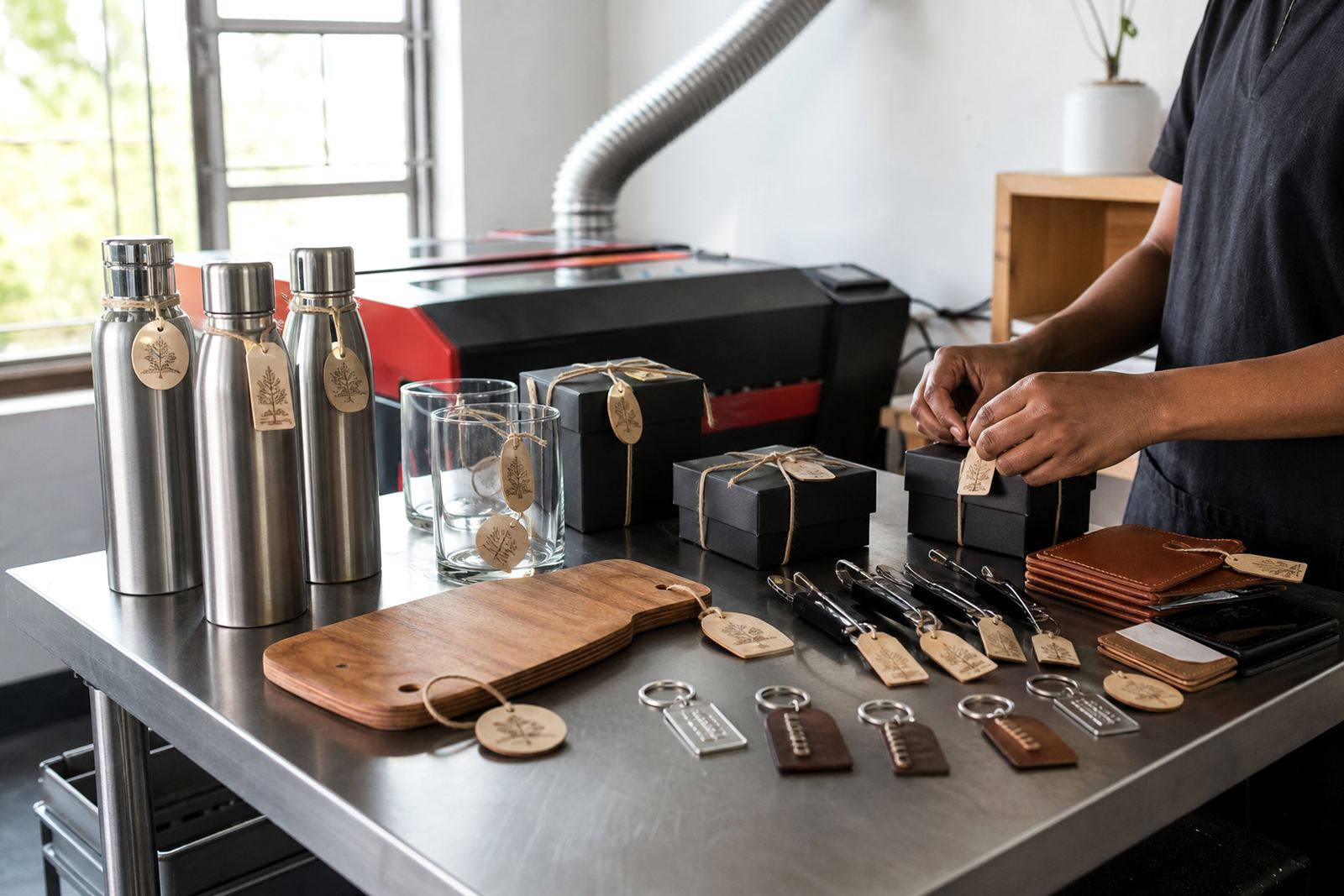
If you are storing engraved leather gifts for later giving, keep them in a cool dry place with a little air movement. Avoid sealed plastic bags for long periods because trapped moisture can lead to odour or marking on the leather. Cotton bags, tissue wrap and clean cartons are usually safer choices.
For batch orders and reorders, it helps to keep the items flat and separated so the engraved faces do not rub against each other. Lindie in dispatch would tell you the same thing for packaging prep: a neat pack out prevents scuffs before the item even reaches the customer.
- Keep leather away from damp storerooms and wet floors.
- Separate stacked items with tissue or card.
- Label sets clearly if you are holding stock for repeat orders.
- Store samples and client approval pieces in a dust-free box.
A Pretoria East Example Of Practical Leather Care
A small business in Pretoria East might use engraved leather key tags for staff, or leather patches on branded bags for a local market. After a week of deliveries, those items can pick up dust from the road and a bit of hand oil from constant use. A quick dry wipe at the end of the day, followed by occasional conditioning, is usually enough to keep them looking tidy.
That same approach works well for gifts too. Whether the item is going to a client in Centurion, a team member in Midrand or a courier delivery to Durban, simple care helps preserve the appearance of the engraving and the leather itself. If the piece was designed with clean artwork, careful storage and light maintenance will keep it presentable for much longer.
Here in Wapadrand, Pretoria East, we plan engraving around both the material and the way the item will be used. For leather, that means planning the layout, choosing the right size and leaving enough space so the mark remains readable as the item wears naturally over time.