Start With the Glass Type And the Use Case
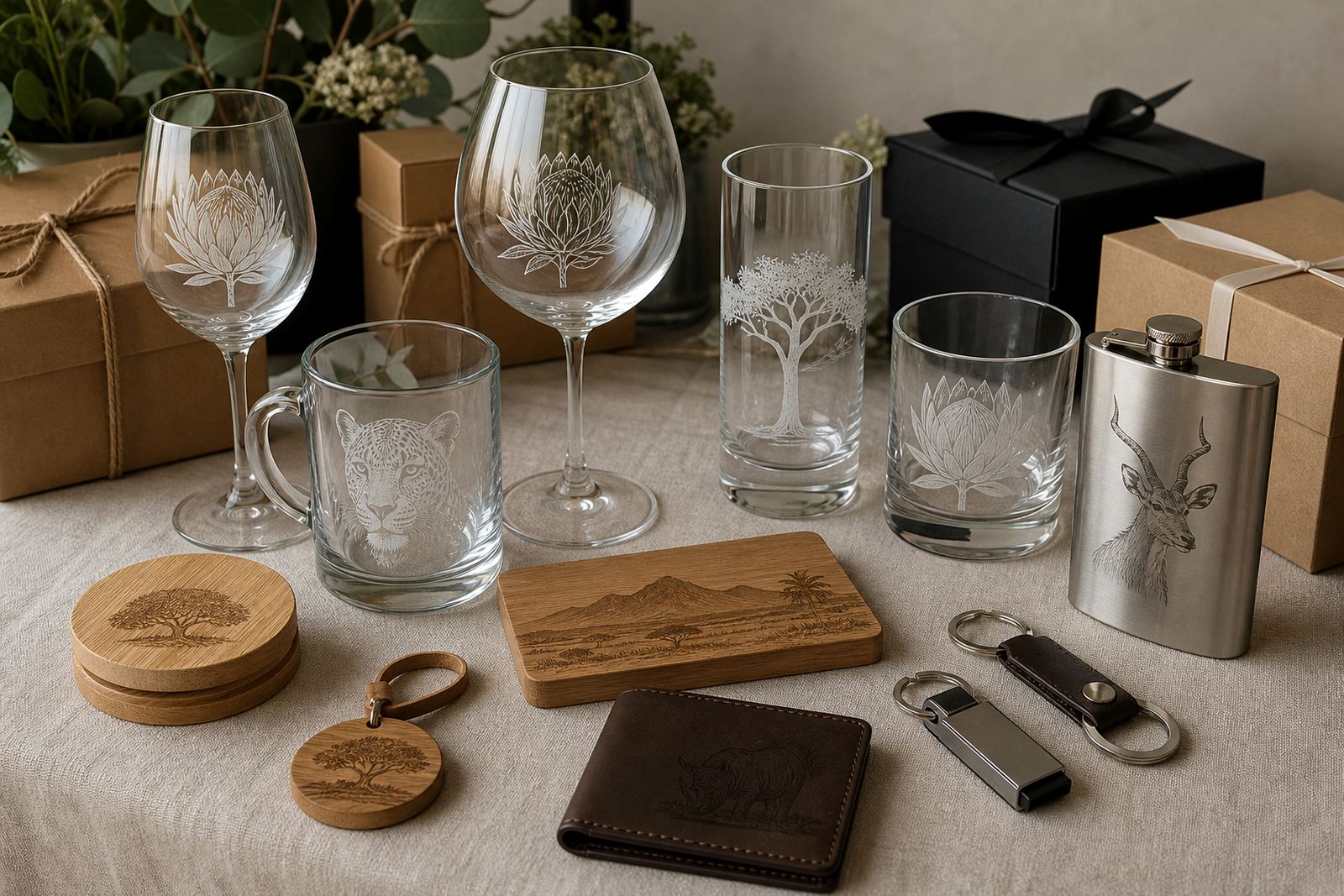
Not all glasses take engraving the same way, so the first step is to match the vessel to the job. A sturdy tumbler for everyday use needs a different approach to a fine wine glass, a champagne flute or a beer glass with a thicker base. The shape, wall thickness and surface finish all affect how crisp the engraving will look.
For gifts, think about how the glass will be handled and washed. For events, think about stackability, uniformity and how many pieces must match exactly. In Pretoria East and across Gauteng many orders are for weddings, corporate functions, birthdays and year-end thank you packs, so a single style often needs to work across a full set.
- Choose the glass by purpose first: gifting, serving, display or souvenir use.
- Check whether the item is clear, frosted, tinted or textured.
- Ask if the shape allows enough flat area for names, dates or logos.
- Confirm whether the glass will be handwashed or used in a bar or restaurant setting.
Artwork That Engraves Cleanly
Laser engraving works best when the artwork is simple, clean and prepared for the size of the glass. Fine lines can look excellent on flat panels but may be too small for curved surfaces. A logo with too much detail can lose clarity once it is reduced to fit a stemmed glass or a narrow tumbler.
At LightBurn Engraving, our team handles artwork setup, logo redraw, file conversion and layout planning so the mark suits the item and the purpose. Thabo Abrahams oversees the business, while Sipho Hendricks manages design and artwork coordination. That matters when a client brings a picture, a low resolution file or a sketch that needs to be turned into something readable on glass.
- Use vector artwork where possible for logos and monograms.
- Keep text short for small glasses and narrow panels.
- Check spelling, dates and initials before proof approval.
- Decide if the mark should be subtle, bold or placed as a full wrap.
Placement, Size and Readability
Placement changes how a glass feels in the hand and how the engraving is seen on the table. A centred mark works well for formal gifts, while a lower position can suit casual drinkware and event sets. On stemmed glasses the available space is often smaller than people expect, so the layout must respect the curve of the bowl and the height of the stem.
Size planning should start with the viewing distance. A logo on a corporate gift box can be smaller than a logo on a bar glass meant to be seen from across the room. For weddings and functions, a name and date may be enough. For product marking, the engraving should stay clear after handling, washing and packing.
- Centre the design when the glass is a formal gift.
- Move the mark slightly lower for practical barware.
- Leave enough empty space around the engraving so it does not feel crowded.
- Test visibility from arm's length, not only from close up.
Material Notes for Different Glass Finishes
Clear glass usually gives a crisp contrast where the laser removes a thin surface layer. Frosted and coated glass can produce a softer appearance, while thicker glass tends to show more depth. Decorative textures can complicate the job because the engraved area may be interrupted by mould lines, patterns or curves.
For gift orders, the finish should match the tone of the event. A simple matte mark feels understated and practical. For premium presentation, a carefully placed engraving on a cleaner glass surface looks neat and professional. If the order includes mixed styles, such as wine glasses, tumblers and decanters, each item may need its own layout adjustment.
- Clear glass is usually best for sharp logo detail.
- Textured or patterned glass needs extra checking for placement.
- Thicker glass can carry deeper looking marks but may need more careful setup.
- Mixed sets should be checked one by one for consistency.
Checklist Before You Approve a Gift Order
Before production starts, it helps to run through a simple approval list. This avoids mistakes with spelling, layout and quantity, especially when the order is for an event with many guests or a batch of corporate gifts. Snethemba Khoza and Ayesha Zwane handle the client side of the process so approvals are clear and practical.
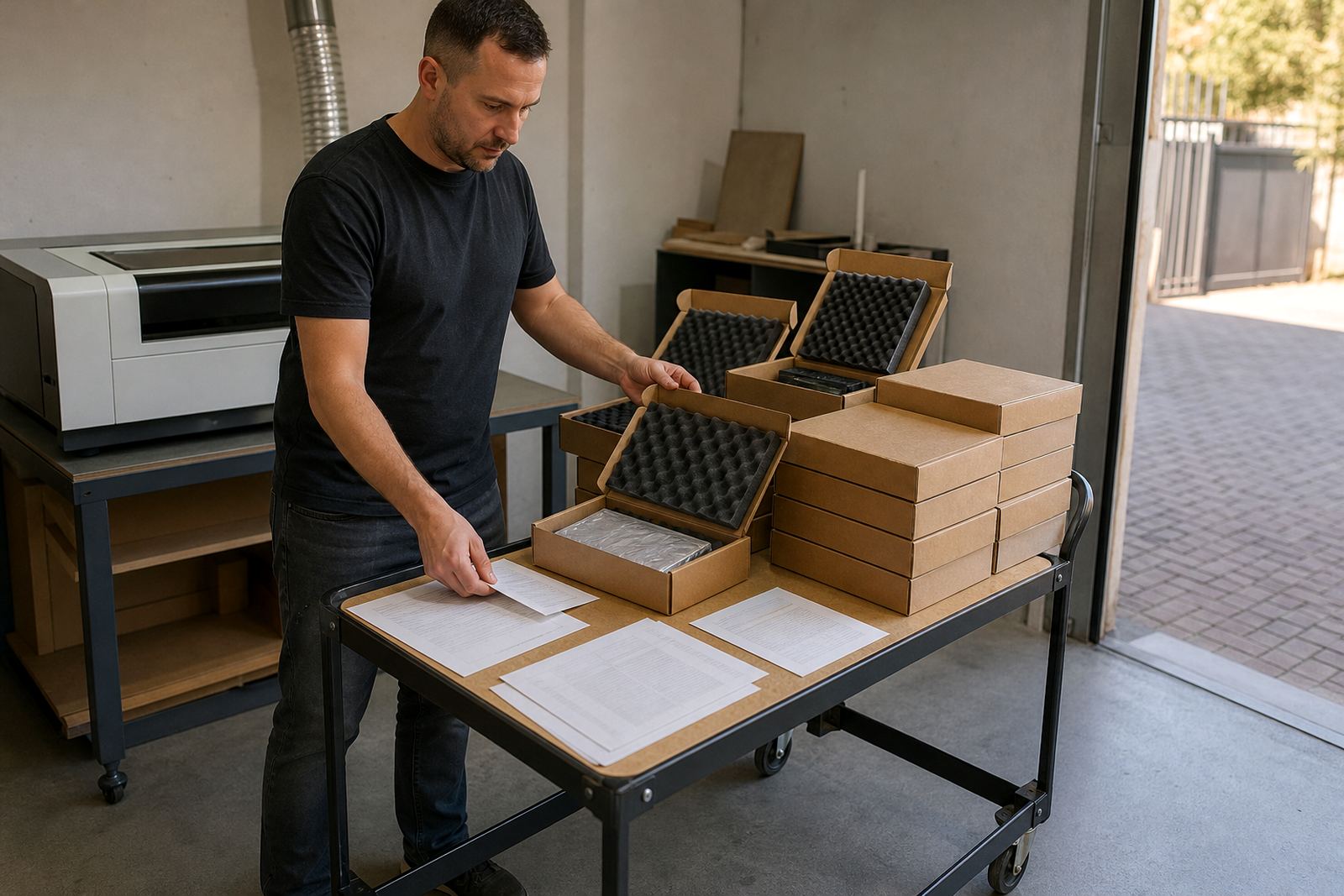
For Pretoria East clients, and those ordering from Johannesburg, Centurion, Midrand or Durban, courier delivery across South Africa can be arranged once the order is finalised. Good packaging matters because glass must travel safely, especially in warmer weather and during busy courier periods.
- Confirm the glass type and quantity.
- Check all names, initials, dates and spellings.
- Approve the size and position of the engraving.
- Ask about packaging prep for breakage protection.
- Confirm whether batch personalisation or matching reorders are needed later.
Aftercare, Packing and Repeat Orders
Engraved glassware needs sensible aftercare so the mark keeps its neat look. Gentle washing is usually the safest approach, especially for gifts that will be kept for a long time. For events or hospitality use, the same layout may need to be repeated later, so it helps to keep a record of the approved design and size.
Lindie Lombard oversees finishing and dispatch, while Johan Hadebe handles laser production. That gives each order a proper check before it leaves our Wapadrand base in Pretoria East. If you need more sets later, or want the same design across another item such as acrylic, wood, leather or metal product marking, matching the original setup is much easier when the first order was approved carefully.
- Use gentle washing where possible.
- Keep the packaging if the glasses may need to be stored or moved again.
- Save the approved wording and layout for future reorders.
- Check that event, gift and product marking orders all use the same version of the artwork.