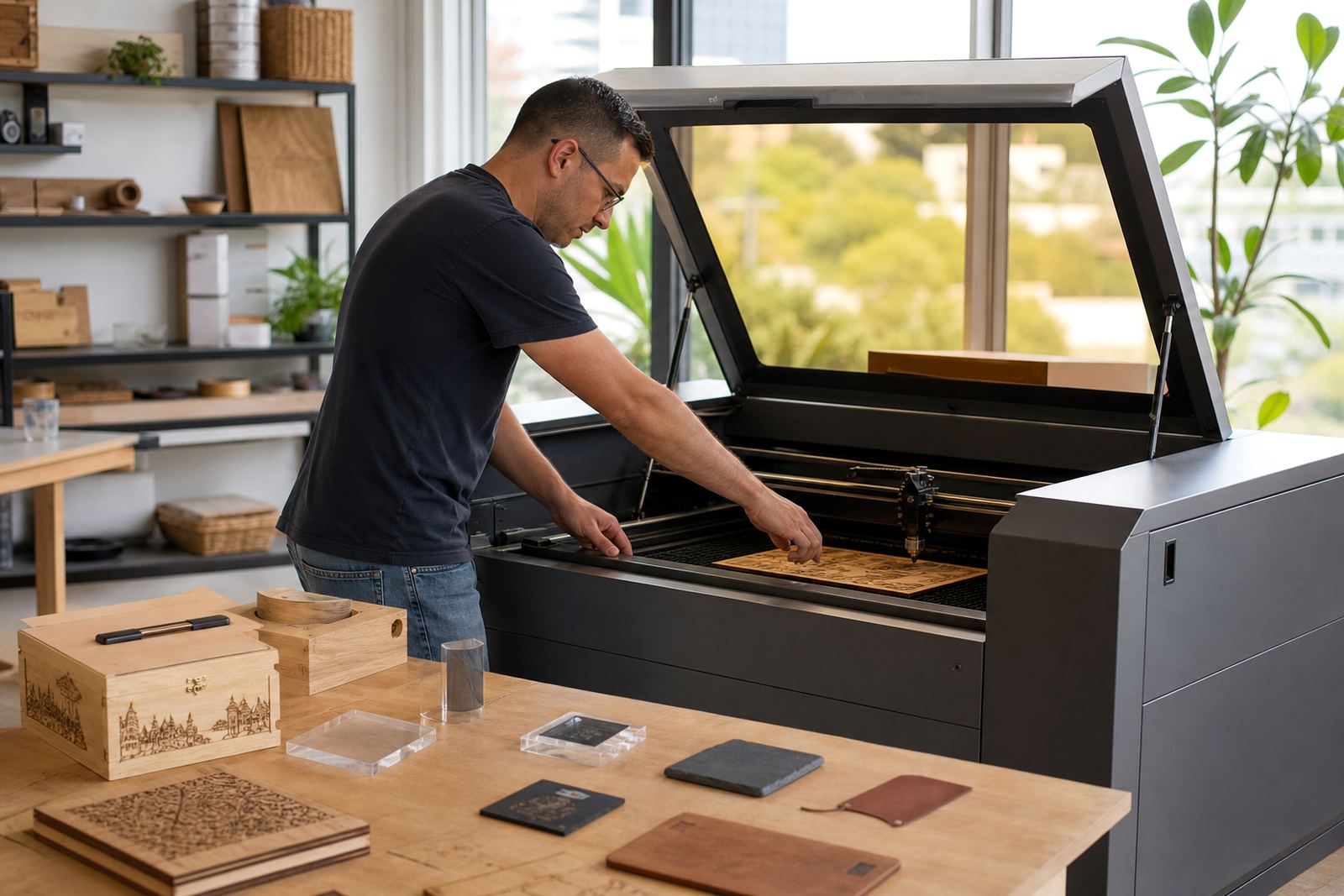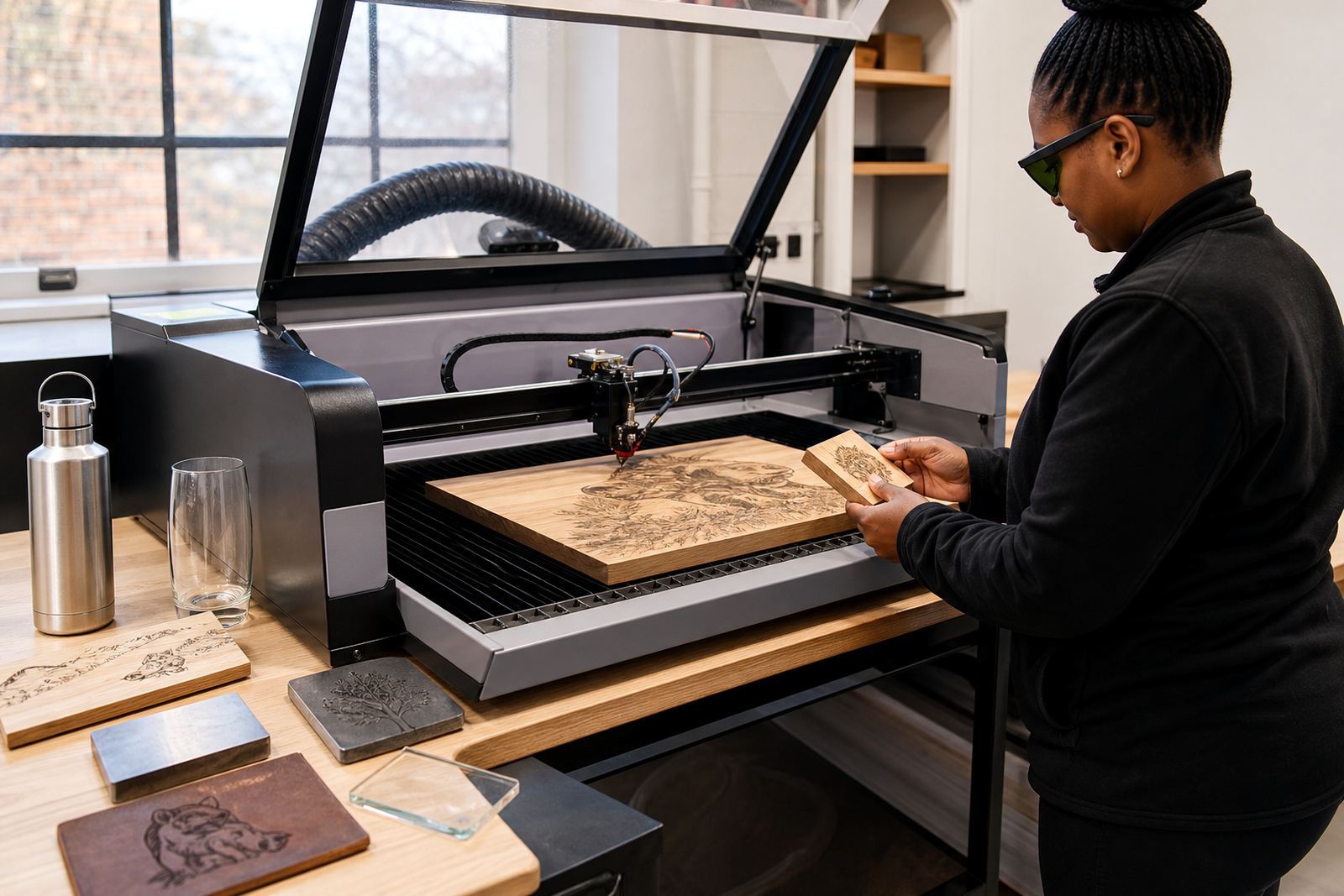

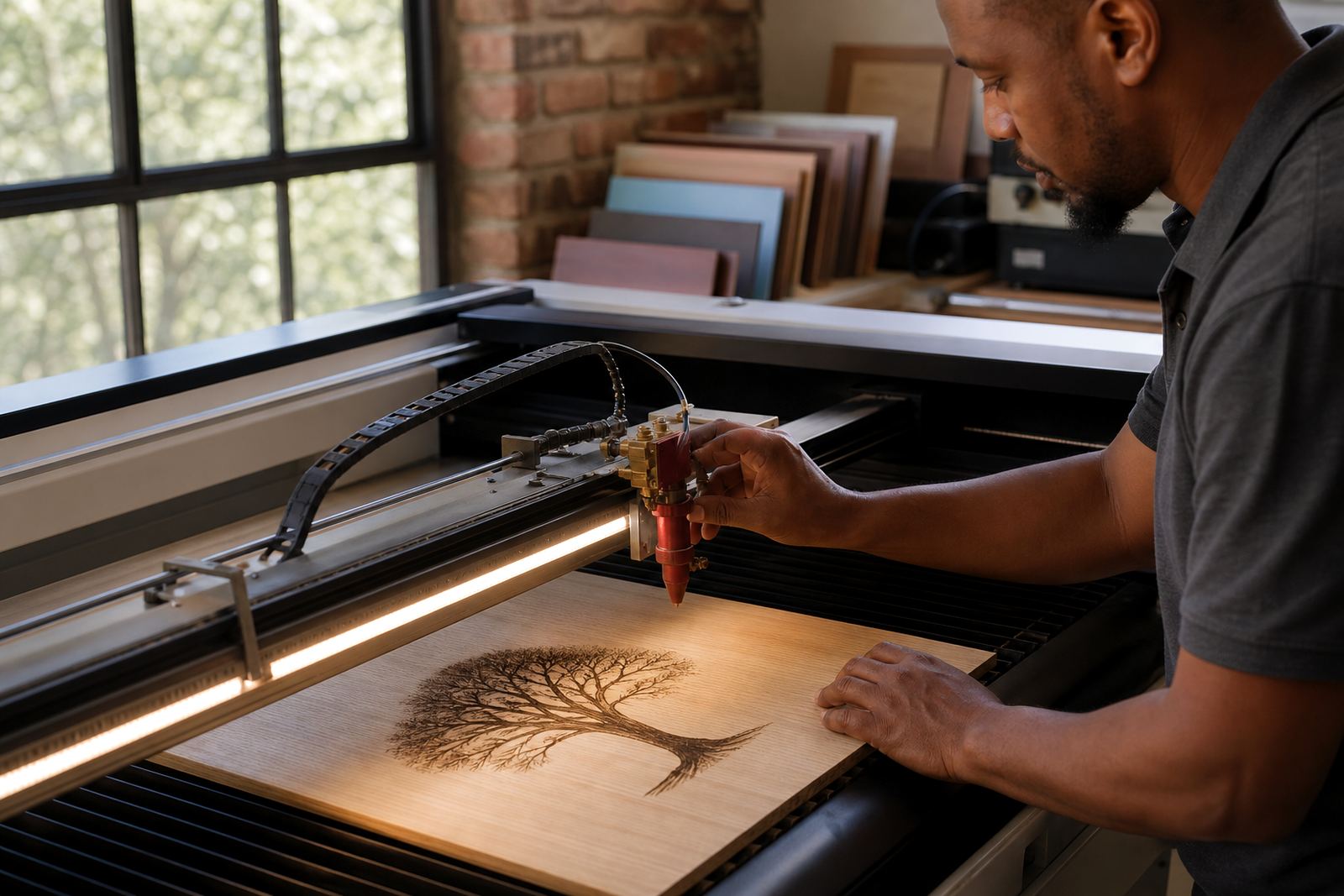
Start with the end use, not just the look
Before you choose a material, think about where the item will be used, how often it will be handled and what finish you want to see. A reception sign in Pretoria East needs different treatment to a set of leather gifts for a company function in Johannesburg or product tags that must stay readable after regular use.
For outdoor use, heat, sun and moisture matter. In Gauteng, strong sun can fade some finishes over time and coastal humidity on couriered items bound for Durban can affect certain materials if they are not sealed or packed properly.
- Choose based on use, handling and location.
- Check whether the item will live indoors or outdoors.
- Decide if the finish should be subtle, glossy or high contrast.
Wood gives a warm, natural finish
Wood is a good choice when you want a natural feel with visible grain. It suits signs, plaques, gift boxes and presentation pieces, especially where the engraving should feel hand-finished rather than polished or modern.
Different woods engrave differently. Some give a dark, crisp mark while others produce a softer tone with more variation in the grain. A smooth sealed surface usually gives cleaner results, but unsealed wood can still work well if the design is planned carefully.
- Best for plaques, decorative signs and personalised gifts.
- Works well with text, logos and line art.
- May need sealing if it will be handled often or exposed to moisture.
Acrylic suits clean signage and clear branding
Acrylic is often chosen for neat, modern signs and labels. It can be clear, coloured or frosted, and it gives a sharp finish that works well for reception signs, directional signs and product display pieces.
Because acrylic is dimensionally stable and takes fine detail well, it is a practical option for repeated orders and matching sets. For mounting, spacing and edge finish all need to be planned early so the final piece sits correctly on the wall or product. Small scratches can show, so handling during packing matters.
- Good for indoor signs, labels and display pieces.
- Works well for layered looks and backer panels.
- Needs careful handling to avoid surface marks.
Glass works best when the message must feel refined
Glass is often used for gifts, awards and commemorative pieces where a more refined look is needed. The engraving can be subtle or more visible depending on the surface and the style of mark required.
Glass needs careful artwork setup because fine details, thin letters and tiny logos can lose clarity if the piece is too busy. If you are marking a bottle, trophy or framed gift, the shape of the item matters almost as much as the design. Thick items are often easier to handle than thin curved surfaces.
- Good for awards, bottles and special gifts.
- Best for clean layouts with readable text.
- Needs careful proof approval before production.
Leather gives a strong tactile result for gifts and accessories
Leather is suitable for key fobs, gift items, notebook covers, tags and similar products where touch and texture matter. The engraving usually gives a darker mark with a warm contrast, though the final look depends on the finish of the leather and the backing used.
Not all leather behaves the same way. Softer or coated materials may react differently to engraved areas, so material guidance is important before a batch is done. For repeat orders, we recommend keeping the same stock and layout so the result stays consistent.
- Works well for small gifts and personalised accessories.
- Needs batch testing for repeat orders.
- Useful where a natural, lived-in look is preferred.
Metal is ideal for product marking that must last
Metal is usually the first choice when durability is the main concern. It is suitable for serial numbers, asset tags, labels, nameplates and branded parts that need to stay legible in daily use. The exact result depends on the metal type and surface finish.
Some metals mark clearly with high contrast while others give a softer or more technical look. For machinery, tools and industrial items, size planning and layout spacing are important so the mark stays readable after fitting and handling. If the item will be used outdoors or near moisture, ask for material advice before approving the file.
- Best for tags, labels, nameplates and asset marking.
- Useful where abrasion resistance matters.
- Often chosen for repeat production and reorder matching.
A practical guide to picking the best sign material
Use this order when deciding: first think about the application, then the environment, then the visual style. After that, confirm the size, the mounting method and the level of detail in the artwork. If you are not sure, send the item type and intended use through the enquiry form and ask for material guidance before final approval.
For clients in Pretoria, Centurion, Midrand, Johannesburg and Durban, courier delivery is available across South Africa. If you are ordering for a shopfront, a corporate function or a batch of marked items, it helps to plan artwork, size and packaging together so there are no surprises later.
- Tell us the item, size, use and finish you want.
- Confirm whether the piece is for indoor or outdoor use.
- Ask for proof approval before production begins.