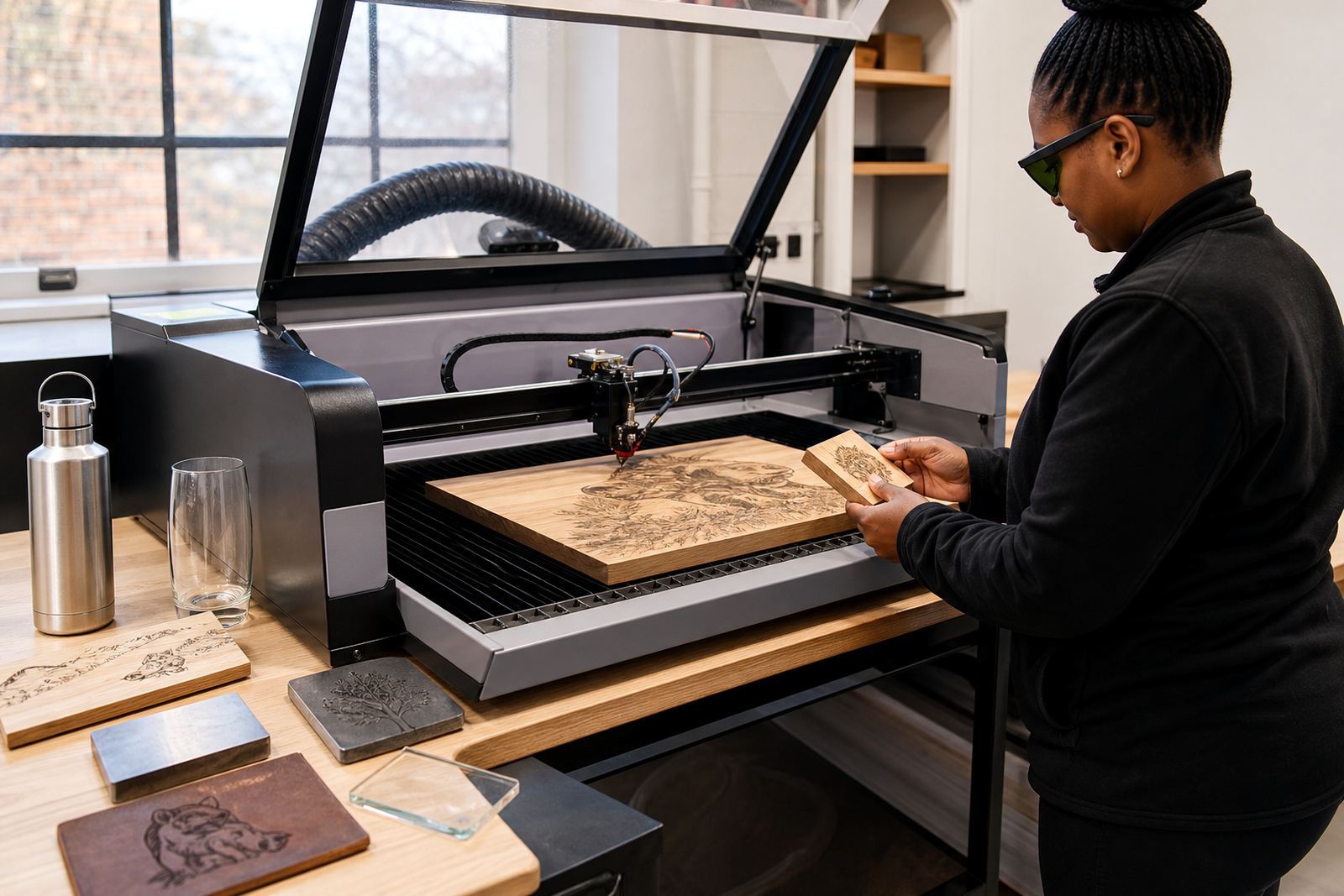
Start With the Item, Not Just the Artwork
The best engraving results start with the object being marked. A name on a slim glass gift, a logo on brushed metal, or a sign on acrylic all need different line weights, spacing and size planning. What looks fine on a screen can lose detail once it is reduced to a small area or transferred onto a textured material.
When you send through your request, include the item type, the material, the size of the engraving area and how the piece will be used. For example, a reception sign for Pretoria East can be planned differently from a batch of leather keyrings for courier delivery to Durban. That detail helps us guide the artwork from the start.
- Tell us whether the item is wood, acrylic, glass, leather or metal
- Give the finished size or available engraving area in millimetres
- Let us know if the item is for signage, a gift, or product marking
- Share whether the finish must be fine, bold, subtle or high contrast
Logo Redraw and File Conversion for Cleaner Results
If your logo comes from a screenshot, a low-resolution image or an old print file, it may need redrawing before engraving. Thin strokes, gradients and tiny text often need adjustment so the final mark stays clear after laser processing. We work with the artwork to suit the material and the marking method rather than forcing one file to fit every job.
Vector artwork is usually best for logos, line drawings and text-heavy layouts. If you only have a photo or a flat image, it can still be used in many cases but it may need cleaning, tracing or simplification first. That is especially important for product marking where consistency matters across a batch.
- Use clear source files when possible
- Remove background clutter where you can
- Keep text readable at the final size
- Send files in a common format if available, such as PDF, SVG, AI, EPS or high-resolution PNG
Choosing Fonts, Layouts and Spacing That Engrave Well
Font choice matters more than many people expect. Very thin scripts, decorative styles and tightly packed lettering can become hard to read on small items or textured surfaces. For engraving, simple and well-spaced type usually gives the cleanest result, especially on gifts and branded products.
We can help with font selection, layout planning and wording order so the piece feels balanced. If you are fitting a long business name onto a small plaque, or multiple names onto a corporate gift, the layout needs to be adjusted carefully. A neat layout also helps with repeat orders, because the same setup can be matched later.
- Use short lines for small spaces where possible
- Leave breathing room around borders and logos
- Keep contact details and small text large enough to read
- Use one clear hierarchy for titles, names and secondary text
Material Guidance for Wood, Acrylic, Glass, Leather and Metal
Different materials behave differently under the laser. Wood can char slightly and may show grain variation, acrylic gives a cleaner edge on many jobs, glass often needs a careful approach to avoid over-marking, leather can darken and metal marking depends on the surface and finish. The same artwork can look quite different from one material to the next.
That is why material guidance forms part of the artwork stage. If you are not sure which finish is suitable, we can talk through the likely result before production. This helps avoid artwork that is too fine, too crowded or simply not suited to the item being engraved.
- Wood: allow for grain, tone change and natural variation
- Acrylic: keep edges clean and lettering easy to read
- Glass: use simple forms and avoid tiny detail
- Leather: plan for tone change and surface texture
- Metal: check whether the finish is coated, polished or brushed
Proof Approval Before We Run the Job
Before production, we send through a proof so you can check spelling, spacing, size and layout. This is the stage to confirm names, dates, logo placement and any special wording. Once approved, the artwork is prepared for the machine setup and production can move forward.
Proofing matters most for gifts, memorial pieces, awards and batch marking where the same text must be repeated accurately. If a client in Gauteng wants several items matched in future, keeping the approved layout on record makes reorders simpler and more consistent. It also reduces the chance of costly mistakes.
- Check every name, date and acronym carefully
- Confirm the exact wording before approval
- Look at logo position and border spacing
- Make sure the size suits the actual item
How to Send Us Artwork for Production
The contact form is the best place to send your artwork, item details, quantity, material and delivery destination. Send the artwork you have, even if it is rough, and include a short note about the item, quantity, material and destination. We are based in Wapadrand, Pretoria East and support clients across Pretoria, Centurion, Midrand, Johannesburg and Durban with courier delivery where needed.
If you are missing parts of the artwork, tell us what you do have. A logo photo, a business name, a handwritten name list or a rough sketch can still be useful for planning. For larger batches, send names in a clear list so we can prepare the file for batch personalisation and matching.
- Attach the best version of your logo or text file
- Include dimensions, quantity and material details
- Say whether mounting or packaging prep is needed
- Let us know if you need matching for a repeat order