
What Leather Patches Are And How They Are Used
Leather patches are small cut pieces of leather that are engraved with a logo, name, size mark or short message, then applied to a finished item or supplied loose for sewing, riveting or adhesive mounting. For apparel and accessories, they give a clean finish that feels more permanent than a printed label and more refined than a paper tag. Because the detail is engraved into the surface, the mark stays readable through regular handling, folding and light washing when the patch is correctly fitted.
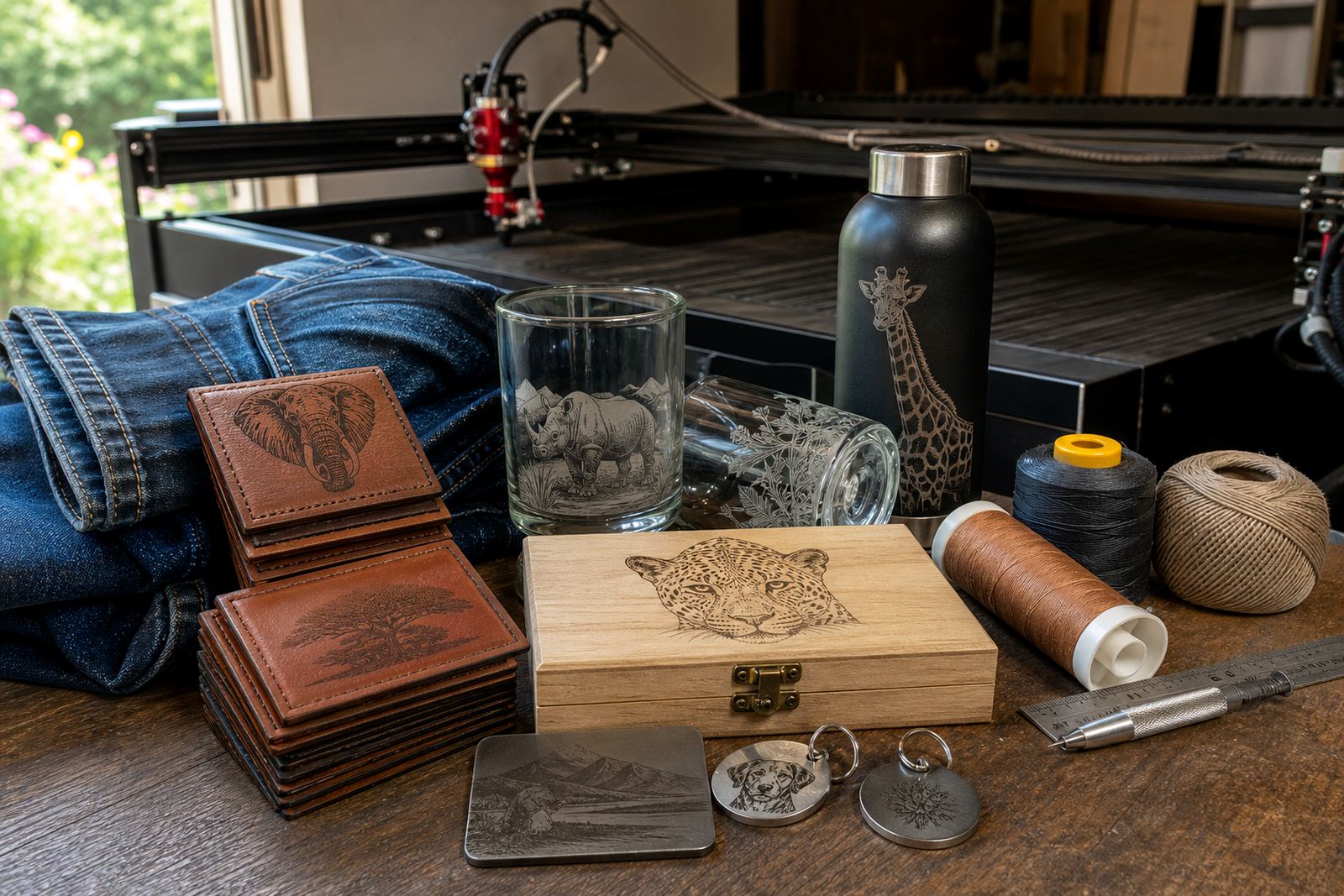
These patches suit caps, beanies, jackets, aprons, handbags, toiletry bags, notebook covers, aprons and handmade gifts. They also work well for small production runs where each item needs consistent branding without the cost of full embossing dies or complex decoration. In Pretoria East and beyond, they are often chosen by small businesses that want a practical branded finish with good visual contrast.
- Suitable for genuine leather and some leather-look materials, depending on the finish
- Works for simple logos, initials, product names and batch markings
- Can be supplied as individual patches or repeated sets for production
Engraving Behaviour On Different Leather Types
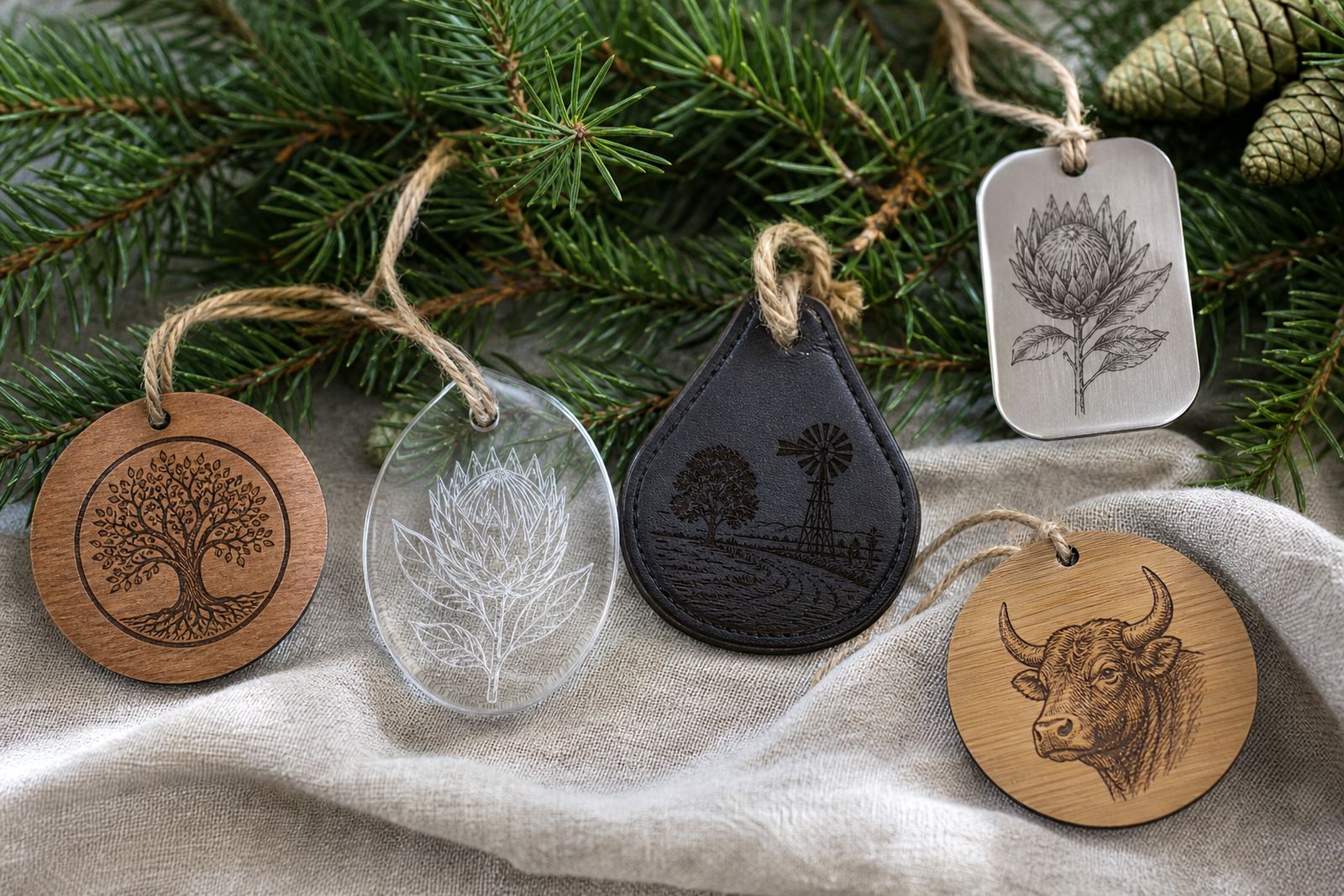
Laser engraving on leather removes or darkens the top surface to create detail, and the result depends on the leather type, coating and thickness. Natural vegetable-tanned leather usually gives the clearest engraved line, while oily, waxed or highly coated leathers may need careful testing because the surface can react unevenly. We check the material first so the mark stays legible and the edges do not scorch more than needed.
Thickness also matters. Thin flexible leather can curl if the settings are too high, while thicker hides may need deeper marking to stay visible after handling. For best results, the artwork should suit the patch size and the material finish. Fine serif fonts and very small text can work, but only when the patch is large enough and the leather surface is suitable. A clean logo often performs better than overly detailed artwork on a small patch.
- Clear results on natural leather with a consistent grain
- Good for darker marks on lighter leather tones
- Test pieces are recommended for coated or uneven materials
Sizes, Shapes And Finish Options For Custom Orders
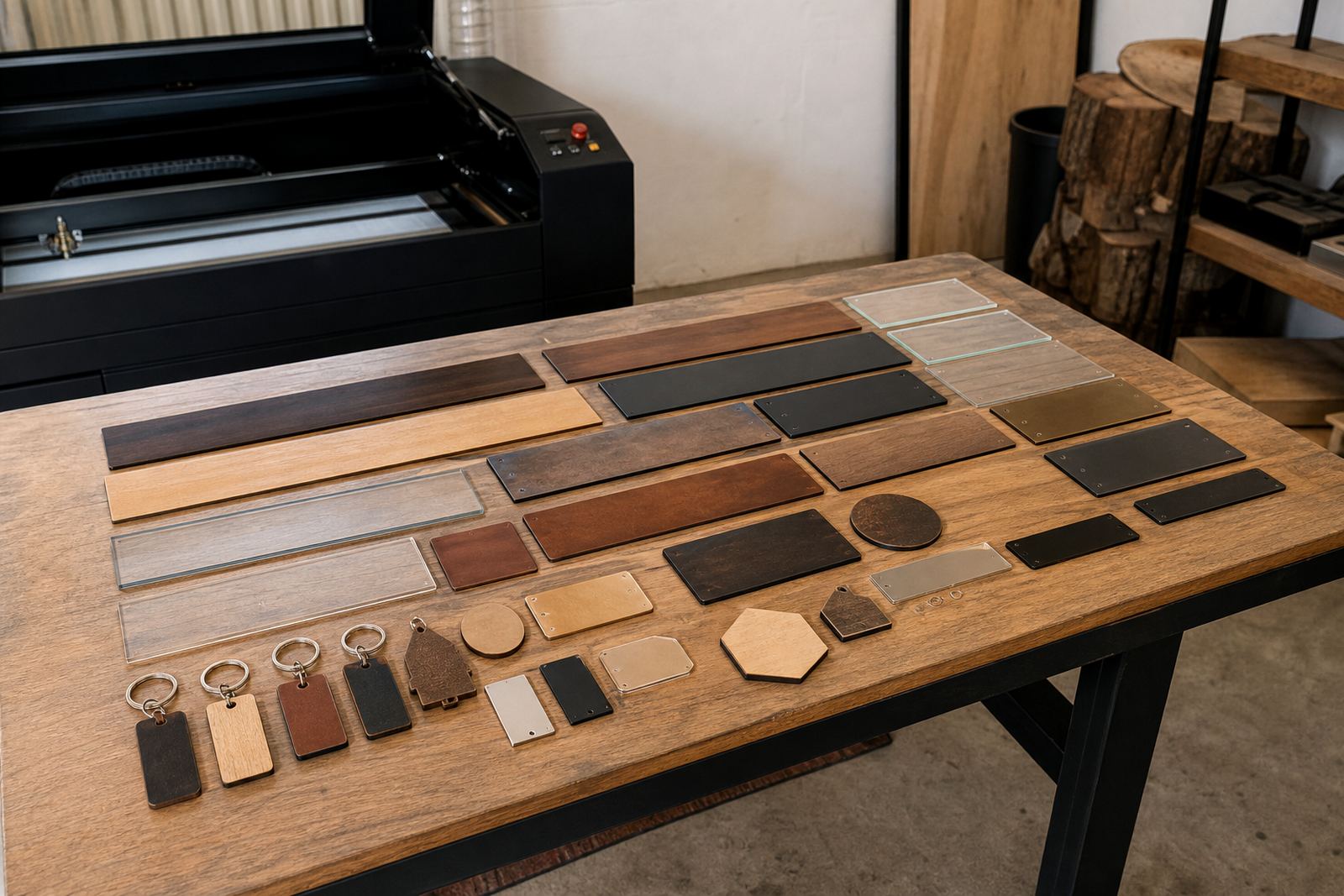
Leather patches can be made in a range of sizes to suit clothing labels, front-panel branding or larger accessory panels. Common sizes start from small tags for hats and end at larger patches for jackets, aprons and duffel bags. Shapes can be square, rectangular, round, oval or custom cut, depending on the item and the amount of space available for the artwork.
When ordering, it helps to think about how the patch will sit on the final item. A patch for a cap front needs a different proportion from one used on a bag flap or a shirt hem. We can help with size planning, font selection and layout so the patch does not look cramped or too small for the product. If you need batch personalisation, the layout should allow for names, numbers or variations without losing balance.
- Typical small label sizes for hats and clothing trim
- Medium sizes for bags, aprons and handmade goods
- Larger statement patches for jackets and display pieces
Where Leather Patches Fit Best
Leather patches suit apparel, accessories and gift items where a natural finish is preferred over a glossy printed look. They are often used on workwear, craft products, school bags, travel goods and promotional items that need a sturdy branded face. For makers in Gauteng, they also suit market stock and short-run product lines because the patches can be ordered in manageable quantities and stored for later application.
On handmade goods, a leather patch can carry a logo, origin mark, product name or care detail. On clothing, it adds identity without covering too much surface area. The patch needs to be chosen with the final use in mind, especially for items exposed to bending, moisture or frequent handling. In humid coastal areas such as Durban, the backing and attachment method should be selected with care so the patch stays secure and clean-looking.
- Apparel: caps, jackets, aprons and outer layers
- Accessories: bags, wallets, notebook covers and pouches
- Giftware: handmade items, small-batch products and promotional pieces
Fitting patches to your products
Engraved leather can carry a faint smoky smell for a day or two. Airing the patches before you stitch them on clears it.
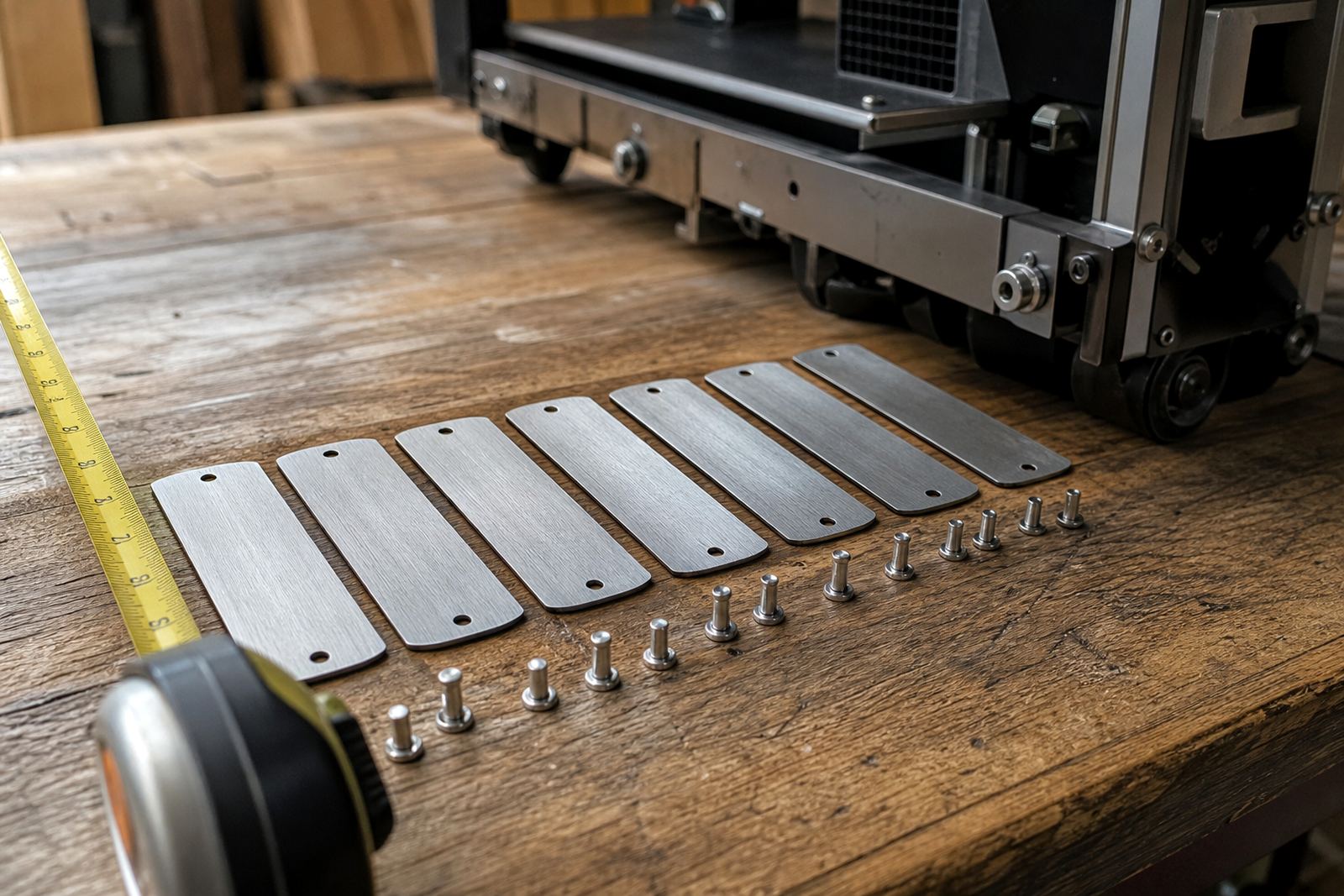
For fitting the finished patches, the installation method depends on the product. Some patches are sewn on, some are riveted, and some are attached with adhesive backing where suitable. Sewing gives the strongest hold for apparel, while rivets or stitching work well on bags and heavier goods. Adhesive can be useful for samples or light-use items, but it should never be chosen without checking the final application. If the item will be washed often, stitched attachment is usually the safer option.
- A faint leather smell after engraving fades within a day or two
- Attachment method should match fabric weight and end use
Care, Cleaning And Ongoing upkeep for engraved pieces
Leather patches need simple care to stay neat. They should be kept away from prolonged soaking, harsh detergents and direct heat from irons or tumble dryers. A dry or slightly damp cloth is usually enough for surface cleaning. If the leather is untreated or lightly finished, it may darken naturally over time, which is part of the look rather than a fault. In dusty areas, including building sites and workshop environments, regular wiping helps keep the engraving visible.
For product makers, upkeep also means checking how the patch wears once it is fitted to the item. If edges lift, stitching loosens or the material becomes brittle, the patch may need a different size, a different leather type or a stronger attachment method. We can assist with reorder matching so repeat batches stay consistent in colour, size and marking placement. That matters when the same product is made across seasons or from more than one supplier batch.
- Keep away from soaking and strong chemicals
- Wipe clean with a soft dry cloth where possible
- Check stitching or fastening during routine product inspection
Check this before we engrave
Before placing an order, check the leather type, patch size, shape and the exact artwork you want engraved. If you are sending a logo, it should be in a clear file format and the small details must still read well at the chosen size. If you need the patch to match an existing product line, send the current size and a sample photo so the layout can be planned correctly. If the patch is going onto apparel that will be sold in Pretoria, Johannesburg, Centurion, Midrand or Durban, it is worth considering how it will hold up in transport and customer use.
It also helps to confirm whether you need loose patches, stitched-on supply, or patches prepared for later fitting. For bulk or repeat work, ask for proof approval before production starts. That gives you a chance to check spelling, spacing and placement. LightBurn Engraving handles artwork setup, logo redraw, layout planning, file conversion, size planning, proof approval, packaging prep and reorder matching from our base in Wapadrand, Pretoria East.
- Confirm leather type, thickness and finish
- Check logo clarity, wording and final size
- Choose the right attachment method for the end product
Job details
| Material types | Natural leather, vegetable-tanned leather and selected leather-look materials |
|---|---|
| Typical use | Apparel, accessories, handmade goods and product marking |
| Marking method | Laser engraving on the surface of the patch |
| Common shapes | Square, rectangular, round, oval and custom cut |
| Attachment options | Sewing, rivets or suitable adhesive backing |
| Service area | Pretoria East, Pretoria, Centurion, Midrand, Johannesburg, Durban and courier delivery across South Africa |