
Engraved house numbers that stay clear outdoors
House number plaques are made to give a property a clean, permanent street-facing marker. We engrave numbers into materials suited to outdoor use, so the detail stays readable in sun, rain and dust. For homes in Pretoria East, Centurion and Johannesburg, a well placed plaque helps visitors, couriers and contractors find the right entrance without confusion.
These plaques suit front walls, gate posts, pedestrian gates, entrance pillars and intercom surrounds. They also work well on sectional driveway walls, garden entrances and townhouse complexes where a simple number plate is easier to read than paint or stickers. For coastal deliveries into Durban, material choice matters even more because humidity and salty air can affect some finishes over time.
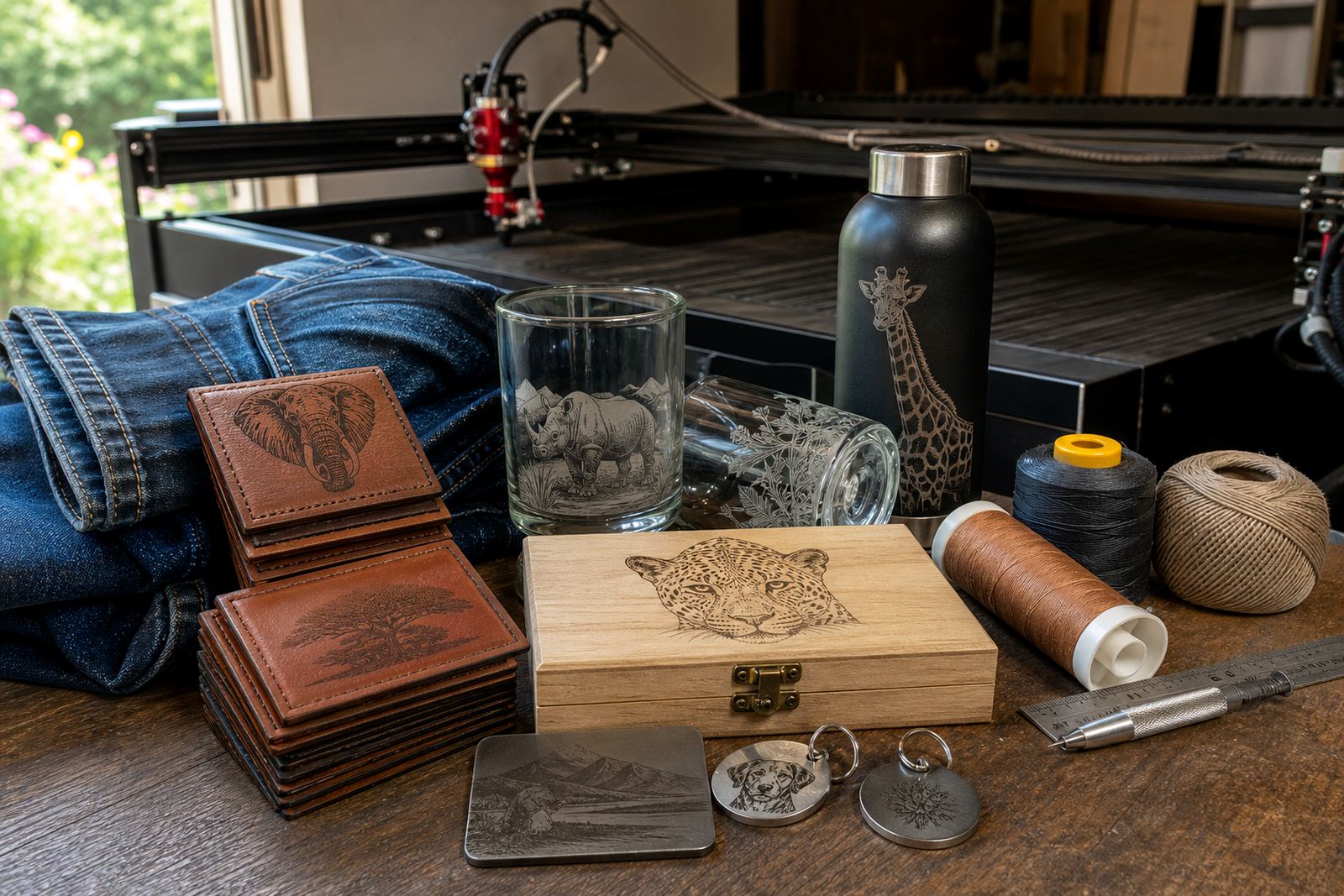
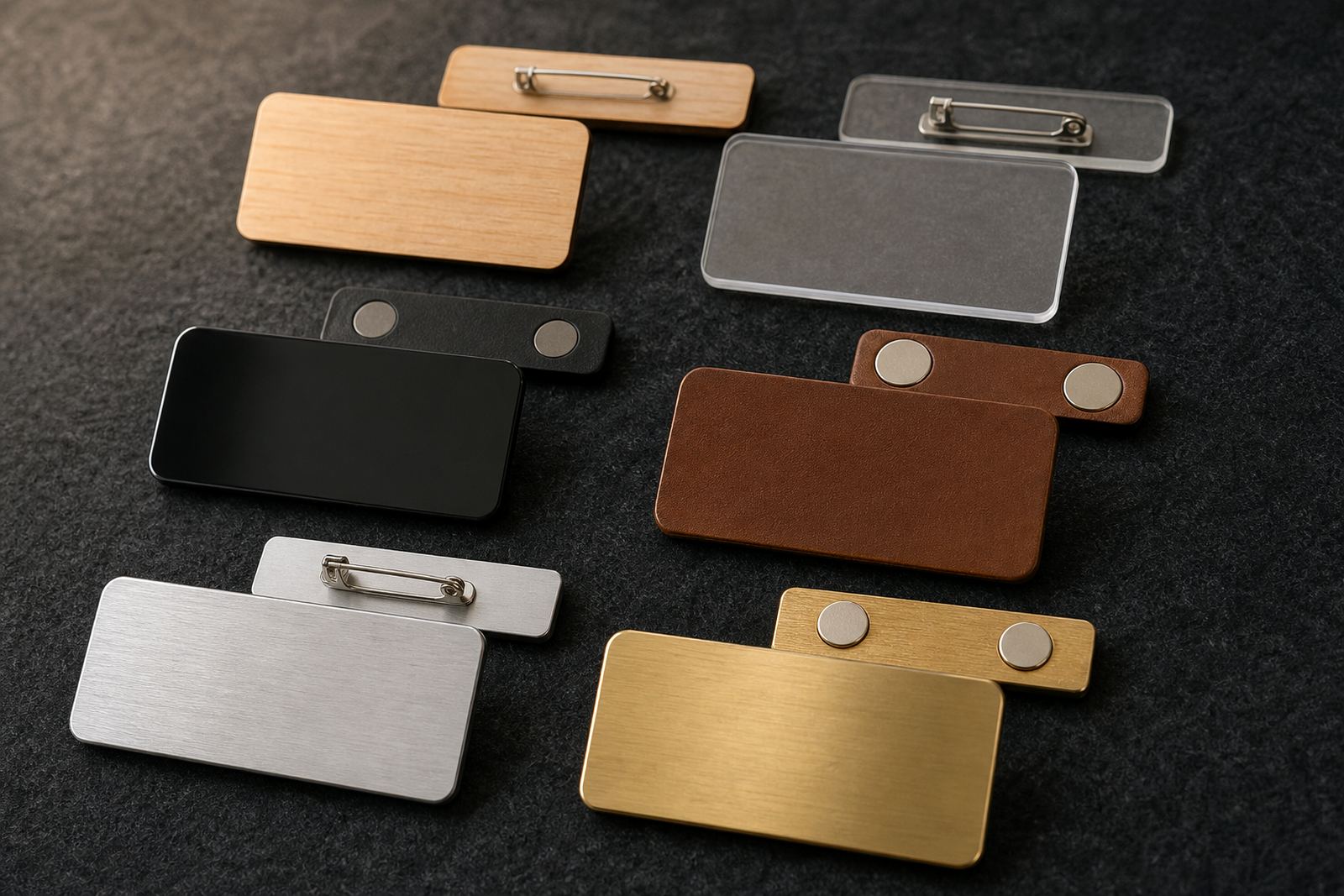
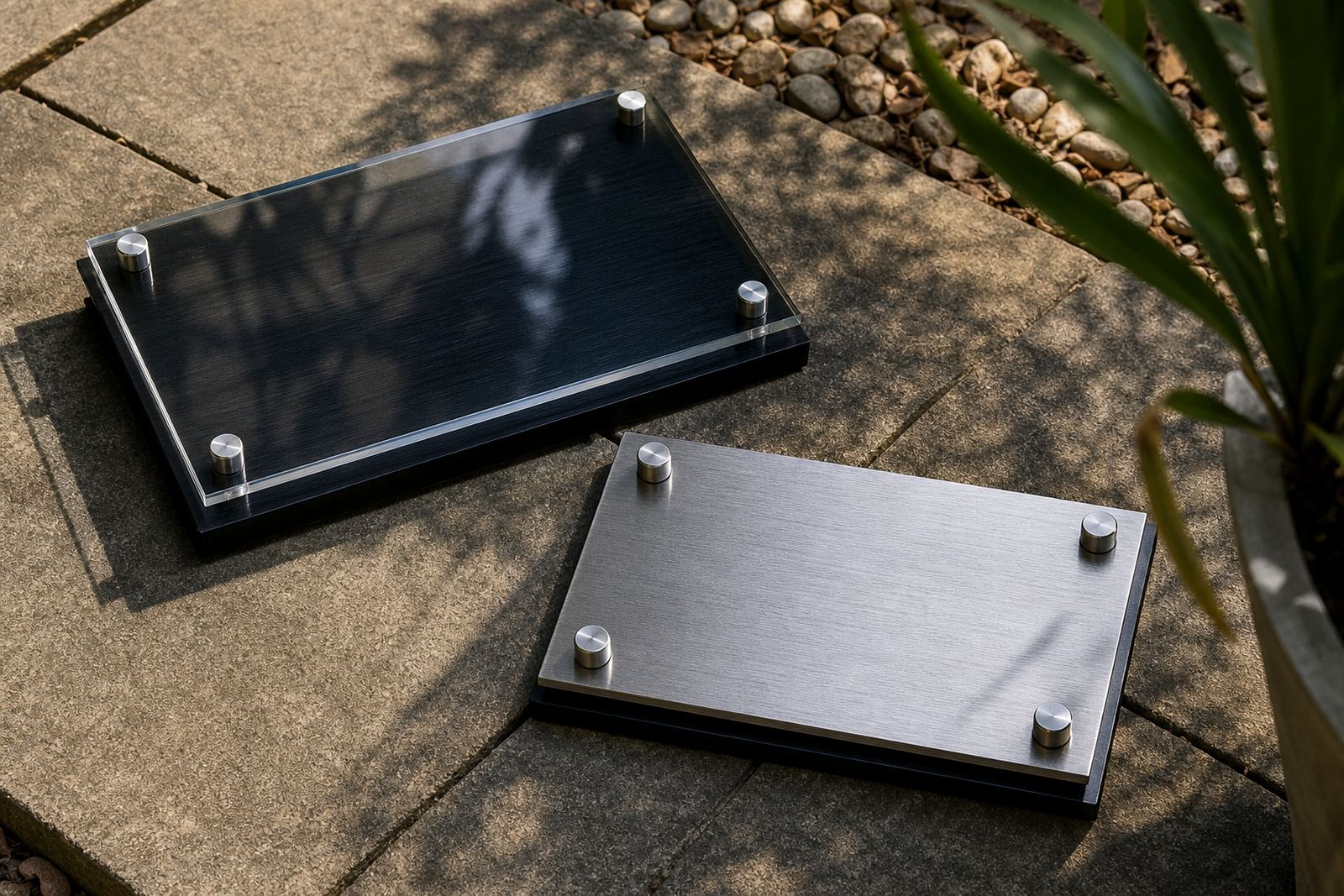
We work with laser engraving on acrylic, wood, glass, leather and metal as a general process, but for house numbers the most common choices are durable acrylic and coated metal. Acrylic gives a clean flat finish with strong contrast. Metal can be used where a firmer feel is needed, especially for entrances exposed to regular handling or direct weather.
Size, material and finish options for your property
House number plaques are available in practical sizes that suit compact gates as well as larger entrance walls. Common formats include narrow horizontal plates, square plaques and vertical plaques for pillar mounting. Size should follow the viewing distance. A small plaque can work near a pedestrian gate, while a bigger format is better when the number must be seen from the road.
- Standard sizes can be cut to suit a number only, a number with street name, or a number with wording such as unit, stand or complex entrance.
- Finish options may include matt or gloss surfaces, single colour contrast, frosted effects on clear material, or painted backing for stronger visibility.
- Fonts can be simple and bold for quick reading, or more refined where the plaque is part of a premium entrance finish.
- Mounting holes, adhesive backing or concealed fixings can be planned according to the wall surface and the look you want.
Because outdoor plaques get handled, washed and exposed to weather, we recommend choosing a format that is easy to clean and not too delicate around the edges. For properties with brick, plaster or tiled finishes, the plaque should also match the wall texture so it sits properly and does not look out of place.
Where house number plaques work best
These plaques suit private homes, cluster developments, townhouse complexes, guest units and office entrances where a simple street number must be visible and tidy. In Pretoria East and wider Gauteng, many properties use a numbered gate plate near the pedestrian access point, plus a larger marker on the boundary wall for drivers.
They are also useful when municipal visibility is important. A number that can be read from the road helps emergency services, delivery drivers and visitors find the correct property faster. That matters on long boundary walls, in low light, or where trees and parked cars can hide a smaller sign.
For homes with sloped driveways or deep setbacks, we often suggest placing the plaque at eye level close to the road edge rather than only on the main door area. If the gate is automated, the plaque should not sit where it may be struck by moving leaves, metal arms or sliding gate sections.
- Gate posts and entrance pillars
- Boundary walls facing the street
- Pedestrian gates and side entrances
- Townhouse and complex entrances
- Guest cottages and rental units
Installation and mounting
House number plaques are straightforward to install. Installation depends on the mounting method chosen and the surface it will fix onto.
For masonry or plastered walls, drilled mounting points are usually the neatest option. On smooth surfaces, adhesive mounting can be used where suitable. For gates and metal frames, the plaque may be fixed with screws, bolts or standoff fittings. The wall or gate should be clean, dry and level before fitting, especially in wet weather or after repairs.
If your entrance is exposed to strong afternoon sun, take care with adhesive methods and make sure the surface is properly prepared. On coastal properties, use fixings that cope better with rust and moisture. If the plaque is going onto a painted surface, it is best to wait until the paint has fully cured so the finish is not marked during installation.
For sectional entrances and shared properties, check body corporate rules or estate guidelines before ordering. Some schemes limit plaque size, colour contrast or where the number may be displayed. We can help plan around those practical limits so the result looks correct and remains readable.
Care, cleaning and long-term use
Outdoor plaques do not need heavy upkeep, but a little care will help them stay sharp for longer. Wipe the surface with a soft cloth and mild soapy water. Avoid rough scourers, strong solvents or abrasive powders, as these can dull the finish or mark fine engraved detail. In Gauteng dust conditions, a regular light clean is usually enough.
If the plaque is fixed with screws or standoffs, check that the fittings remain tight after strong wind or repeated gate movement. For adhesive mounted plaques, inspect the edges now and then for lifting, especially on surfaces that heat up in direct sun. In coastal areas, rinse away salt build-up more often to reduce staining on metal fixings.
Most number plaques only need replacement if the property details change, the surface is badly damaged or the family wants a different size or style. If you need a matching plaque later for a second entrance, keep the same wording, size and mounting method where possible so the pair looks consistent.
Check this before we engrave
Before ordering, confirm the exact house number and whether any extra wording is needed. Check the final size against the viewing distance, and think about whether the plaque will be seen from a road, driveway or pedestrian path. This helps avoid a plate that is too small to read or too large for the wall.
You should also decide on material, colour contrast and fixing method. A high contrast number is easier to spot at night and in weak light. If the wall colour is close to the plaque colour, the number can disappear from a distance. For metal gates, make sure there is enough flat space for the chosen mount without interference from hinges, latches or automation parts.
- Exact number format, including flat, complex or stand details
- Preferred size and whether the plaque is horizontal or vertical
- Wall, gate or pillar surface type
- Indoor or outdoor exposure, including sun, rain or coastal humidity
- Fixing preference such as drilled, adhesive or standoff mounting
- Any estate, municipal or body corporate requirements
Clients in Pretoria, Johannesburg, Centurion, Midrand and Durban can use the enquiry form on our contact page to request a suitable layout. We handle artwork setup, logo redraw where needed, font selection, material guidance, size planning, proof approval and packaging prep for courier delivery across South Africa.
Job details
| Product type | Engraved house number plaque |
|---|---|
| Typical materials | Acrylic, coated metal, wood or glass for selected applications |
| Common sizes | Custom made to suit gate, wall or pillar dimensions |
| Mounting options | Screws, bolts, standoffs or adhesive where suitable |
| Use areas | Gates, entrances, boundary walls, pillars and townhouse fronts |