
Start with the job the plate must do
Before any engraving starts, the main question is simple: what must the metal piece do once it is installed or handed over? A nameplate on a control box, a serial label on a machine, a plaque on a cabinet and a small asset tag all need different treatments. The more clearly the purpose is defined, the better the marking can be sized, laid out and finished.
For indoor use, lighter engraving options often work well. For outdoor use, or where the piece may be handled often, the marking needs more depth and a metal that can stand up to dust, coastal humidity, cleaning chemicals and the occasional knock. In Pretoria East, Johannesburg and Centurion, many clients want neat plates for offices, workshops and gated estates. The same plate that looks fine in a reception area may need a different finish if it is going onto a gate motor housing or a metal enclosure outside.
Good planning also helps with municipal and site rules. Some business parks and sectional title schemes want clear unit numbers, fire equipment labels or service point identification. If the plate is too small or the wording is cramped, it causes trouble later. A bit of planning at the start saves rework, and that matters when a site has already been measured, drilled and prepared.
Choose the metal for the conditions, not just the look
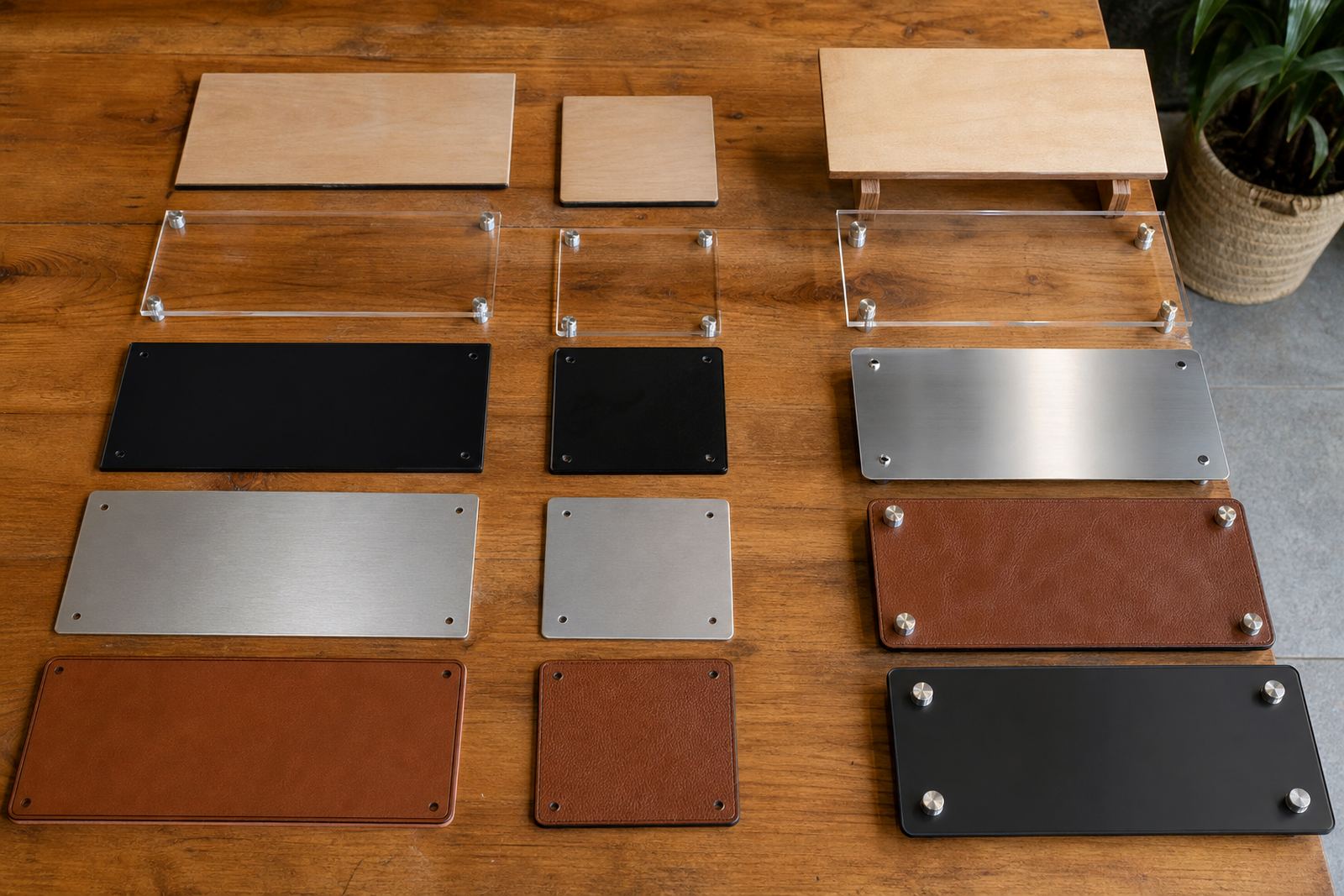
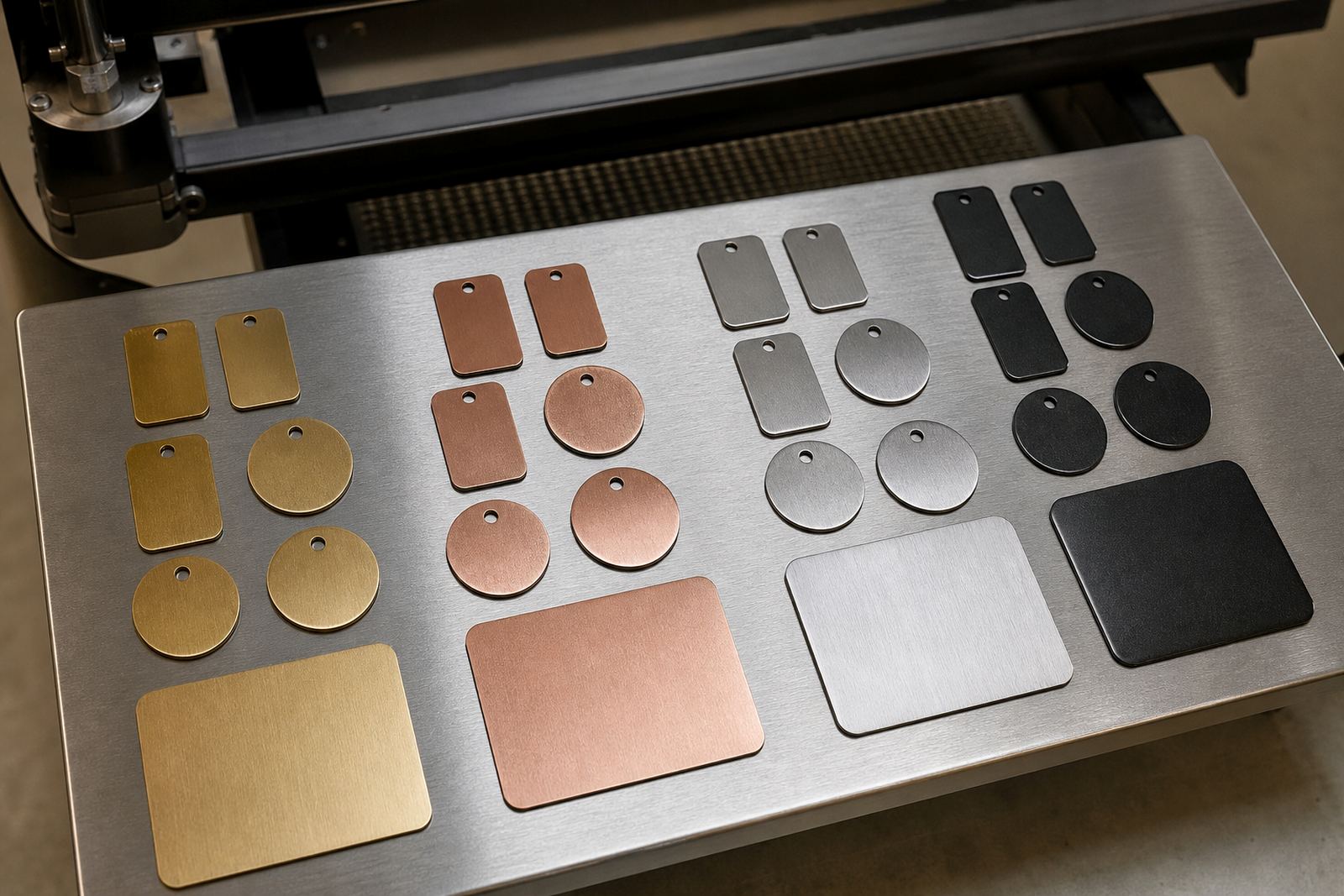
Different metals behave differently when engraved. Aluminium is light, practical and commonly used for labels, tags and plates. Stainless steel is harder wearing and suits harsher environments, especially where moisture is present. Brass is often chosen for a more formal appearance, while anodised aluminium offers strong contrast for text and numbers. Each one has strengths and limits, so the right choice depends on the location and the purpose of the item.
In Gauteng, indoor office plates face a different set of conditions from outdoor identification pieces mounted on perimeter walls or plant rooms. In Durban, salt in the air can affect some finishes faster, so material choice matters even more. If a plate is going near a pool, on a coastal balustrade, or in a workshop with regular cleaning, ask for guidance before the artwork is finalised.
- Use aluminium for lightweight labels and general indoor identification.
- Use stainless steel where durability and weather resistance are important.
- Use brass when the appearance must feel more formal or traditional.
- Use anodised aluminium when clear contrast and tidy text matter.
For wood, acrylic, glass, leather and metal, laser work can give different results, but metal usually demands the most thought around depth, contrast and fixing. It is not only about engraving a name, it is about making that name stay readable.
Legibility comes from spacing, size and contrast
A neat metal plate is not always a readable one. Small text, crowded logos and too much wording can make a label hard to read from even a short distance. A good layout keeps the most important information first: name, reference number, warning, or department. Less important details can sit lower down in a smaller size if needed.
Font choice matters too. Thin script styles may look attractive on screen but can blur into each other once engraved on a small plate. Clear letterforms with enough spacing are usually safer for serial numbers, gate labels and machine tags. If the plate is meant to be read quickly, especially on site, the engraving must stay practical, not just decorative.
- Keep the main line short and direct.
- Leave enough margin around the text and logo.
- Check that numbers cannot be confused, especially 0, O, 1 and I.
- Ask for a proof before production if the wording is technical or legal.
Because the finished engraving depends on it, LightBurn Engraving in Wapadrand, Pretoria East, takes the artwork stage seriously. Logo redraw, font selection, layout planning and file conversion all help prevent a plate from looking cramped or uneven once it is engraved.
Fixing methods matter as much as the engraving
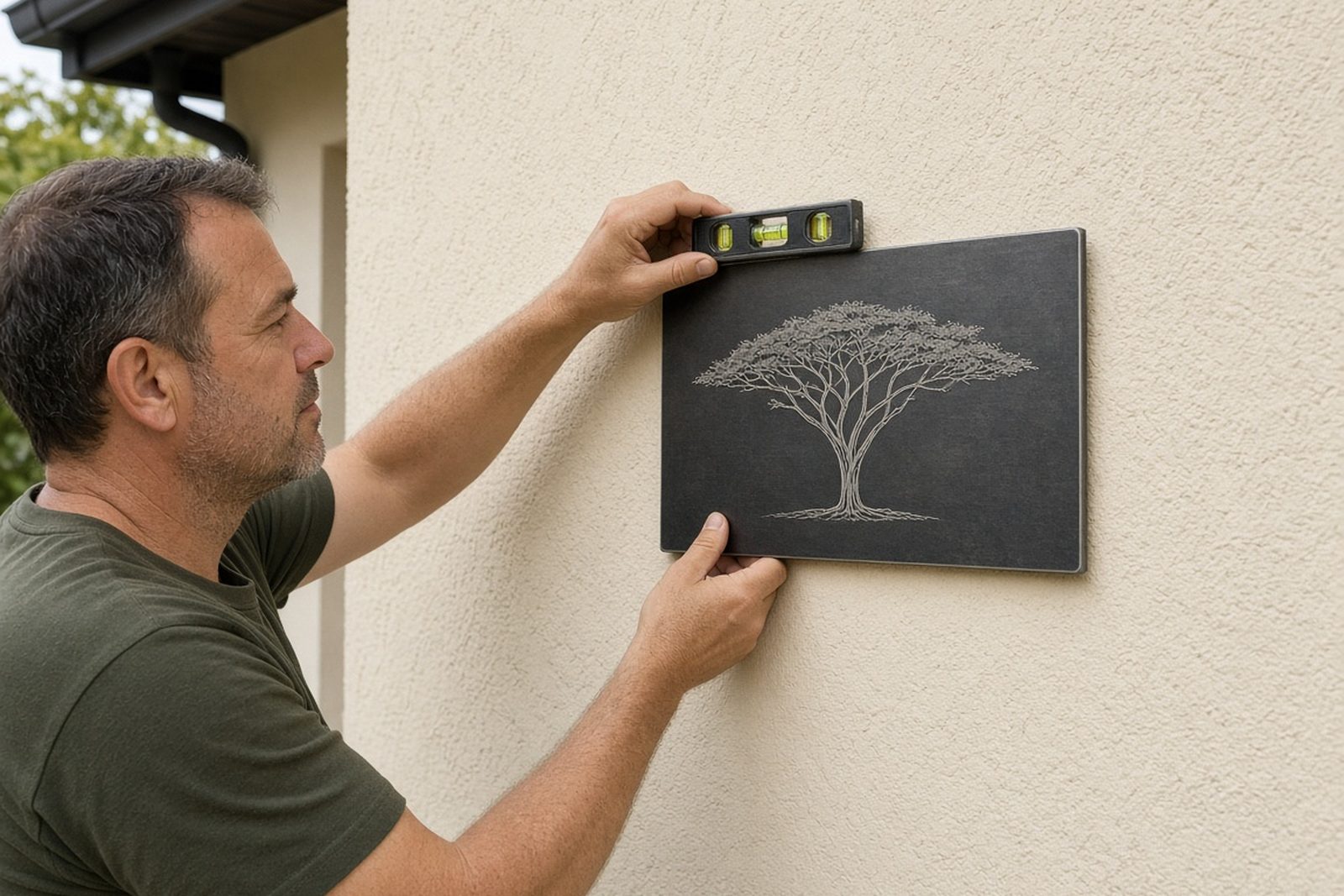
Even the best engraved plate can fail if it is fixed badly. A label mounted with the wrong adhesive may lift in heat, while one that is drilled poorly can distort or crack around the holes. The right fixing method depends on the surface, the size of the plate and whether it will be removed later for maintenance.
Common options include mechanical fasteners, adhesive backing, screws with caps, rivets, or mounting studs. For equipment tags and safety labels, the fixing should match the environment. Where vibration is present, a secure mechanical fixing is often better than adhesive alone. On smooth indoor panels, adhesive backing may be suitable if the surface is clean and fully dry.
Moisture and surface prep are often overlooked. Dust, oil, paint residue and uneven texture can all affect adhesion. In factories, stores and body corporate areas, it is worth checking whether the mounting surface is powder-coated, painted, brushed metal or plastic lined. That determines what will hold properly over time.
Batch marking needs consistency from piece to piece
When a business orders a set of plates, tags or labels, consistency matters just as much as appearance. Asset tags, machine numbers and locker labels need to match each other in size, position and finish. If one plate is slightly different, the whole set looks untidy and can confuse staff during audits or maintenance.
Batch personalisation is useful for schools, offices, workshops and property managers who need many similar items marked with unique wording or numbers. Reorder matching is also important when replacements are needed later. The original material, layout and fixing style should be kept consistent so the new piece blends in with the existing set.
- Confirm the numbering sequence before production starts.
- Keep a record of the plate size and fixing method.
- Check whether the surface needs drilled holes, adhesive backing or both.
- Ask for packaging prep if the pieces need to arrive sorted by room, unit or department.
For customers in Pretoria, Centurion, Midrand and Johannesburg, courier delivery makes it easier to handle repeat orders without collecting from site. The same applies further afield, including Durban and other parts of South Africa, where secure packing protects the finish during transit.
A local example: a Pretoria East control room label set
Consider a Pretoria East business that needs a set of metal labels for a control room, an external gate motor housing and several internal cabinets. The outdoor pieces need tougher material, clear numbering and fixing that will not give way in heat or rain. The indoor plates can be lighter, but they still need strong contrast and clean spacing so maintenance staff can read them quickly.
In that kind of project, the process usually begins with artwork setup and proof approval. If the client provides a rough logo or a faded old label, logo redraw may be needed. Then size planning, material guidance and mounting options are checked together. That avoids an error where a plate is too small for the wording or too large for the available panel space.
It is also the stage where practical details get sorted, such as whether the labels should be packaged in sets for different rooms or whether each piece needs a reorder reference for future work. A good metal marking job should fit the site, the weather and the people using it.