Start With the Location and Conditions
The first question is not what looks nicest, but where the sign will sit and what it must withstand. A reception sign indoors in Pretoria East has very different needs from a shop sign exposed to afternoon sun, dust and summer storms in Gauteng.
For outdoor use, think about UV exposure, moisture, cleaning, and whether the sign will be touched often. For indoor use, detail and finish matter more, especially for awards, directional signs, gift items and branded panels. If the sign is for a municipal or shared building, check any size, fixing or display rules before artwork is approved.
- Outdoor wall sign: choose a material that handles sun and rain.
- Indoor feature sign: you can prioritise appearance and fine detail.
- Product marking: choose a material that stays legible after handling.
- Gift item: consider weight, texture and how it will be packed.
Wood for Warm, Natural Signage
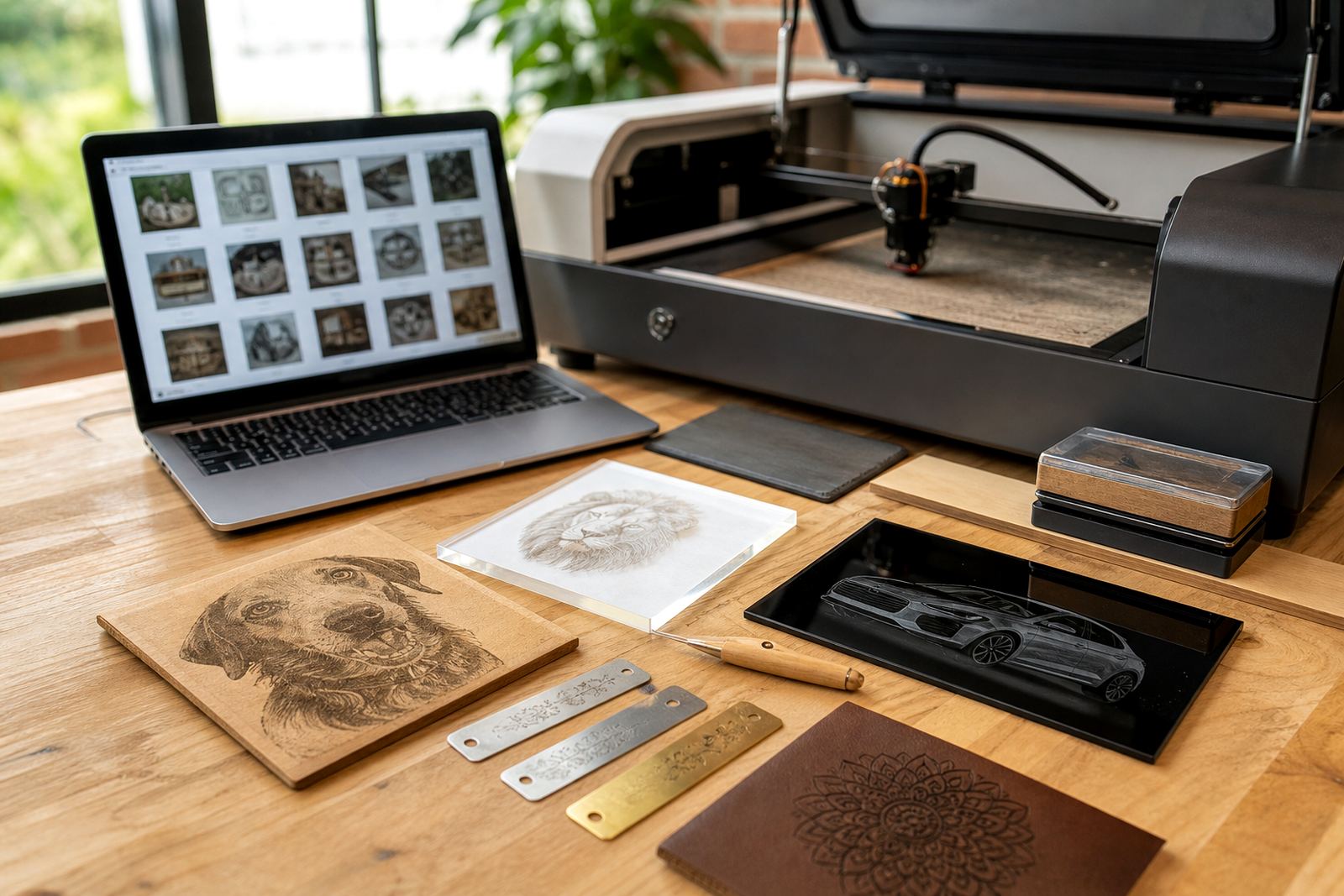
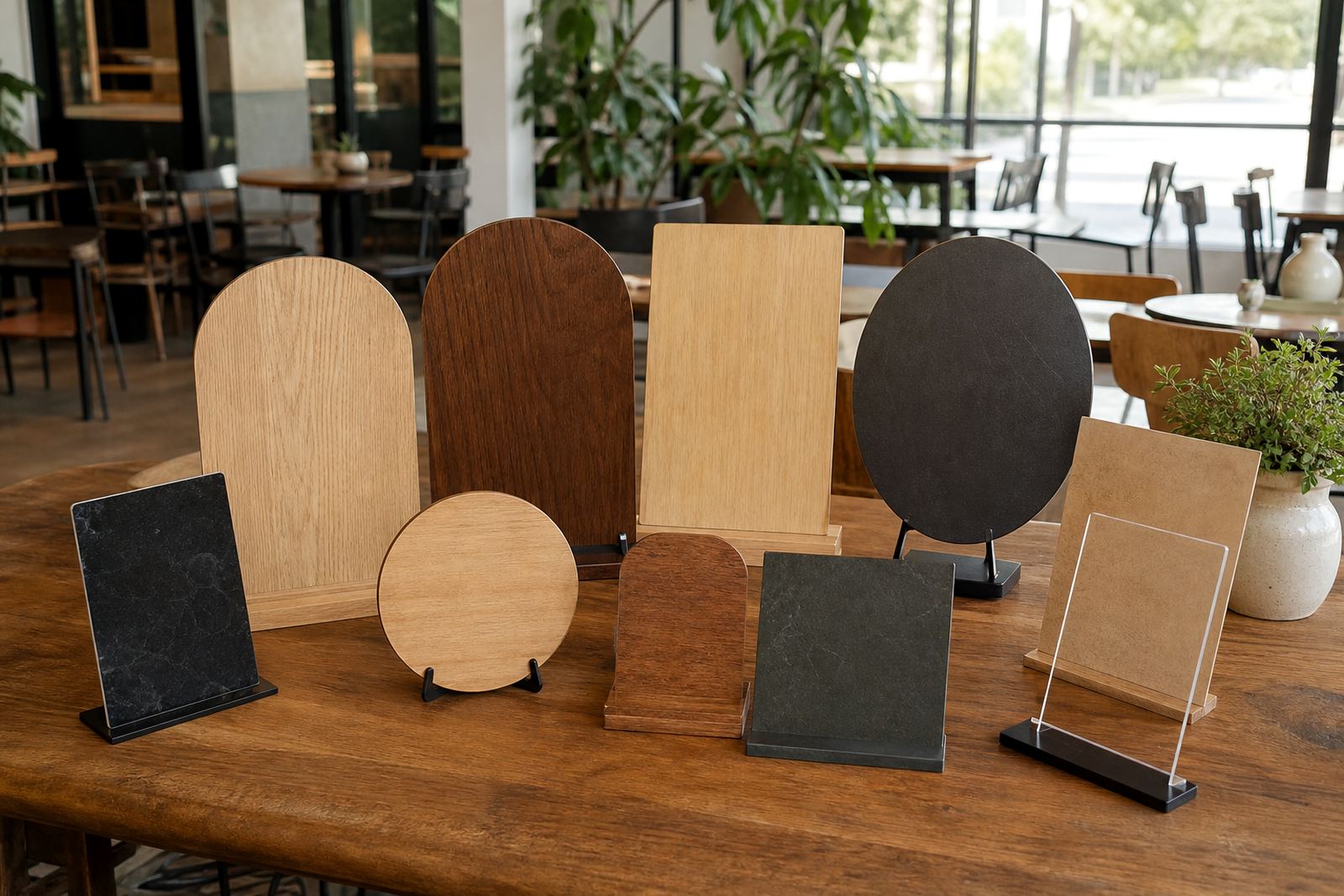
Wood is a good choice when you want a natural, warm look for reception signs, rustic décor, menu boards or personalised gifts. Laser engraving on wood gives a strong contrast on many timber types, with the grain adding character. It works well for interior branding and decorative pieces, but it needs proper sealing if it will face moisture or direct sunlight.
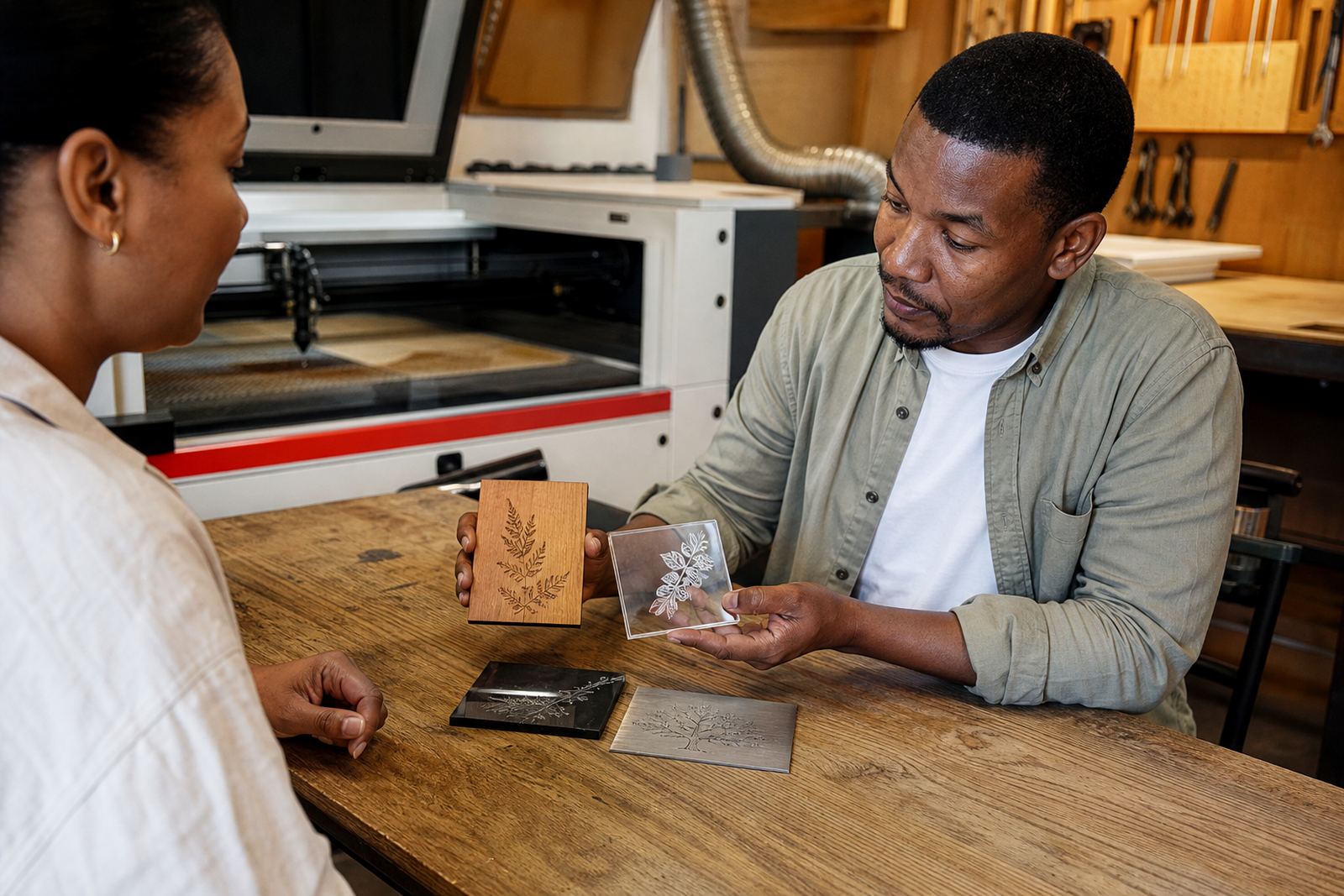
Different woods behave differently under the laser. Some engrave dark and crisp, while others produce a softer mark. Lighter woods usually show more contrast, while darker woods can create a quieter, premium finish. If the sign is going into a coastal area or a humid store room, ask for material guidance before finalising the board.
- Best for: indoor signs, plaques, awards and gift items.
- Consider: sealing, grain movement, and edge finish.
- Not ideal for: long term exposure to rain unless properly protected.
- Useful when: you want a natural, crafted appearance.
Acrylic for Clean, Modern and High Contrast Signs
Acrylic is often chosen for office branding, wayfinding signs, retail displays and name plaques because it gives a neat, modern finish. It can be cut to shape and engraved for clean lettering, icons and numbering. Clear, frosted, black and coloured sheets all have different uses, so layout planning matters before production starts.
For a polished look, acrylic can be paired with wall spacers or mounted onto another surface. It is also useful when you need lightweight signage for indoor use or sheltered outdoor areas. If the sign will be in direct sun, heat or strong weather, the thickness and fixing method must be selected carefully. In Gauteng, where temperatures can shift sharply between seasons, that matters more than many people expect.
- Best for: office signs, directional signs, brand panels and display pieces.
- Works well when: you need clean lines and a modern appearance.
- Check: thickness, mounting holes and whether the surface will face UV exposure.
- Good for: short to medium text, logos and layered sign work.
Glass for Elegant Indoor Marking
Glass engraving suits awards, commemorative pieces, premium gifts and selected interior signs. It gives a refined etched finish that is understated and readable, especially on clear or frosted glass. Because glass is brittle, layout and handling need care from the start, including how the item will be packed for courier delivery to Johannesburg, Centurion, Midrand or Durban.
Glass works best where the sign or item will not be knocked often. It is popular for boardroom name panels, special presentation pieces and decorative branding. For visibility, think about contrast behind the glass and whether the sign will be viewed from one side or both. If the engraved area is very small, proof approval is important so the spacing and depth are right before production.
- Best for: awards, premium gifts and interior feature pieces.
- Handle with care: glass chips and breaks if packed badly.
- Consider: background contrast, viewing angle and mounting method.
- Good choice when: a subtle etched look is preferred over bold colour.
Leather for Personalised Gifts and Product Marking
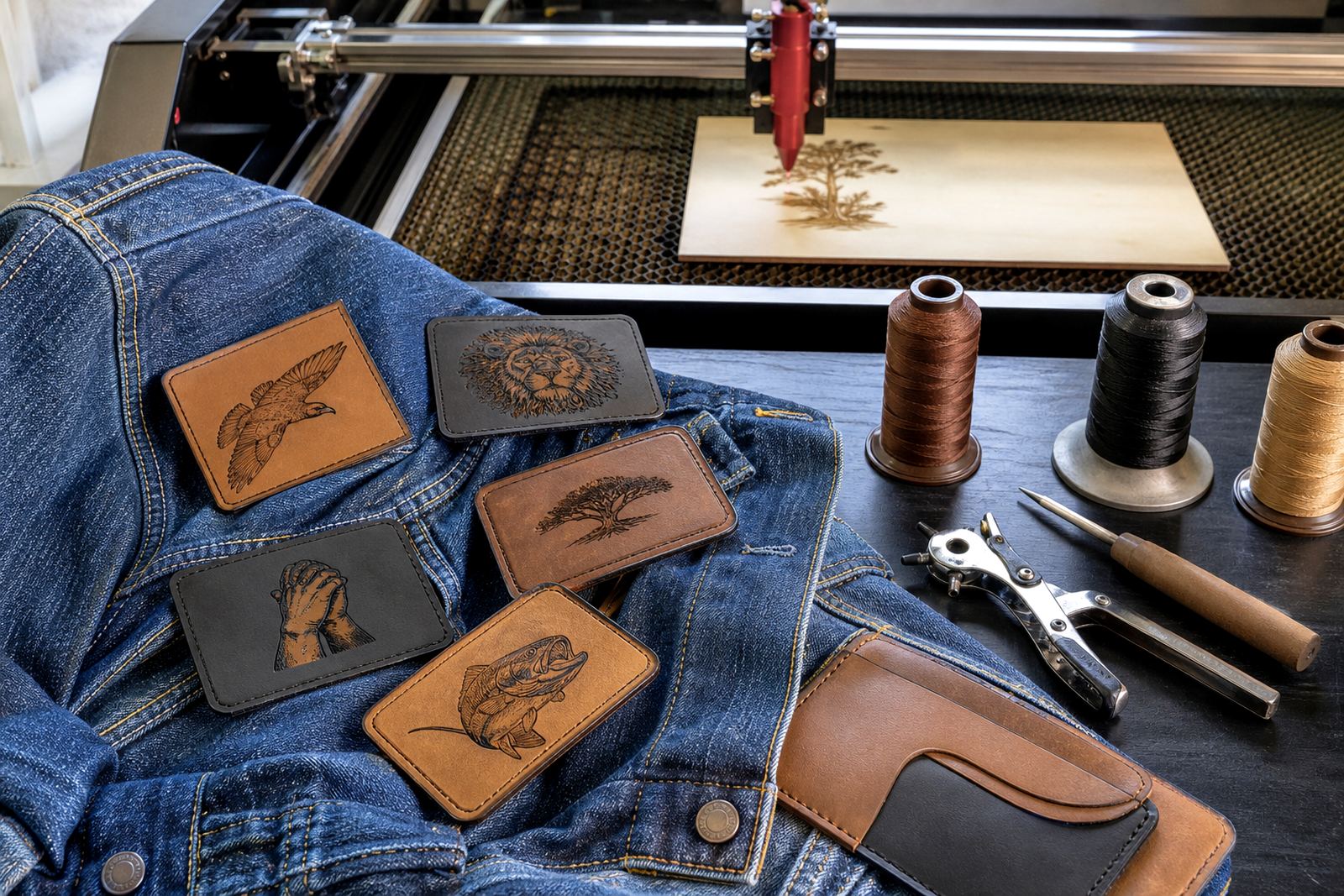
Leather engraving is popular for personalised wallets, tags, presentation folders, luggage pieces and branded gift items. The laser creates a marked finish that depends on the leather type, tanning method and surface coating. Because leather can vary from item to item, sample approval or a first test piece is often useful, especially for repeat orders or batch personalisation.
For gifts, leather has a strong handmade feel and travels well when packaged properly. For product marking, it gives a neat branded result without adding bulk. Keep in mind that soft leathers, coated finishes and stitched items may need layout adjustments so the engraving sits square and legible. Reorder matching is easier when the original artwork and size planning are kept on file.
- Best for: personalised gifts, tags, covers and branded accessories.
- Check: leather type, coating and how the item was made.
- Useful for: batch personalisation and repeat corporate gifting.
- Ask for: font selection that stays readable on a textured surface.
Metal for Durable Branding and Product Identification
Metal is the right choice when the sign or marking must stay legible through regular handling, cleaning and tough conditions. It suits asset tags, serial plates, machine labels, outdoor markers and premium name plates. Different metals engrave differently, so the surface finish, colour and thickness all influence the final look.
In workshop and industrial settings, a metal plate can be more practical than decorative options because it resists wear. For branded signs, it can also deliver a smart professional result if the layout is planned carefully. If the piece will be fixed outdoors in Pretoria or Johannesburg, think about corrosion resistance, mounting options and whether the sign will be cleaned with chemicals. A good material choice now can avoid rework later.
- Best for: product marking, asset tags, machine labels and outdoor plates.
- Think about: corrosion, cleaning, fixing method and visibility.
- Suitable when: long term durability matters more than a soft decorative finish.
- Useful in: workshops, factories, retail back rooms and outdoor sites.