When a workshop label needs to stay readable
Machine labelling usually starts when stickers begin peeling, handwritten tags become hard to read, or a panel has been changed too many times and the markings no longer make sense. In busy environments, labels need to hold up against handling, dust, light oil, cleaning cloths and the general wear that comes with daily use. Engraved plates and tags are a practical choice because the text is cut into the material or fixed with a permanent finish, so the information stays clear for longer.
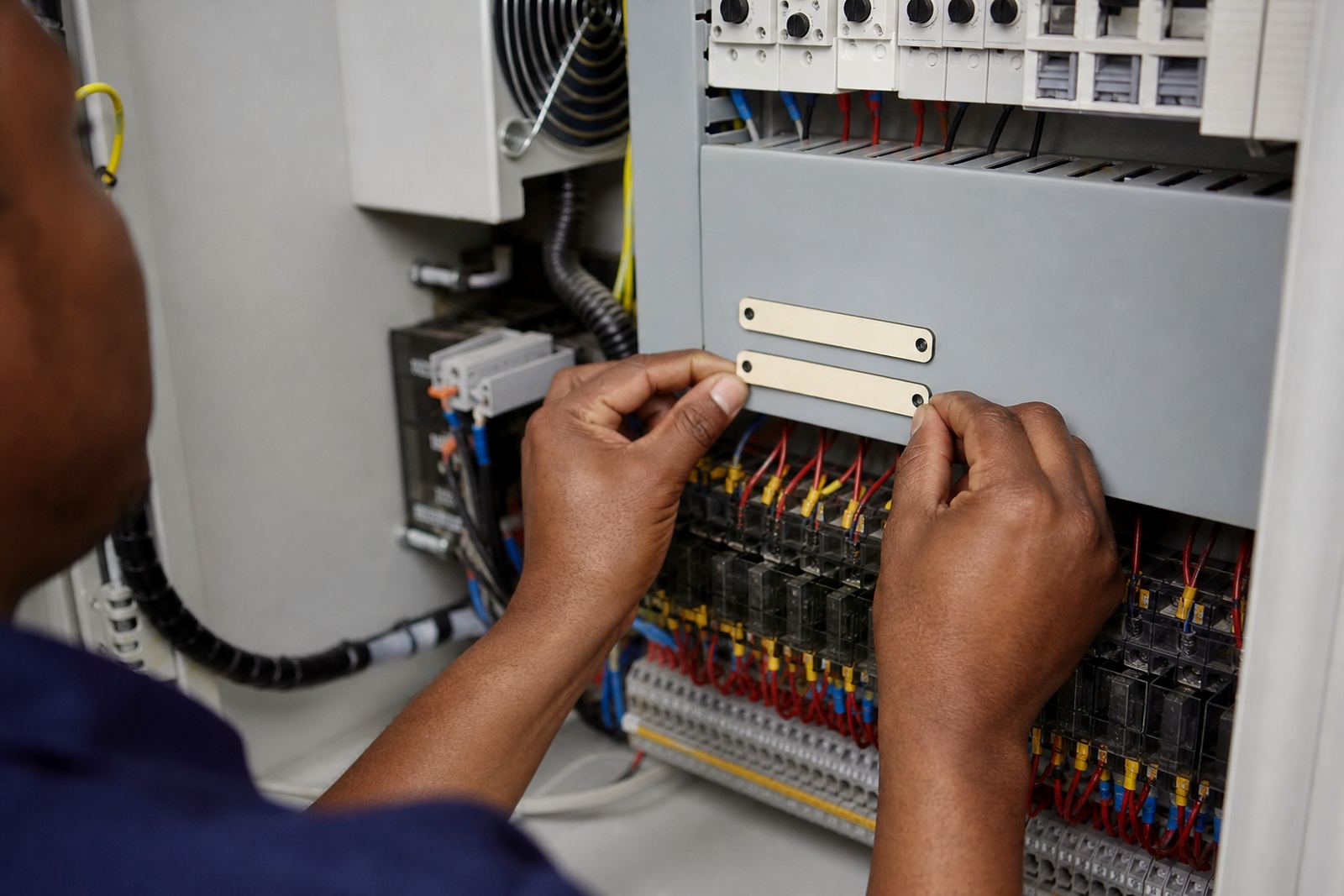
We work with factories, maintenance teams, installers and small workshops that need labels for control boxes, switch points, equipment fronts, safety notes and asset identification. The job can be as simple as a row of matching name plates or as detailed as a full set of machine plates with serial references, warning notes and operating zones. Clear labelling also helps with audits and handovers, especially where staff change often or more than one person uses the same equipment.
Typical machines, panels and parts we label
Machine labelling is not limited to one type of equipment. In practice, it often covers a mix of items across the workshop, production floor or utility area. The size and finish depend on where the plate will be fitted, whether it must be handled often, and whether the surface is flat, curved or textured.
- Control panels and switch boxes
- Workshop machines and tool stations
- Asset tags and inventory plates
- Safety warnings and operating notes
- Identification plates for pumps, compressors and motors
- Drawer fronts, shelves and storage systems
- Outdoor equipment that faces sun, dust or coastal humidity
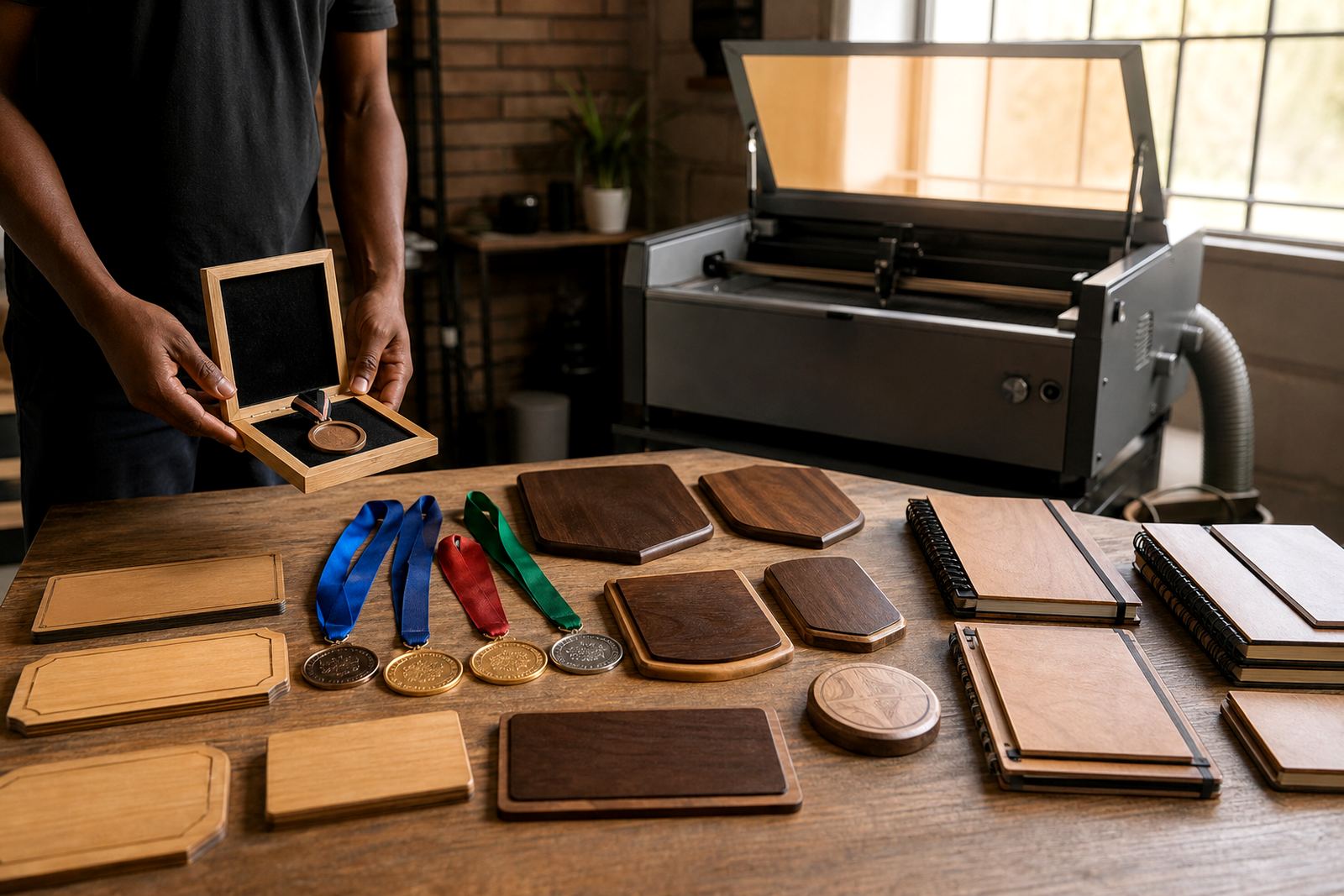
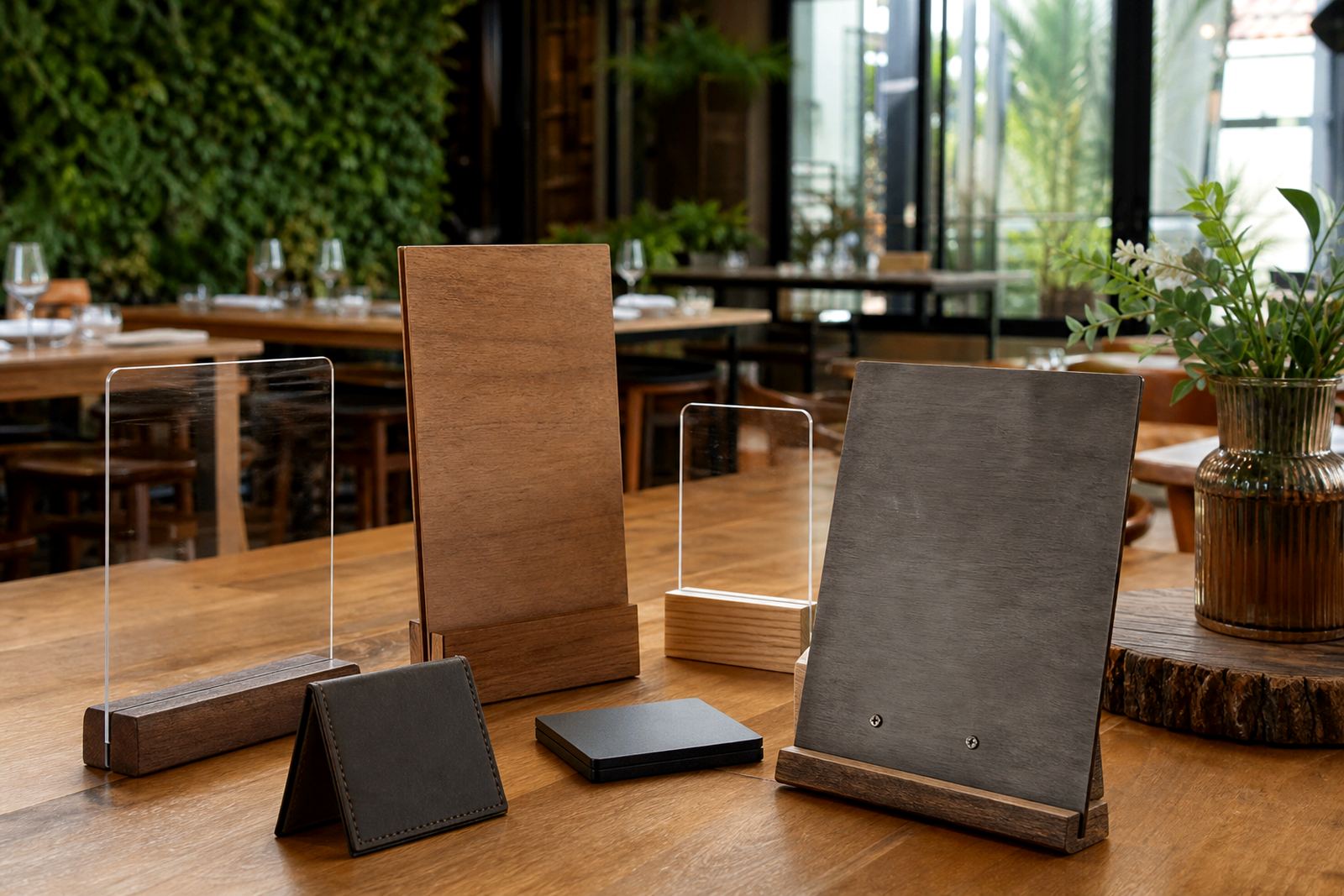
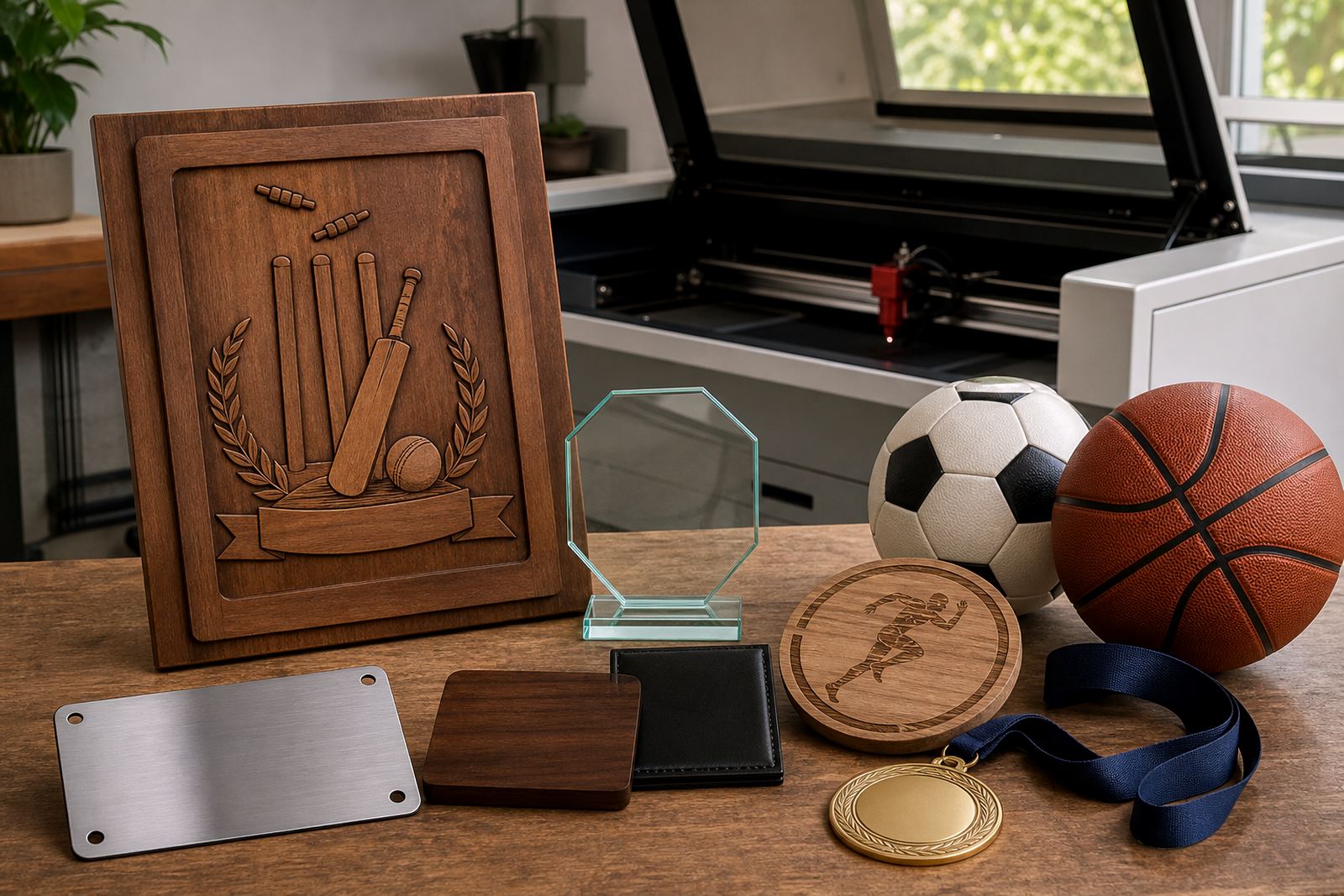
For metal surfaces, engraved aluminium or similar plate material is often used where a clean professional finish is needed. Acrylic can work well for indoor panels and colour coding, while wood is sometimes used for presentation labels or fitted workshop displays. Glass and leather are less common for machinery itself, but they can be used for custom tags, gifting, or special marking on presentation items and equipment cases.
Choosing the right material for the job
The right label material depends on the environment, the fixing method and the amount of detail needed. For Pretoria East workshops and Gauteng sites, heat and dust matter. For Durban deliveries or coastal use, moisture and salt air can affect fittings and adhesives if the wrong product is chosen. If the equipment is cleaned often, the label should have good contrast and a finish that is easy to wipe down.
We help with material guidance, size planning and layout planning before anything is cut. That includes checking whether the plate needs holes for screws, double sided mounting tape, stand off fittings or a recessed fit. Font selection also matters more than many people expect. Thin scripts may look neat on screen but become hard to read on small machine plates. Block lettering, sensible spacing and enough border around the text usually give the best result.
- Wood: useful for display pieces, signage and presentation plates
- Acrylic: clean for indoor labels, colour coding and panel marking
- Glass: suitable for decorative or specialist marking where clarity matters
- Leather: useful for tags, cases and branded accessories
- Metal: best for hard-wearing industrial labels and long-term identification
How to plan a label set before production starts
A neat label set is usually planned, not rushed. Before production, it helps to gather every machine name, part number, warning line and location note into one list. If the workshop has multiple units, it is worth checking spelling, numbering and sequence carefully. A small mistake on a single plate can cause confusion later, especially when staff rely on matching labels across several machines.
For batch work, we often advise clients to group items by size and function. That makes it easier to keep the layout consistent across the whole set. It also helps with reorder matching later if another plate needs to be added. If a logo is required, a clean redraw may be needed so the mark engraves properly at the right size. File conversion is also useful when the original artwork is not in a format that suits laser production.
- Confirm all wording before proof approval
- Check the final plate size against the mounting area
- Keep warnings short and direct where space is limited
- Use the same font family across related labels
- Allow for screws, corners and edge clearance
Common mistakes that make machine labels hard to use
The most common issue is trying to fit too much information onto a plate that is simply too small. When the text shrinks too far, people cannot read it from a normal working distance. Another mistake is choosing a finish that looks good in a sample but fails once the label is exposed to abrasion, heat or regular cleaning. On some sites, labels are also fitted too close to moving parts, which is not ideal for safety or maintenance access.
Another problem is using mixed styles throughout the same facility. One machine has bold lettering, the next has a thin script and a third uses different spacing altogether. It looks untidy and can slow down work. A better approach is to create one standard layout for names, another for warnings and a third for asset numbers, then repeat those layouts across the site. That makes replacement and future ordering much easier.
If the item is being couriered, packaging also matters. Plates should be protected from scratching and kept flat where needed. For heavier batches, we can assist with packaging prep so the labels arrive ready for mounting. This is especially useful for clients in Johannesburg, Centurion, Midrand and Durban who need courier delivery rather than collecting in Pretoria East.
Budget ranges for workshop and panel labelling
Machine labelling budgets vary depending on size, quantity, material and fixing method. A small one-off replacement plate will naturally cost less than a full workshop set with multiple sizes and layout changes. For planning purposes, many clients work within a range of a few hundred Rand for a simple label and several thousand Rand for larger batch runs, especially where there are many plates, careful artwork adjustments or mounting needs.
If the job includes logo redraw, file conversion, proof approval and matching multiple repeat plates, the total may sit higher than a plain text order. Batch personalisation can improve consistency across a whole set, while clear size planning helps avoid paying for overly large pieces when a smaller plate would do the same job. We always suggest pricing the job by use and not just by the number of characters. In some cases a plain warning plate with strong contrast is more effective than a crowded, decorative layout.
For local clients in Pretoria, Pretoria East, Centurion and the wider Gauteng area, we help keep the order practical for the site conditions and the available budget. Courier delivery across South Africa also makes it easier to standardise labels across branches, stores or workshop teams in different towns without losing consistency.
Hands on every engraving order
Our workshop operates from Wapadrand in Pretoria East. Our team is led by Thabo Abrahams, Managing Director, with Snethemba Khoza overseeing operations, Johan Hadebe handling laser production, Ayesha Zwane leading client services, Sipho Hendricks coordinating design and artwork, and Lindie Lombard supervising finishing and dispatch. That structure helps keep machine labelling orders moving in a steady, practical way from first enquiry to final packaging.
Clients reach us through the enquiry form on our contact page, where they can send their text list, layout notes or reference files. From there we can advise on font selection, material guidance, proof approval and the best method for fixing the labels in place. Whether the job is for a small workshop in Pretoria East or a multi-site operation with delivery to Johannesburg, Midrand or Durban, the goal is the same: clear engraved labels that are easy to read and built for the setting.