
Industrial plates for a Pretoria West workshop
The client was a Pretoria West workshop team working with a mixed set of machines, jigs and support equipment that all needed proper identification. Some items had old labels that were peeling, and others had handwritten tags that were getting hard to read after oil, cleaning and general handling. They needed a cleaner system for asset marking, safety reference and basic traceability around the floor.
We based the job on practical use, not decoration. The plates had to fit onto metal housings, guards and cabinet doors without interfering with access points or moving parts.
- Client type: industrial workshop in Pretoria West
- Use case: machine ID, asset marking and equipment reference
- Area served: Pretoria West, with delivery support into Pretoria and nearby areas
Brief, material choice and workshop limits
The brief asked for engraved plates that would hold up better than printed labels. We discussed the likely placement on each machine, then guided the client on plate size, hole positions, edge finish and whether adhesive backing or screw fixing made more sense in each case. In a workshop environment, the mounting method matters as much as the marking itself.
We also had to work within a few constraints. Some surfaces were curved, some were powder coated, and a few mounting points had limited space because of guards and cable runs. On top of that, the client wanted each plate to stay readable after repeated cleaning with standard workshop products, and to remain clear in a place where dust and vibration are part of the day.
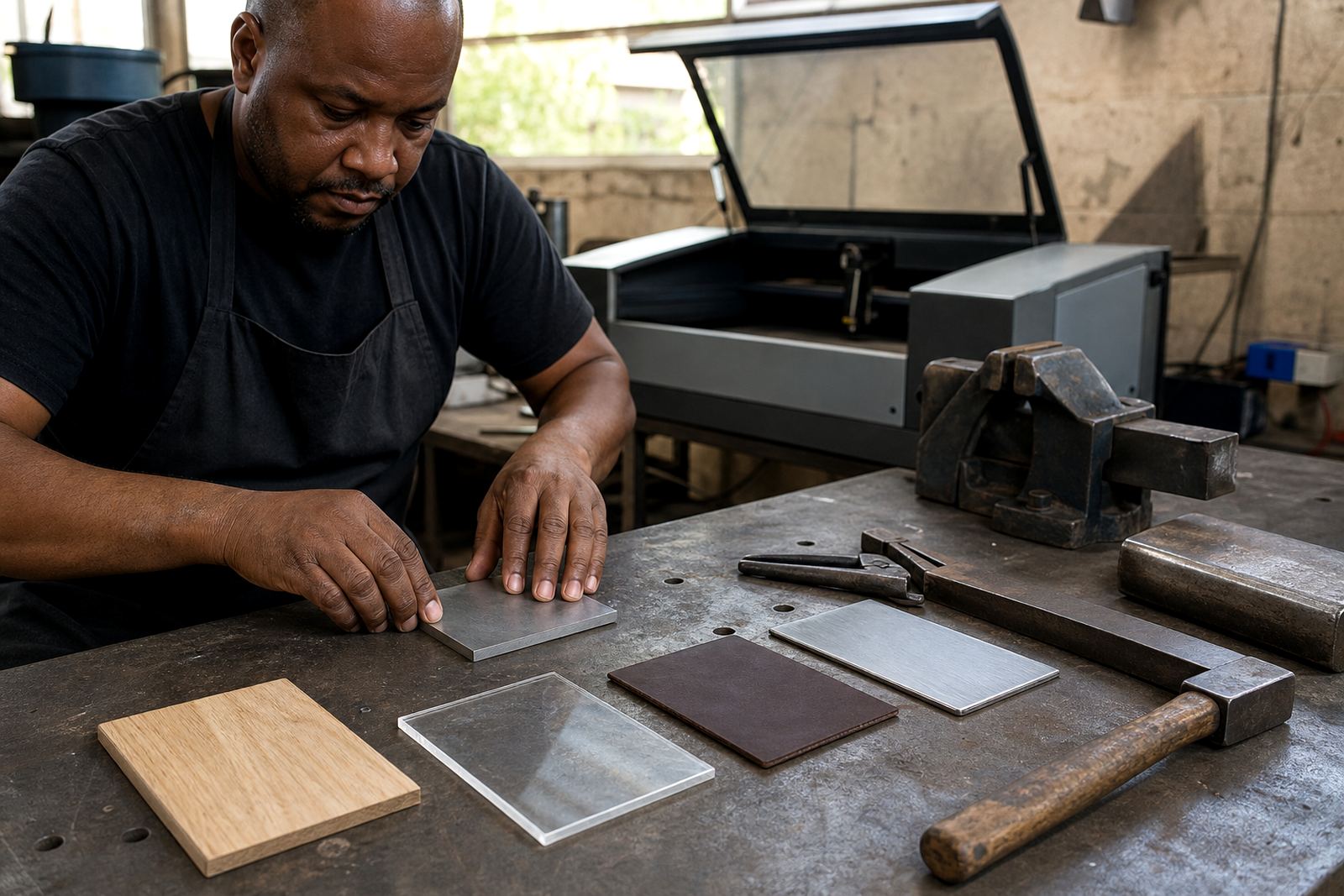
- Material options considered: anodised aluminium, stainless steel and acrylic for specific indoor uses
- Mounting options: pre-drilled holes, adhesive backing or supplied loose for on-site fixing
- Readability: strong contrast, clear type, practical font sizing for quick inspection
What we supplied and how the plates were set up
We handled the full setup from layout planning through to final finishing. That included artwork clean-up, logo redraw where needed, text alignment, and file conversion so the engraving lines would reproduce correctly. For a machine plate job, small details matter, because even one cramped line can make a plate awkward to use once it is fitted.
The set included multiple plate sizes for different pieces of equipment, with repeated fields for machine name, asset number, service reference and location tag. We kept the layout consistent across the set so maintenance staff could move from one machine to the next without relearning the format. Where the client needed sequential marking, we prepared the batch so the numbering stayed in order. Simple work, but it saves time later.
- Artwork setup and layout planning for a consistent plate range
- Logo redraw and file conversion where supplied files were not clean enough
- Batch personalisation for repeated labels and serial style fields
- Proof approval before production started
Weeks on the job and production flow
The project moved from brief to proofing, then into production over a short multi week schedule. The first week focused on measurement, text layout and approval. The second week was used for engraving, finishing and checking the plate edges and mounting holes. The final stage covered packing and dispatch for the client collection point.
That timing worked well because it allowed us to check every plate against the approved list before it left the shop. For industrial work, a missed serial number or one wrong label can cause confusion later, so we treated the list carefully and checked each item against the approved proof. It is the kind of job where a slower start can actually save time overall.
- Week 1: site requirements, measurements and proof setup
- Week 2: engraving, finishing and quality check
- Final stage: packaging and collection or courier dispatch
Results on the floor after installation
Once fitted, the plates gave the workshop a cleaner and more organised look. More importantly, staff could identify each machine quickly, which helped with maintenance logs, basic housekeeping and equipment control. The engraved marking stayed easy to read and did not rely on surface ink that can wear off or smear in a busy environment.
The client also appreciated that the plates were made in a format they could reuse later for new machines or replacements. That matters in industrial settings where equipment gets added, shifted or repaired over time. With a proper plate system, future orders become much simpler because the layout, size and numbering pattern are already established.
- Better visual control across the workshop
- Cleaner identification for inspections and maintenance
- Reusable format for future machine additions
What we would repeat for the next plate order
If we were doing a similar Pretoria West machine plates order again, we would keep the same approach: confirm the fixing method first, lock down the plate sizes early, and approve one sample layout before running the full batch. That sequence keeps the job practical and reduces the chance of rework, especially where machines have tight mounting spaces or existing hardware in the way.
For sites with more than one workshop zone, we would also recommend grouping the plates by area before production. It makes dispatch easier and helps the client fit them in order, which is handy when a maintenance team is working under pressure and cannot stop to sort through loose labels.
- Confirm fixing method before production
- Approve one sample format first
- Group plates by machine zone for easier installation
Job details
| Project | Pretoria West Machine Plates |
|---|---|
| Client type | Industrial workshop in Pretoria West |
| Use | Machine identification, asset marking and workshop reference |
| Materials | Anodised aluminium, stainless steel and acrylic depending on use |
| Timeline | Approx. 3 weeks from layout to dispatch |
| Service area | Pretoria West, Pretoria East, Pretoria, Centurion, Midrand, Johannesburg and Durban with courier delivery across South Africa |