What engraved name plates are used for
Engraved name plates are small identification plates made for people, departments, counters, shelves, machines and service points. They are often fixed to a counter front, mounted on a wall, placed on a shelf edge or attached to equipment where clear labelling matters. In Pretoria East, Johannesburg and Centurion they are commonly used in offices, clinics, studios, schools and reception areas where visitors need fast, readable direction.
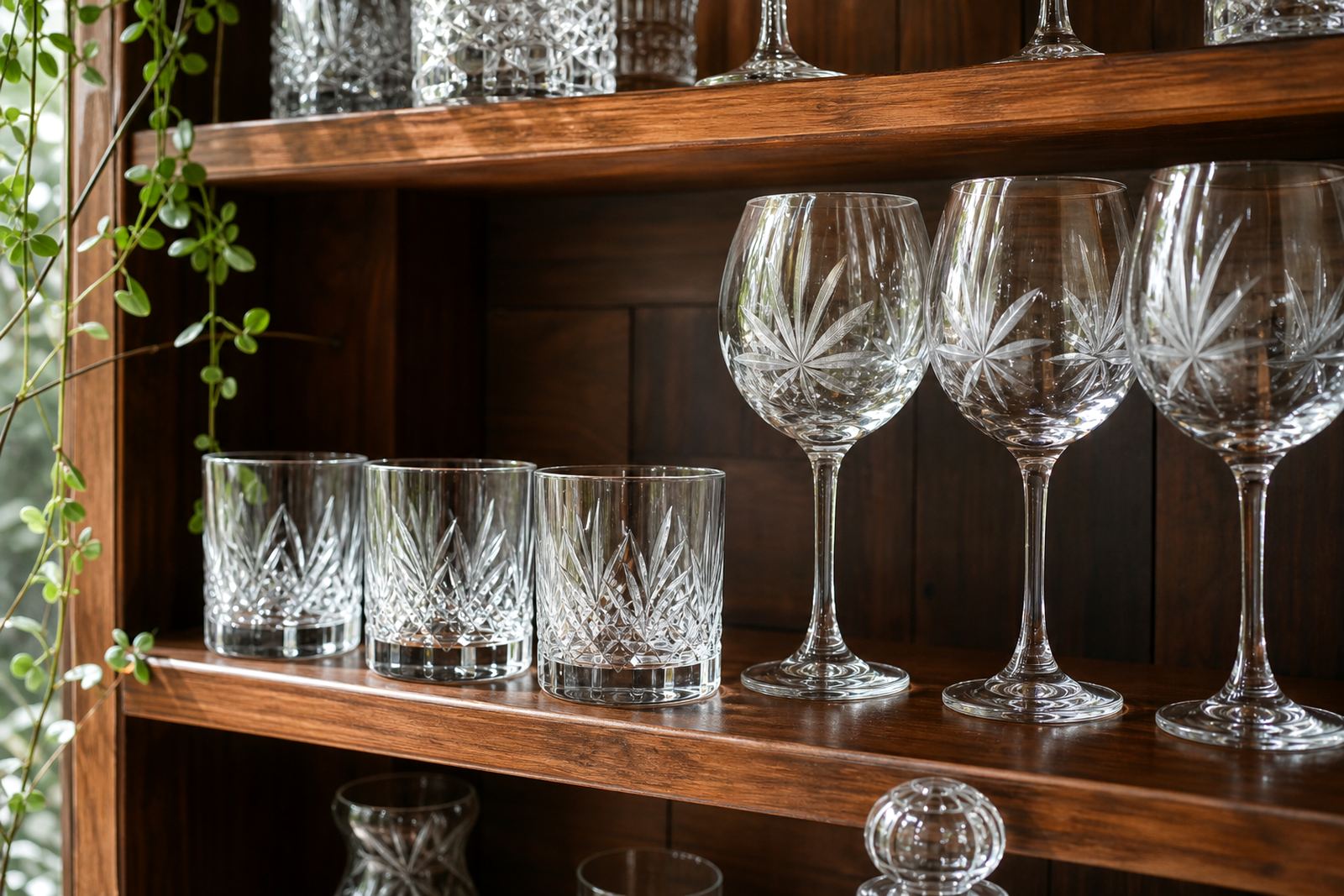
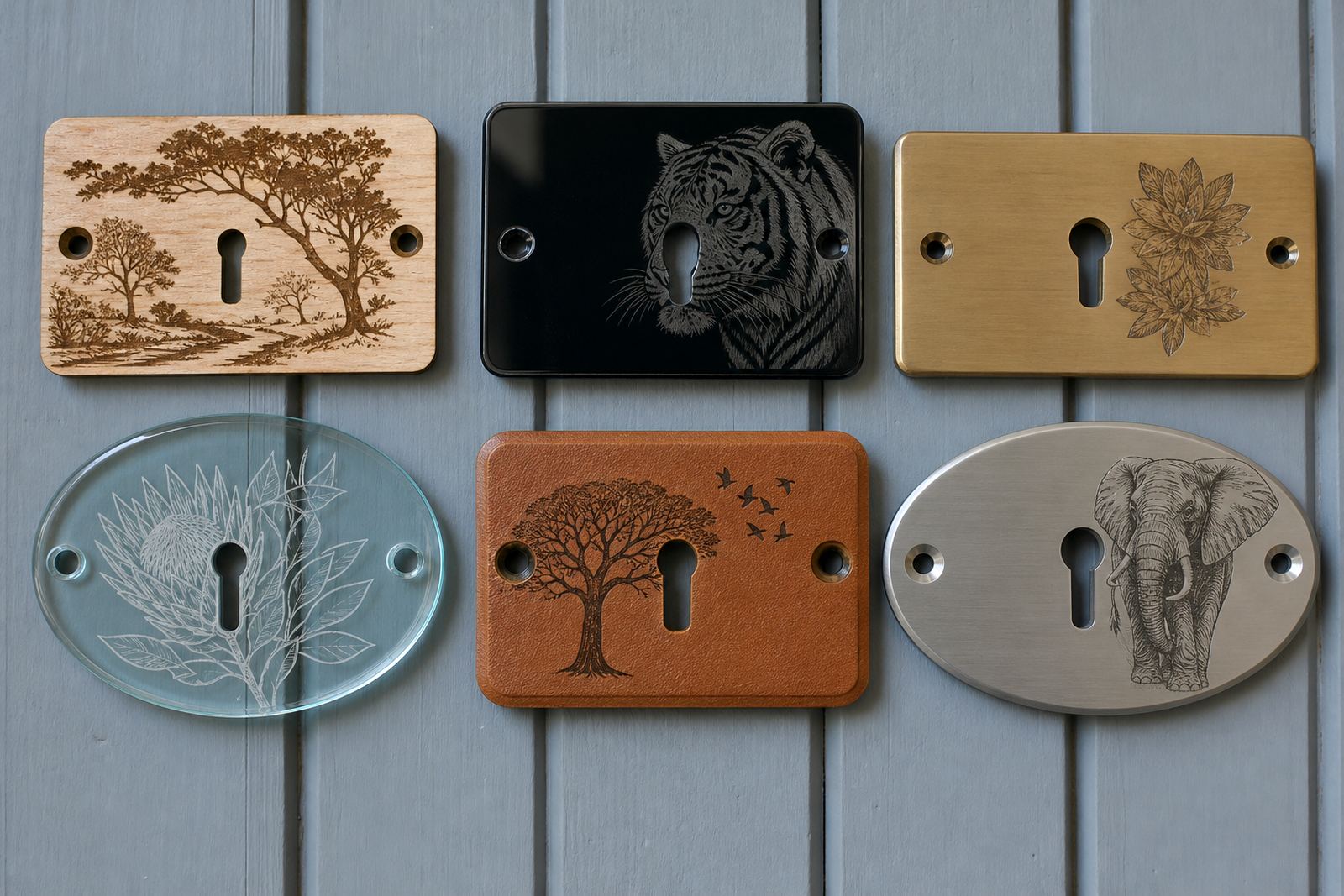
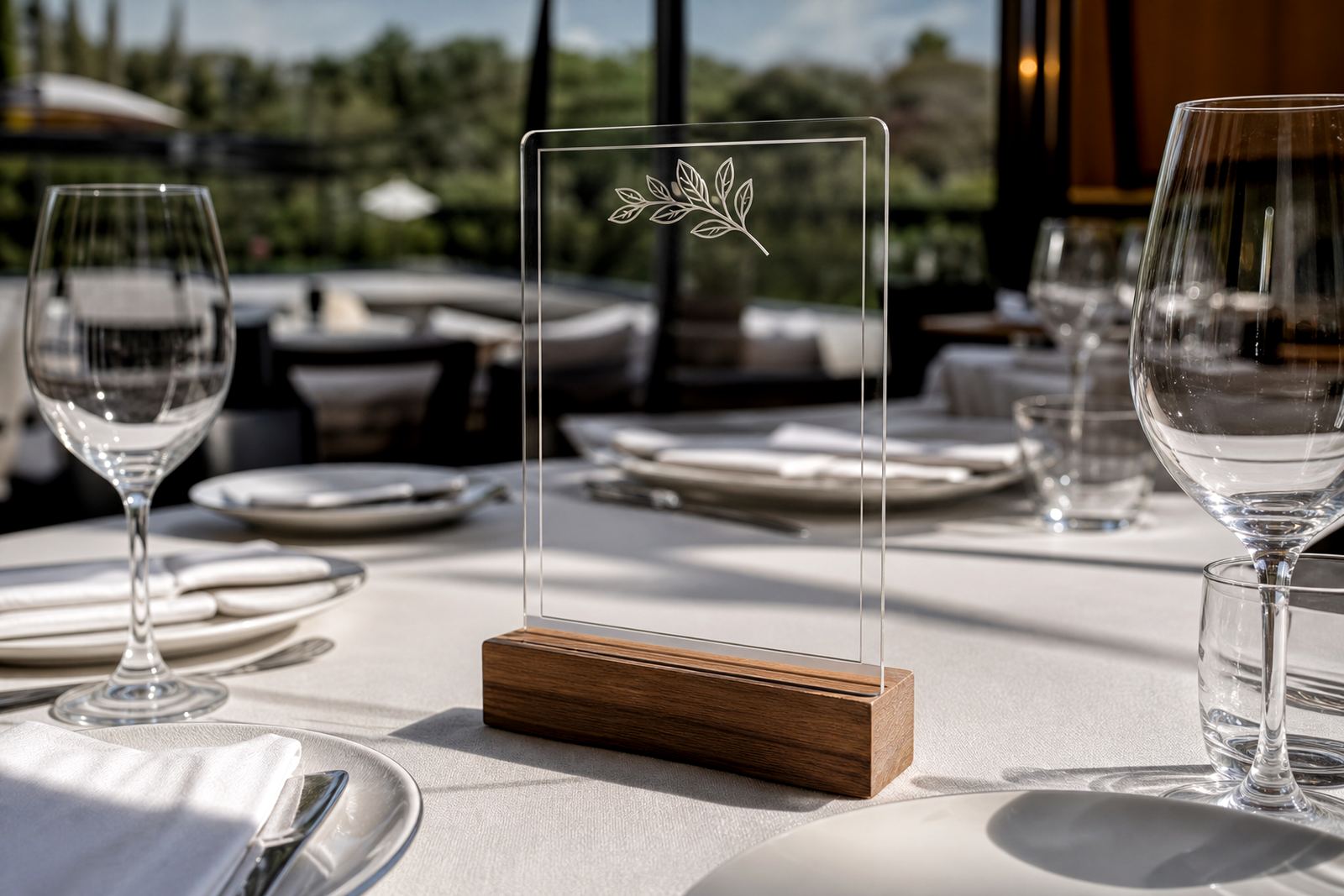
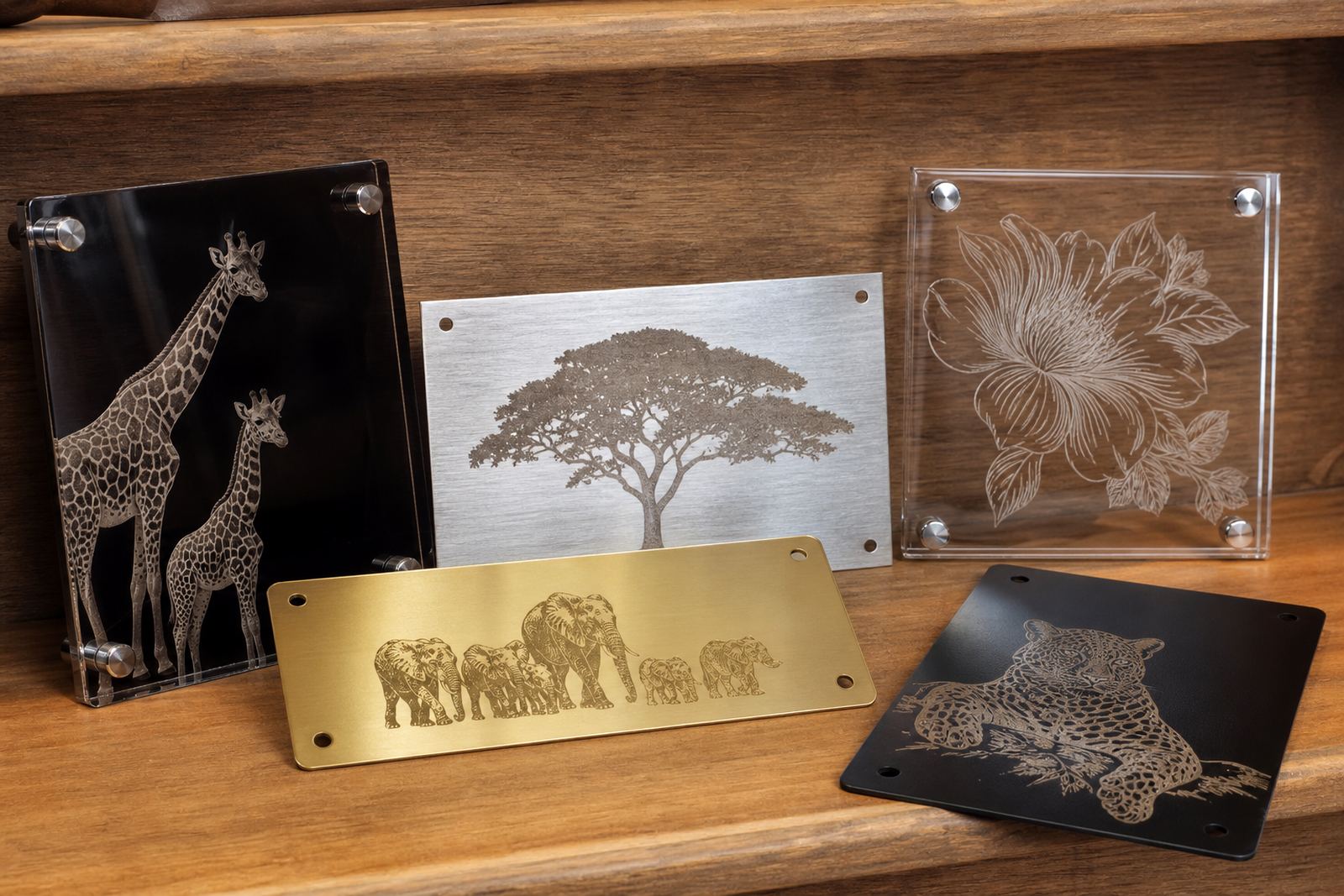
We produce name plates in a range of materials suited to the setting. For indoor spaces, acrylic and engraved laminate are popular because the lettering stays crisp and clean. For a warmer look, wood works well on reception counters, boutique fittings and gifts. Glass and metal suit formal spaces or areas that need a more permanent feel. Leather is used less often, but can be a strong choice for presentation items and special branded pieces. The right material depends on where the plate will sit, how often it will be handled, and whether it must match other fittings.
- Reception counters and front-of-house areas
- Office doors, shelves and drawers
- Workstations, studios and shared rooms
- Product and stock identification
- Special recognition plates and gifts
Size options, thickness and fixing choices
Name plates are usually made to suit the space, not the other way round. Small plates may be fitted to a shelf edge or machine panel, while larger plates are better for reception counters or wall mounting. Common sizes range from compact rectangles around 50 x 20 mm to larger formats such as 200 x 50 mm or 300 x 100 mm. Square, rounded corner and strip layouts are all possible depending on the text and logo shape.
Thickness is chosen with appearance and use in mind. A slim plate suits neat indoor labelling, while a thicker plate gives more presence on a counter or stand. Mounting can be arranged with adhesive backing, screw holes, standoffs or free-standing bases. For temporary use, removable fixing is useful. For long-term use, mechanical fixing is usually better, especially in busy spaces or where humidity and cleaning happen often. In coastal areas, a properly fixed plate also helps reduce lifting at the edges.
- Standard rectangles, strips and custom cut shapes
- Single line, multi-line or logo plus text layouts
- Adhesive, screw-fixed or stand-up mounting
- Matte, gloss or textured finishes depending on material
- Colour contrast chosen for easy reading at a glance
Where name plates suit best in Gauteng and beyond
Name plates are a practical solution anywhere clear identification is needed. In Pretoria East and the wider Gauteng area, they are often used for reception counters, consultation rooms, shared offices, retail shelving and workshop areas. They also help in Durban and other humid regions where well-finished plates can be selected for easier cleaning and better durability.
For business use, the biggest value is not decoration but clarity. A well-sized plate helps clients and staff find the correct person or department without asking around. In stock rooms and production areas, it helps with order and reduces mistakes. In customer-facing spaces, it gives a tidier, more organised look and makes a workspace feel properly managed. We also prepare name plates for product marking, small runs and batch labelling where repeat naming needs to stay consistent.
If you are fitting plates in a building with formal rules or landlord conditions, it is worth checking whether drilling is allowed, whether adhesive is preferred, and whether there are restrictions on wall finishes or fire-rated surfaces. For shared buildings, this saves time and avoids damage to painted panels or glass.
Check this before we engraveing
The best results come from clear artwork and a few basic measurements. Before ordering, check the exact name or wording, the spelling of initials, the size of the area available, and whether the plate should be read from close range or across a room. If the plate needs a logo, send a clean file where possible. If only a photo or rough sketch is available, we can assist with artwork setup, logo redraw, layout planning and file conversion.
It also helps to decide on the finish and colour contrast early. Dark text on a light plate is often easiest to read, while light text on dark material can look more formal. If the plate must match existing signage, bring a sample or a clear photo so the size and tone can be matched more closely. For multi-site orders across Pretoria, Midrand, Johannesburg and Durban, batch personalisation and reorder matching help keep the look consistent across branches.
- Confirm the exact wording, spelling and line breaks
- Measure the available space before choosing the size
- Decide on indoor, outdoor or sheltered placement
- Check if screw fixing, adhesive or stand-up placement is preferred
- Choose a finish that gives good contrast and easy cleaning
Installation and site considerations
Finished name plates are passive identification items, so the main concern is how they will be attached and what surface they are going onto. For counters and shelves, adhesive backing or small fixings may be enough. For walls, doors and equipment panels, drilled fixing can be more secure. If a plate is going onto glass, polished stone or painted metal, the fixing method should be checked carefully so the surface is not damaged during installation.
In dusty or high-traffic areas, simple mounting and easy removal for cleaning can be a real benefit. For outdoor or semi-outdoor use, the plate should be specified for weather exposure and sheltered from direct driving rain where possible.
We also assist with packaging prep for courier delivery across South Africa. Plates can be packed for single-site use or grouped for multiple branches so each destination arrives with the correct set. For Durban and other coastal routes, careful wrapping helps protect edges and keep finishes clean in transit.
Care, cleaning and repeat ordering
Most engraved name plates are easy to look after. Use a soft cloth and mild cleaning product, then dry the surface so no water marks remain. Avoid harsh solvents or abrasive pads, especially on acrylic, coated metal and polished finishes. Wood should be kept away from standing moisture and wiped dry promptly after cleaning. Glass can be cleaned like standard glazing, but it should be handled carefully at the edges.
If a plate is used in a busy shared space, plan for the occasional replacement or update. Staff changes, department changes and room renaming happen often, so a good ordering record saves time later. Keeping the same size, layout and material makes reorders easier and keeps the workspace consistent. For regular clients in Pretoria East, Centurion and Johannesburg, we can keep the layout format aligned for future batches.
Before dispatch, our Wapadrand, Pretoria East team works closely on artwork, layout and finishing. The process is practical and detailed, with careful attention to readable text, clean edges and a finish that suits the space.
Job details
| Product type | Engraved name plates for counters, shelves, doors, workstations and product marking |
|---|---|
| Common materials | Acrylic, wood, glass, leather and metal |
| Typical sizes | From small labels around 50 x 20 mm to larger plates such as 300 x 100 mm |
| Mounting options | Adhesive backing, screw fixing, standoffs or free-standing bases |
| Finish options | Matte, gloss, textured or brushed depending on material |
| Service area | Pretoria East, Pretoria, Centurion, Midrand, Johannesburg, Durban and courier delivery nationwide |