What laser engraved asset tags are used for
Asset tags are small identification plates or labels fixed to equipment so each item can be tracked through buying, issue, servicing and audit cycles. A laser engraved tag carries a permanent marking that is far harder to fade than printed stickers, which makes it suitable for assets that are handled often or kept in harsh conditions.
We make tags for office equipment, workshop tools, IT hardware, cabinets, plant rooms, field cases and general stock control. Depending on the material, the marking can be crisp black on light surfaces, pale on dark surfaces or engraved into the surface itself for a clean and practical finish. This is useful for businesses that need clear numbering, barcodes, QR codes, location codes or property marks.
Because every site is different, the tag layout is planned around how it will be used. A tag on a server rack does not need the same size or mount as a tag on a hand tool or on a metal cabinet. We help with artwork setup, logo redraw, file conversion and size planning so the final tag suits the item and the way your team handles it day to day.
Common materials and tag formats
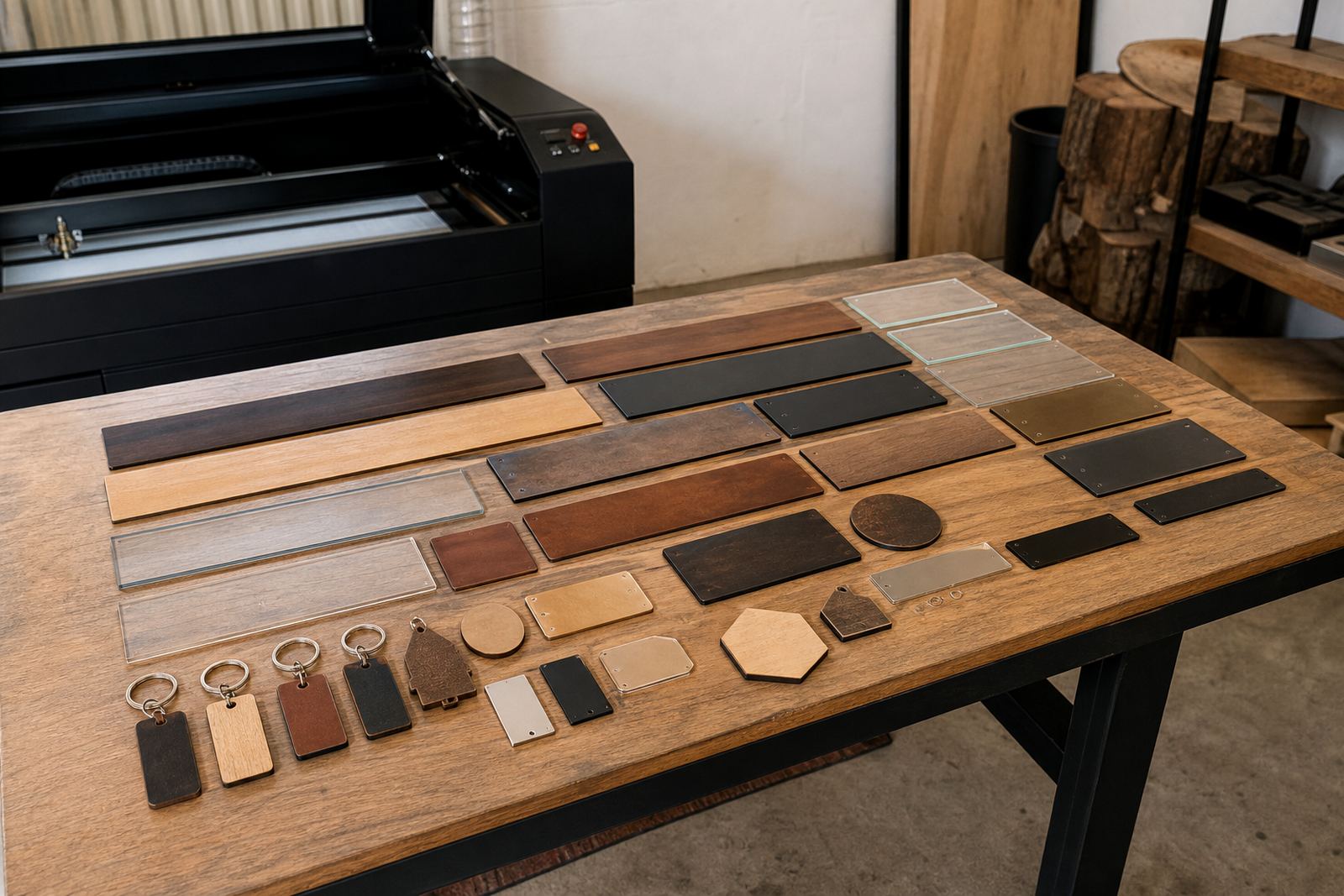
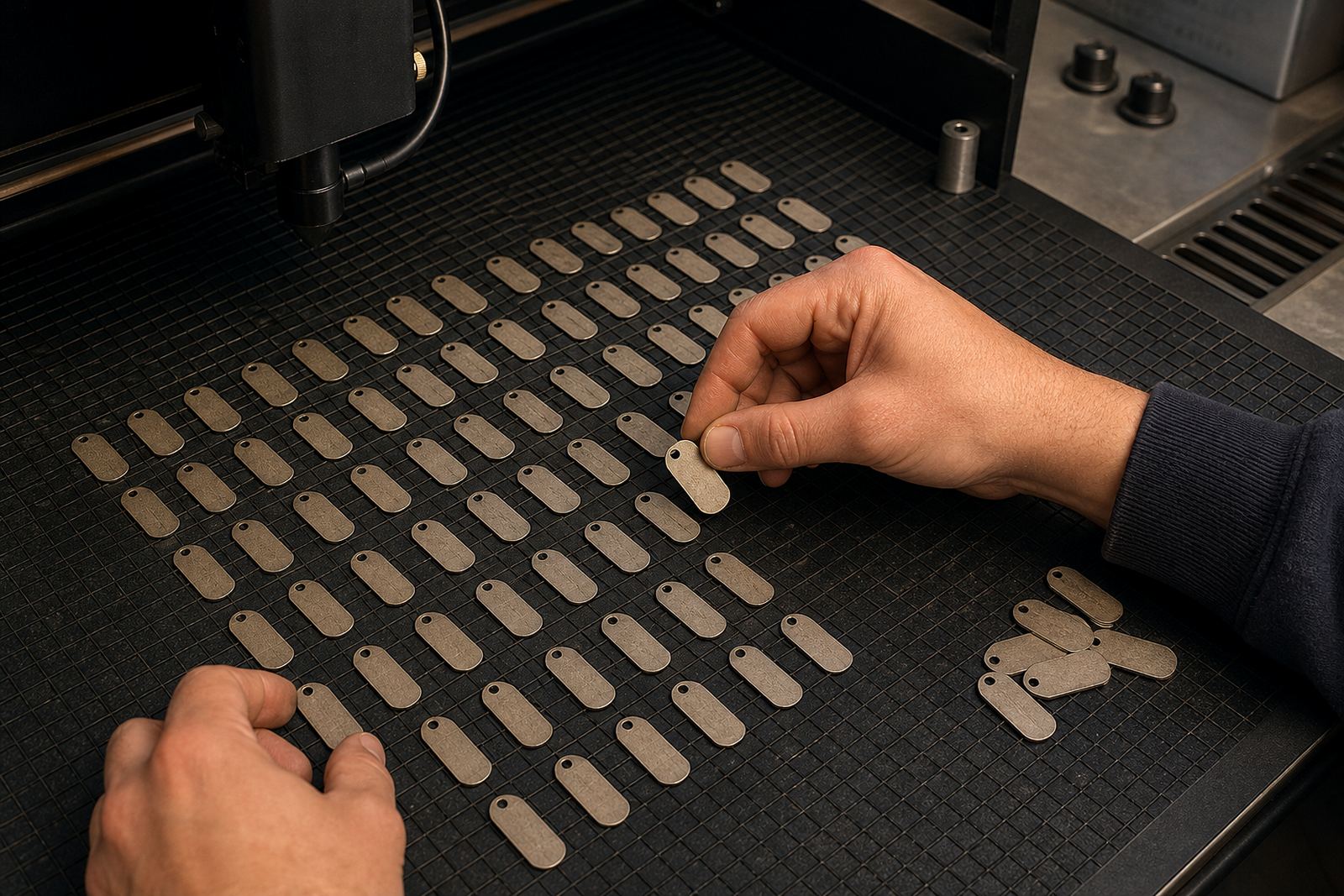
Asset tags can be made on a range of materials depending on where they will be fitted and how much wear they will take. Laser engraving gives clean edges and good repeatability, which is important when you need many tags with matching numbering or a repeat order later on.
- Aluminium tags: good for equipment labels, plant rooms and outdoor use where moisture and handling are common.
- Anodised aluminium: well suited to crisp marking on small tags, serial plates and inventory labels.
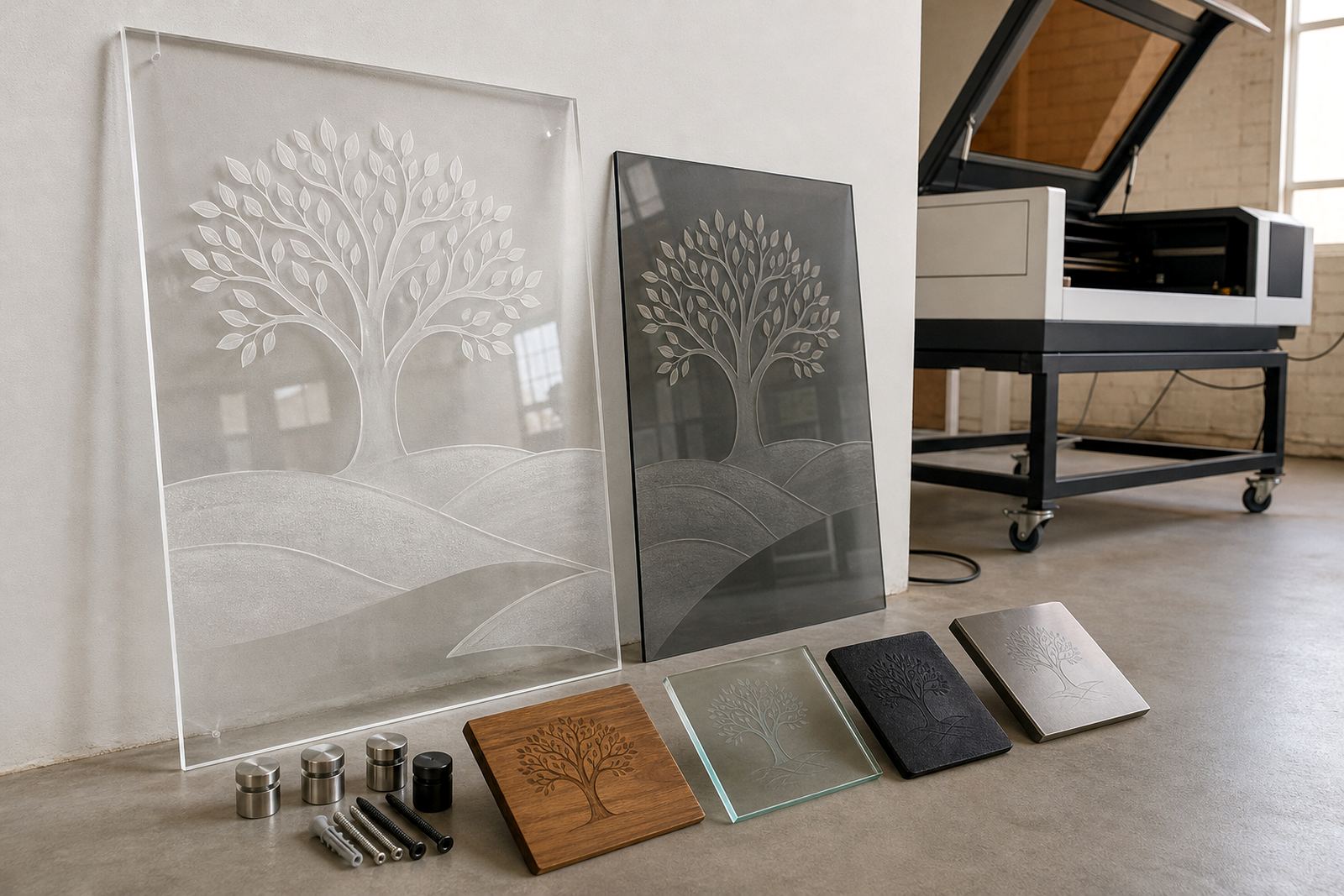
- Acrylic tags: useful for interior items, display assets and colour coded identification.
- Stainless steel tags: suitable for high wear areas, industrial settings and marine influenced conditions.
- Wood or leather tags: used for presentation pieces, branded gifts or special items where a natural look is wanted.
Tag size normally depends on the amount of information needed. Smaller tags are often 20 x 10 mm, 30 x 15 mm or 40 x 20 mm for simple numbering. Larger formats such as 60 x 30 mm, 70 x 25 mm or custom shapes work better when you need a logo, asset number, department name and a QR code on one plate. Mounting holes, adhesive backing or rounded corners can be added where required.
Where asset tags suit best
Asset tags are used in many South African workplaces, from Pretoria East offices to Johannesburg warehouses and Durban sites exposed to humidity and salt air. The right material and layout help the marking stay readable after cleaning, movement and everyday use.
They suit businesses that manage multiple items across different rooms, branches or vehicles. When equipment leaves the main store, a tag makes it easier to identify, return and record. It also helps with internal checks when items are moved between departments or when replacements are ordered.
- Office and admin equipment
- IT devices and peripherals
- Workshop and maintenance tools
- Hospitality and catering equipment
- School and training assets
- Retail fixtures and backroom stock
- Property and facilities management items
For many clients in Gauteng, the main aim is simple control. Clear tags reduce confusion when several similar items are in use, and they make audits faster because each item can be matched to a code or asset register more easily.
Installation, mounting and site considerations
How a tag is fitted depends on the surface and how permanent the mark needs to be. Some tags are fixed with industrial adhesive, while others are riveted, screwed or tied depending on the item and the environment. On painted metal or powder-coated surfaces, the fixing method is chosen carefully so the item remains secure without damaging the finish more than necessary.
If tags will be used outdoors or in areas with dust and vibration, the fixing should be planned with that in mind. Coastal humidity in places like Durban can affect some adhesives over time, so a mechanical fixing may be better. In Pretoria and Centurion, heat and direct sun can also affect certain plastics, so material choice matters just as much as the artwork.
The engraving is done in our production space in Wapadrand, Pretoria East, and the finished tags are supplied ready for fitting. If you need numbering in batches, we can set the sequence so each tag stays consistent across the full run.
Care and long term readability
Once fitted, asset tags need very little care. The main point is to choose a material that matches the environment and to keep the surface free from heavy build-up that could cover the marking. For most sites, a simple wipe with a damp cloth is enough.
For tags exposed to oil, cleaning chemicals or frequent handling, stainless steel or anodised metal often gives better long term results than softer materials. Acrylic can be a good option indoors, but it is best kept away from hard impact areas. If a tag is likely to be removed during servicing, we can plan the fixing method so it comes off cleanly without affecting the item too much.
- Avoid abrasive pads on engraved surfaces
- Do not use strong solvents unless the material is confirmed safe
- Check adhesive tags after wash-downs or heat exposure
- Reorder matching tags from the same layout when expanding a register
If you are keeping a formal asset register, it helps to store the tag number, location and issue date together. That makes future reprints and replacements easier, especially when items are spread between Pretoria, Johannesburg, Midrand and other branch locations.
Check this before we engrave
Before ordering asset tags, decide what information each tag must carry and how much space is available on the item. A good layout is clear at arm’s length and still legible when the tag is small. If the tag is for scanning, the barcode or QR code should have enough quiet space around it for reliable reading.
It also helps to think about the surface finish. Smooth metal, powder-coated panels, glass, acrylic and sealed wood all behave differently, so the marking method and mounting choice should follow the material. If you are unsure, send measurements and a photo through the enquiry form on our contact page and we can advise on layout, size planning and material guidance.
- Asset number format and sequence
- Logo, department name or location code
- Tag size and shape
- Mounting method: adhesive, screw holes or rivets
- Indoor or outdoor use
- Whether barcodes or QR codes are needed
For repeat orders, it is worth keeping the original file or at least a clear sample of the approved layout. That makes reorder matching simpler and helps keep your tags uniform across branches and sites.
Local support from Pretoria East to South Africa-wide delivery
Working from Wapadrand in Pretoria East, LightBurn Engraving handles clients across Gauteng and beyond, including Pretoria, Centurion, Midrand, Johannesburg and Durban. The team is led by Thabo Abrahams, with support from Snethemba Khoza, Johan Hadebe, Ayesha Zwane, Sipho Hendricks and Lindie Lombard. That means your tag order is handled from artwork through to finishing and dispatch by people who deal with practical marking jobs every day.
Whether you need a small batch for a department or a wider rollout for multiple branches, the aim is the same: clear tags, good legibility and a finish suited to the item in front of you. Courier delivery is available across South Africa, and all enquiries can be sent through the form on our contact page.
Job details
| Product type | Laser engraved asset tags for tracking and durable labelling |
|---|---|
| Materials | Aluminium, anodised aluminium, acrylic, stainless steel, wood and leather |
| Typical sizes | 20 x 10 mm to 70 x 25 mm, with custom sizes available |
| Marking options | Text, numbering, logos, barcodes, QR codes and location codes |
| Mounting options | Adhesive backing, screw holes, rivets or tie points |
| Service area | Pretoria East, Gauteng and courier delivery across South Africa |